The Bilbao City Council, via its Human Rights, Coexistence, Cooperation, and Interculturality Department, has renewed its agreement with the non-profit association Zaporeak to support food programs for refugees in the camps of Lesbos, Greece. The agreement, valued at thirty thousand euros, will back the initiative currently underway at the Kara Tepe II refugee camp.
Zaporeak, founded in 2016, provides dignified meals to refugees arriving in Europe. Currently, it prepares food to improve the living conditions of those trapped in Greek refugee camps. The humanitarian crisis caused by the war in Syria prompted seven friends to travel to Greece to help those fleeing towards Europe, using their skill: cooking. With the help of locals, NGOs, and Basque solidarity, they developed Zaporeak.
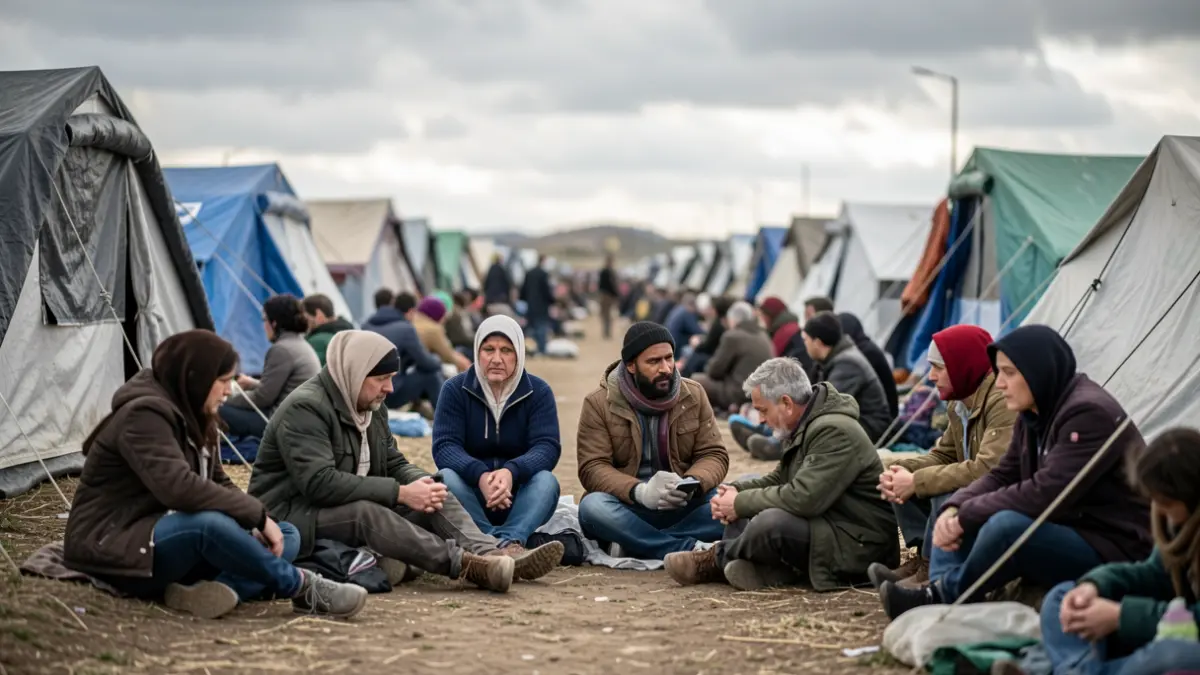
The project operates within the Kara Tepe II refugee camp, located on the island of Lesbos, Greece. Lesbos is an Aegean island near the coast of Turkey, serving as a primary entry point for refugees into Europe due to its geographical proximity to Asia Minor.
The refugee population at Kara Tepe II is diverse in nationality, gender, and age. Most come from conflict-ridden countries such as Afghanistan (40%), Syria (25%), Iraq (15%), and the Democratic Republic of the Congo (10%), with the remaining 10% originating from other countries in Africa and the Middle East. Approximately 55% of the population are men and 45% are women. Around 35% are under 18 years old, and 10% are over 60. The number of residents has fluctuated between 2,000 and 7,000 people.
Qualitatively, this is a highly vulnerable population, mainly composed of families with minors, pregnant women, individuals with chronic illnesses, and victims of violence and persecution. Uncertainty about their future, lack of access to employment and education, and precarious living conditions contribute to high levels of stress and mental health issues among refugees. By 2026, the situation continues to worsen as the emergency has become chronic, leading to an increase in chronic diseases and the number of refugees suffering from them.
Zaporeak distributes an average of 2,500 rations daily, supported by over 60 volunteers who travel to Lesbos in shifts, and a stable team of 6 refugees working in the kitchen. Their tasks include preparing and cooking food, cleaning the workspace, and distributing meals. An average of four volunteer rotations occur every three weeks, supplemented by self-funded volunteers, which is crucial given the increasing number of refugees.
A nutritionist advises the team to ensure adequate nutrient intake for different groups. They provide nutritional supplements like milk, nuts, and extra fruit, which are difficult for refugees to access. Menus include a piece of fruit and milk, essential for vitamin intake to combat chronic illnesses. Thanks to societal donations, refugees receive a daily dignified and nutritious meal.