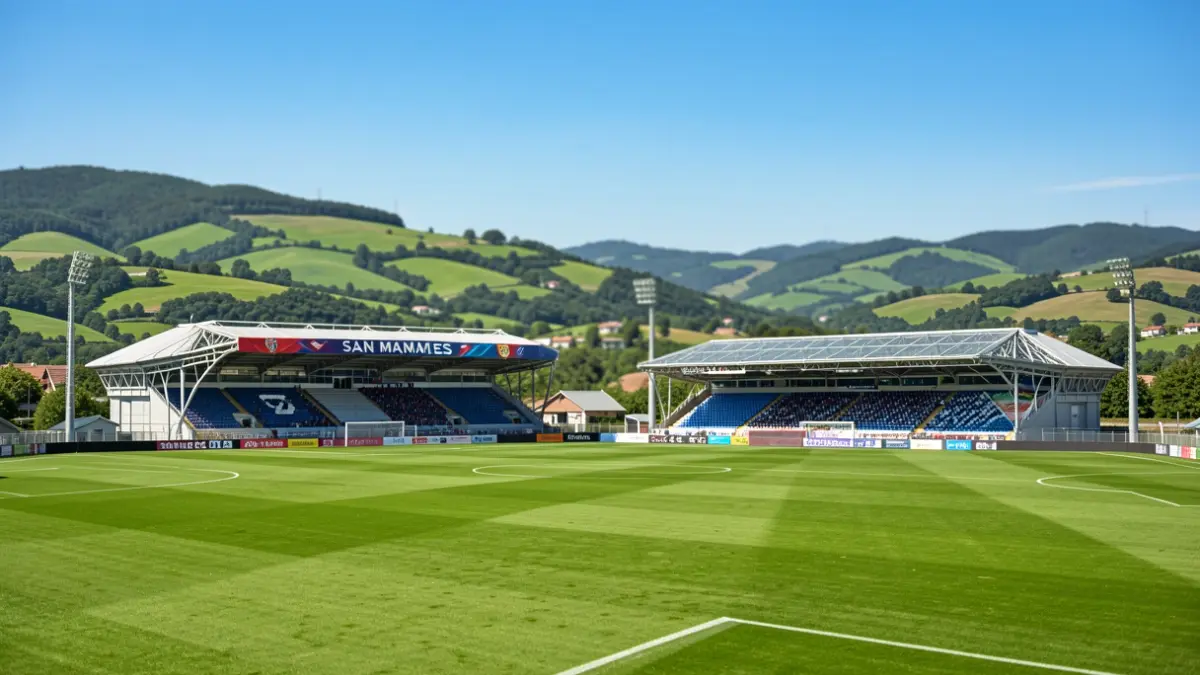
Basque institutions are moving forward with the bid to host matches for the 2030 Football World Cup, this time advocating for a joint venue that will unite Bilbao and San Sebastián. Under the new plan, San Mamés stadium would host two group stage matches, and another two would be played at Anoeta stadium in June. Consequently, Bilbao would have two fewer matches, one of them being an elimination game. The final decision will rest with the International Football Federation (FIFA).
The administrations have explained this change in an informative note sent to FIFA, adhering to the deadlines set in the bidding process. After conducting relevant studies and analyses, they propose this alternative, 'prioritizing the general interest and the country's perspective'. However, the Mayor of Bilbao, Juan Mari Aburto, has indicated that the financial aspect is significant in decision-making, mentioning a figure much higher than the 12 million euros the City Council allocated for the Tour de France start.
The institutions had already expressed in a document sent to FIFA two years ago the aspects that were unacceptable, both economically and in terms of citizen impact. Among the 'red lines' were high economic costs, demands to prove the capacity to host international events, regulatory changes, new investments in stadiums and territories, the exclusion of co-official languages, the non-holding of other events during the competition, and certain exclusive rights for the organizing company.
The Minister of Culture of the Basque Government, Ibone Bengoetxea, has reaffirmed that the new proposal is a demonstration of the territory's 'commitment'. 'We do not give up,' she stated, despite doubts expressed in recent weeks. Nevertheless, she emphasized that there are still issues to be clarified by the organizers and defended the need to articulate 'a proposal with two stadiums,' which 'is in favor of the citizens' interest.' She acknowledged that hosting matches would have a 'positive economic impact,' but also 'repercussions' in the cities.
Last March, FIFA representatives visited both stadiums, but the administrations claim that none of the questions raised two years prior were answered. Following this, a thorough analysis began into what accepting all the requests to host two World Cup venues would entail.
Finally, and 'in defense of the interests and well-being of the citizens,' the institutions have defined a 'single budget' to present to FIFA, detailing the aspects they would be willing to assume. This documentation, according to the venue selection process calendar, was sent yesterday, May 31, 2026. The final decision rests with FIFA.