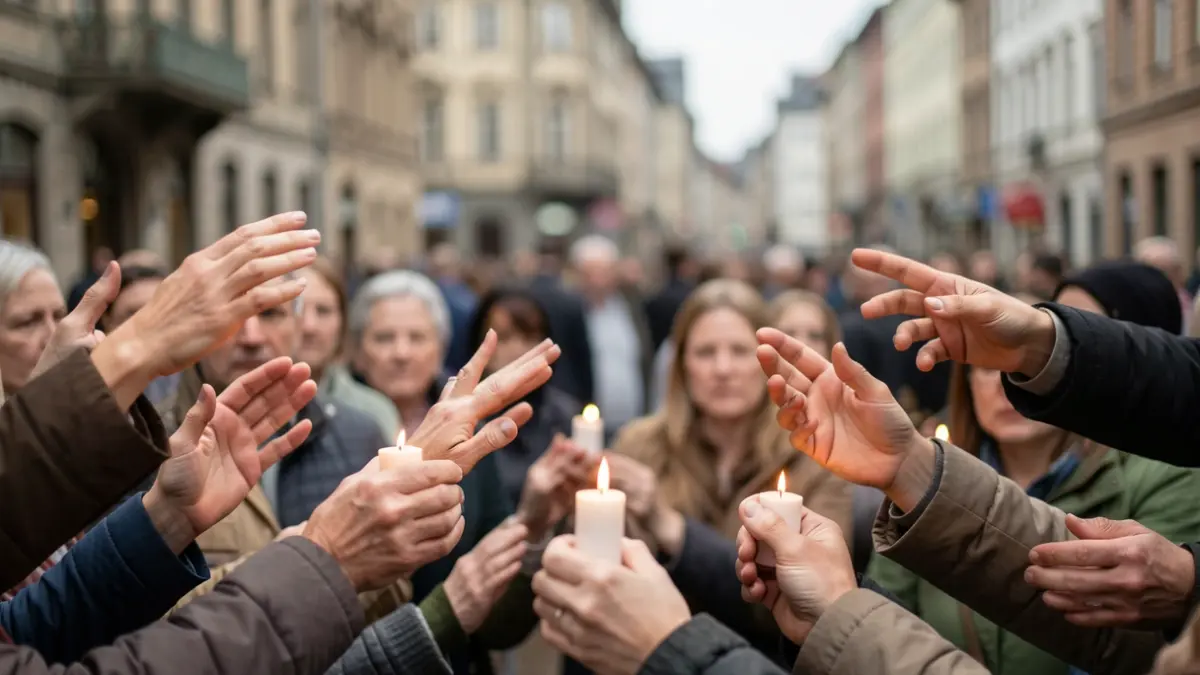
The Ordizia City Council, through the Political Table for Coexistence, has renewed its commitment to memory this November 10th, the Day of Memory. The Table, initiated almost two legislative terms ago, has worked «discreetly and away from the public spotlight», convinced that important processes require time, listening, and trust. Over these years, there have been encounters, serene dialogue, agreements, and disagreements, with the shared objective of contributing to stronger coexistence in the municipality, respecting human rights and the dignity of all people.
The institutional declaration recalls that speaking about the recent past requires sensitivity, honesty, and a willingness to listen, «even to that which is sometimes difficult to hear». However, the true value of this process lies in the ability to listen to each other, even amidst disagreement.
The Table aims to recognize all victims, «without leaving anyone behind, nor any family whose suffering has not been recognized». While no institution can fully repair the pain caused by violence, they can and must publicly acknowledge the suffering endured, dignify the memory of all victims, and clearly state that their pain also concerns the entire community.
It is acknowledged that there is still a long way to go to more deeply understand all human rights violations and sufferings caused by politically motivated violence in the municipality. Therefore, the Political Table, together with the Baketik Foundation, is undertaking research to create a map of suffering in Ordizia, following the methodology developed by the Pro Human Rights Association Argituz. The goal is to clarify all human rights violations, violent incidents, and sufferings that have marked the town's recent history, thereby recognizing all victims.
The Table believes that, as a society, we have the responsibility to «recognize all truths, sit with those who think differently, listen respectfully to what we may have never wanted to hear, and acknowledge the suffering of others», even if their narrative does not fully align with ours. This involves reaching out to those we have long felt were on opposite sides, discovering that common principles can be found even in disagreement.
Therefore, they defend the importance of creating safe spaces for dialogue, where listening is as crucial as speaking, dissent is understood not as a threat but as an opportunity to better understand one's neighbor, and agreements can be built without everyone thinking alike. Coexistence, they state, arises not from unanimity but from mutual respect, respect for human rights, and diversity of opinions.
Finally, they announce the creation of a «space for memory» at the current location, which will recognize all victims and serve as a symbol of coexistence and encounter.
The members of the Table for Coexistence are: Adur Ezenarro Agirre and Jon Ander Caballero Zubelzu (EH Bildu); Joseba Aranburu Ganzarain and Jose Ignacio Iturrioz Gotor (PNV); Viviana Murillo Cazar and Mila Sukia Galparsoro (Ordizia Orain-Elkarrekin Podemos Ahal Dugu); and Ana Sanchez Herraz (PSE-EE).