The intervention began in 2021 when falling pieces from the altarpiece raised alarms. Subsequent studies confirmed severe deterioration in the structure, caused by wood-boring insects, necessitating the complete dismantling of the main altarpiece to ensure its stability and preservation.
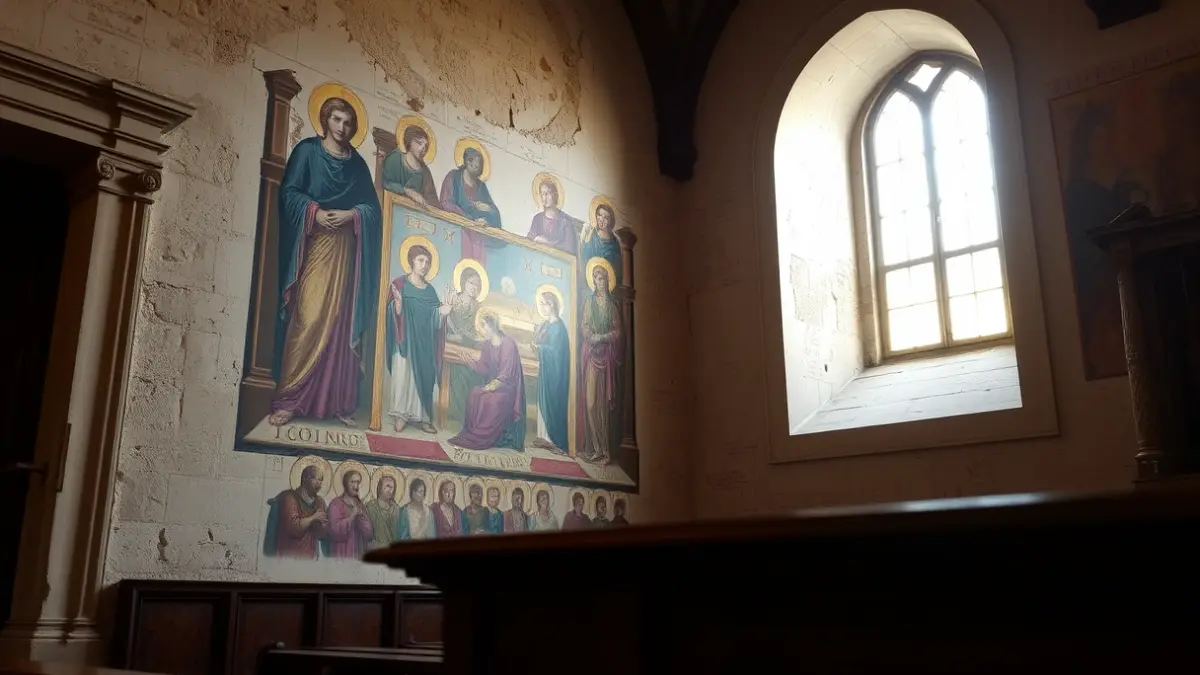
However, during the altarpiece's dismantling in July 2022, a discovery was made that expanded the project's scope. Mural paintings, previously unknown, appeared in the temple's apse beneath the structure. Further investigations confirmed they were a Renaissance ensemble dated 1555 and attributed to the painter Juan Pérez de Landa. From then on, the intervention was reoriented to address both the altarpiece's restoration and the recovery of these paintings.
They all agreed on highlighting the value of the discovery, which they defined as a 'treasure' that has passed from darkness to light thanks to the intervention.
These works predate the Baroque altarpiece installed in the 17th century, covering the walls and vaults of the presbytery and depicting various religious scenes and decorative elements. Their restoration was carried out in two phases between June 2023 and December 2024, through a meticulous process that consolidated them and restored their visibility.
Concurrently, the altarpiece was restored. In May 2025, the decision was made to move the main altar forward and place the altarpiece on a structure independent of the wall. This solution now allows the paintings, which remained hidden until the start of the works, to be viewed.
The altarpiece was reinstalled in December 2025, and the works were completed in early 2026 with improved lighting, cleaning of other altarpieces and the organ, as well as general conditioning of the temple. The project's completion was presented by institutional representatives, who emphasized the cultural enrichment for Beasain and the region, and its potential as a new tourist attraction.