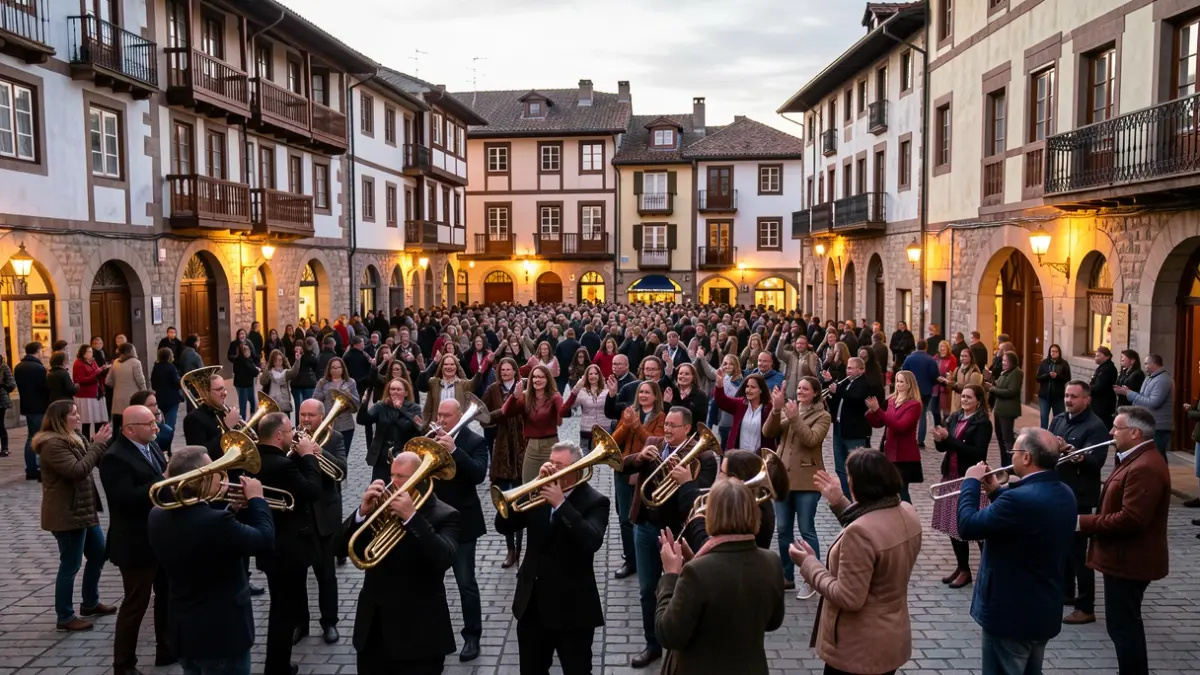
Eighty years ago, the first giants arrived in Beasain from Barcelona by train. Since then, these figures have become an integral part of the municipality's life, a common sight during the Loinatz Jaiak and other cultural events throughout the year. This year, the anniversary coincides with another significant milestone: the 40th birthday of Mari and Basajaun, two of the town's most cherished giants.
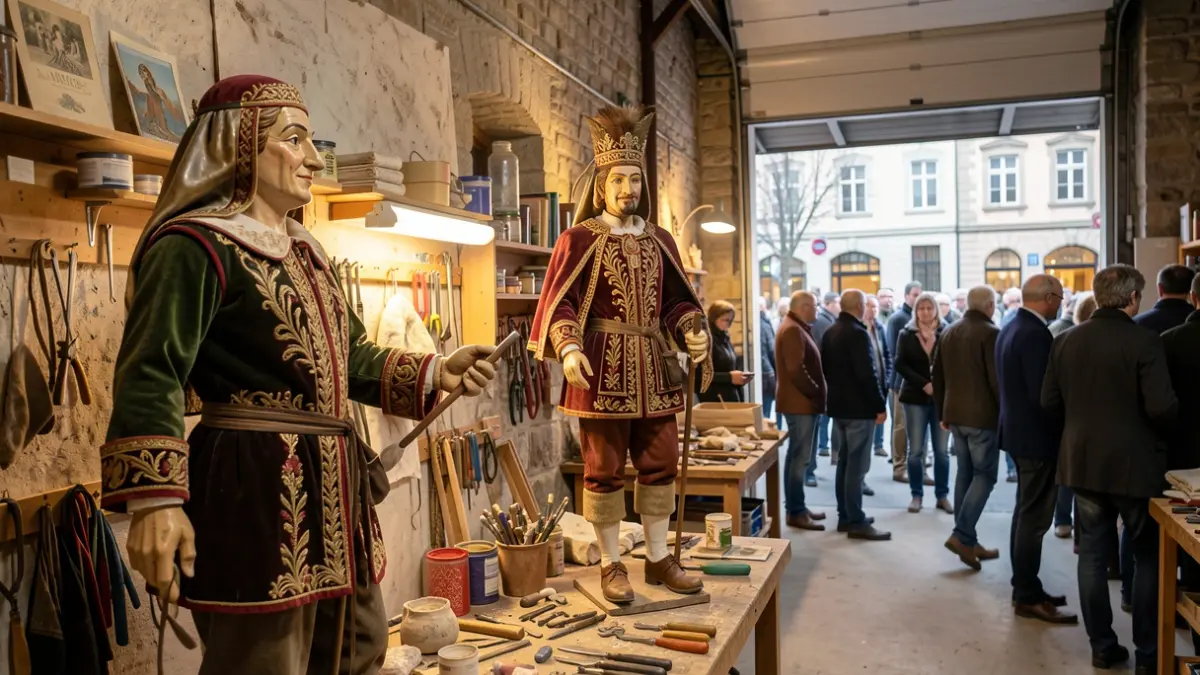
Currently, both are in the workshop. Their absence during this year's festivities has been noticeable, particularly among children who have been asking about their whereabouts. "We told them they were in the mountains, on Murumendi," shares Jesús García (Beasain, 1998), president of the Ekaitz troupe. The reality is less mysterious: they are being restored to regain the height at which they were created four decades ago.
Mari and Basajaun were designed by Xabier Garate from Irun, commissioned by the City Council, along with several 'cabezudos' (big-heads). Upon their creation, they stood at 4.40 meters, making them the tallest giants in Euskal Herria. Over the years, however, their height was reduced to 3.50 meters, matching other figures. Now, Jesús García is working to restore them to their original stature, thereby reclaiming their historical recognition. At this original height, Mari and Basajaun are also among the tallest dancing giants in Spain.
In his workshop in Tolosa, García balances the restoration of these figures with the creation of new projects, including three small giants he plans to gift to the town.
It is worth noting that his connection to this world began much earlier. He recalls being fascinated by their dimensions, colors, and dances from a young age. His passion started in childhood; at nine years old, he asked his father for a small giant, a wish that was granted, and he paraded with it behind the larger ones.
Today, he leads a troupe experiencing one of its most active periods. Although Ekaitz has only been an organized group for four years, there are individuals behind it who had long been keeping this tradition alive more informally in Beasain.
Currently, around 30 people are part of the group, though not all are giant carriers. Some also manage the 'cabezudos'. Carrying a giant is no easy feat: all figures exceed three meters in height and weigh around 40 kilograms, requiring coordination, balance, and above all, endurance.
Rehearsals take place every Wednesday, where they prepare the choreographies performed in the streets. García himself designs and teaches them. They first practice the steps without the giants and then move on to performing under the figures.
Nowadays, the troupe boasts six giants and eight 'cabezudos'. Three of the latter represent well-known local figures: Koxkolo is inspired by Pello Irizar, a local musician and composer; Vagonero represents Imanol Galarreta, a former footballer and carpenter; and Pitxu is a tribute to Pedro Urretabizkaia, a former municipal police officer. The remaining 'cabezudos' are drawn from Basque mythology: Sorgina, Mateo Txistu, Akerbeltz, Zezengorri, and Errementari.
The Ekaitz troupe states that interest in giants and 'cabezudos' has grown in recent years. Jesús García believes that, gradually, the perception of this tradition in Beasain is also changing. "I now feel they are beginning to receive the recognition and place they deserve," he explains.
This growth also presents new challenges. The troupe is seeking new members, particularly women, as currently only two are part of the group. Furthermore, their current workshop space has become too small for storing and working with such large figures. A request for a larger space has been submitted to the City Council, the owner of the giants and 'cabezudos', but it remains unresolved for now.