Guitrans held its General Assembly of Members this Saturday in Donostia. Attendees included, among others, Azahara Domínguez, Deputy for Mobility, Tourism, and Territorial Planning of Gipuzkoa; Mónica Díaz from the Basque Energy Agency; and Fran Manzano from Igarle.
Azahara Domínguez stated that the road freight transport sector "is an essential piece of our present and also of our future." Therefore, she emphasized "the need to support and assist the sector in the challenges it faces, such as the lack of generational replacement or the uncertainty generated by the global geopolitical crisis." She recalled that "in 2025, more than 700 people took the CAP exams, with a pass rate exceeding 50%".
The deputy indicated that the Provincial Council has approved aid lines for certain transporters who cannot benefit from the partial refund system of the Hydrocarbons Tax, as well as for gas-powered vehicles. Finally, she expressed her willingness to continue "collaborating with the sector to ensure its future".
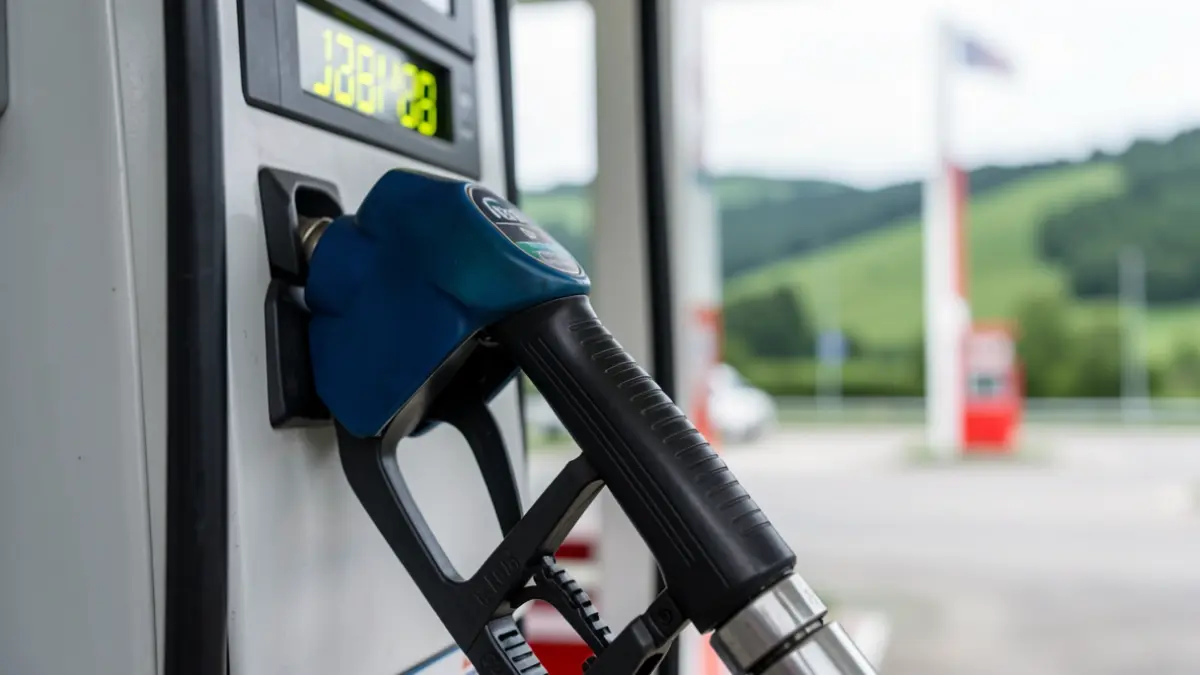
The president of Guitrans, Javier Ortega, warned of "the very serious situation caused by the Middle East crisis" in the sector, as it "has driven up, among other things, the price of fuel." "Diesel has risen by almost 40%, although there were weeks between March and April when the increase exceeded 50%," he noted, adding that this "represents an extra cost per vehicle of 1,600 euros per month for national transport and 2,000 for international transport".
In this context, he warned that "there is no other option but to pass on the fuel price increase to the transport invoice; failing to do so would mean the disappearance of a large part of the sector's companies." He insisted on "the mandatory nature of this pass-through," requesting "maximum collaboration from the shipping companies," who "must consider whether they want to assume the risk of being left without transport by not accepting a well-justified increase that has a minimal impact on the price of the transported product".
He also criticized "the delay in processing the 20-cent-per-liter bonus approved by the Government in March, which is not yet being implemented" and warned "of the malpractice of some shipping companies that intend to include this bonus in the calculation of the new rate, something that the regulation strictly prohibits".
Furthermore, Ortega highlighted "the effort made by Guitrans to promote the entry of new professionals into the sector through origin hiring, a system that provides guarantees to both the contracting and contracted parties." Regarding early retirement, he noted that "the sector has been demanding its approval for years" and "the process is taking a long time, especially considering that the professional driver activity contributes three percent more than other categories (contributing 6.7% compared to 3.7% for others)".
"Discontent"
He also raised "the discontent and weariness over the delay in processing the procedures that must be carried out at the Gipuzkoa Traffic Headquarters." "Months and years pass, and this serious problem that causes economic losses to companies is not resolved," he insisted.
He also raised "the discontent and weariness over the delay in processing the procedures that must be carried out at the Gipuzkoa Traffic Headquarters." "Months and years pass, and this serious problem that causes economic losses to companies is not resolved," he insisted.
Regarding the increase in the maximum authorized mass to 44 tons, linked to the decarbonization process, he defended that the sector "is a benchmark," as it "has reduced its NOx emissions by 98% and particulate matter by 95% since 1990".
In line with promoting the sector's decarbonization, Díaz explained "the benefits" of Energy Saving Certificates (CAE), which "allow energy savings generated, for example, through fleet electrification or efficiency improvements, to be converted into an economic asset".