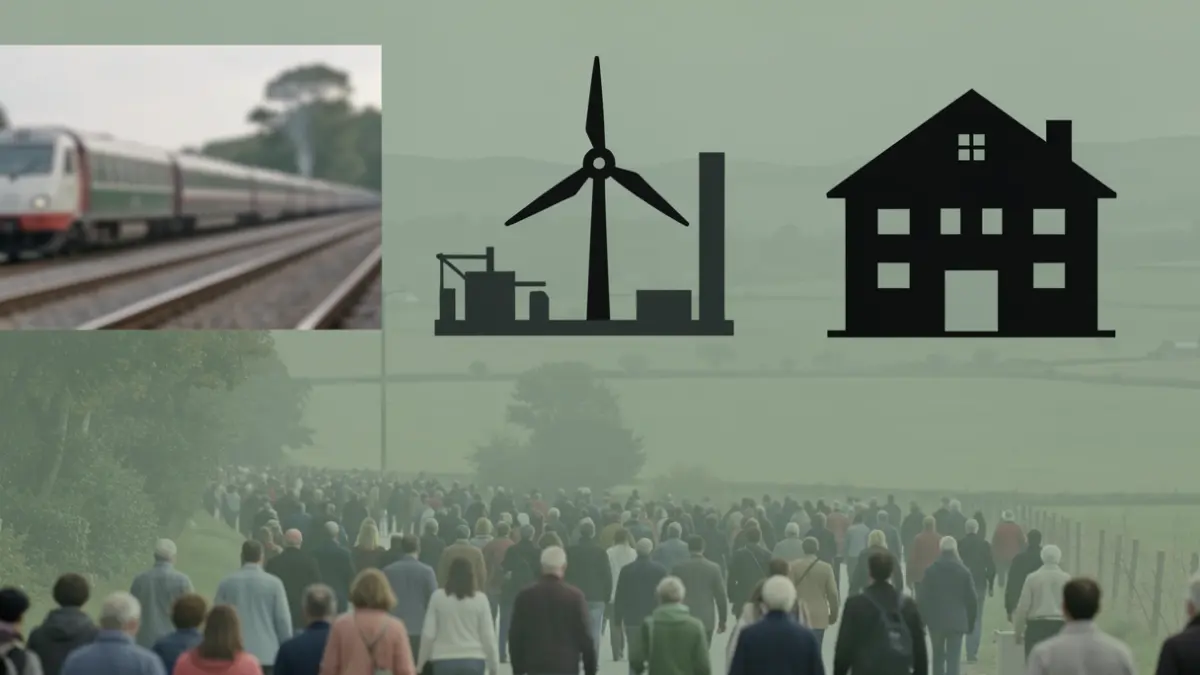
Across the territory of Gipuzkoa, virtually every strategic project initiated, from infrastructure to new housing developments, has led to the emergence of platforms and associations aiming to halt its progress. The 'nimby' ('not in my backyard') phenomenon, describing the stance of those who support necessary projects but oppose their construction near their own environment, is evident across various sectors.
The High-Speed Train (TAV) has been a focal point of social contention since construction began in 2006 in Álava and 2008 in Gipuzkoa (Ordizia). Peaceful protests have occurred, alongside threats and sabotage, tragically culminating in the assassination of constructor Inaxio Uria by ETA in 2008 in Azpeitia.
Other projects have also carried a human cost. The Leizaran Highway saw four fatalities and nine injuries, after environmental protests intensified with the involvement of ETA, which succeeded in altering the initially planned route.
The underground variant of the Topo line through central Donostia has taken over from the TAV in mobilizing certain social movements. While no objections were filed during the project's consultation period, protests emerged as the initiative progressed.
The Zubieta incinerator project was halted between 2011 and 2015, during Bildu's governance in Gipuzkoa. For years, waste had to be transported out of the territory at a significant cost. It opened in 2020, and waste is no longer a major issue.
Euskadi aims to maximize recycling, including its industrial waste. However, two projects in Gipuzkoa have already failed: one for plastic recovery in Zumarraga and another for paper pulp in Bergara.
Out of a dozen wind farm projects that have appeared in Gipuzkoa in recent years, none have materialized. Five are cancelled, three are under appeal or objection, and four are in the process of being approved with uncertain futures, facing social rejection in the municipalities where they are planned.