In the La Calera river, within Lanestosa and extending to the border with Cantabria, work has been carried out over a 2,364-meter stretch, covering an area of 676 m². Additionally, interventions have taken place along the Ballonti river, on both the right bank in Ortuella and the left bank in Portugalete, focusing on a one-kilometer section around the "rotonda de los tubos" (roundabout of the pipes), treating 283 m². These efforts have continued downstream towards the Nervacero facilities.
The objective is to eliminate invasive species and subsequently re-vegetate with native riparian plants. A review will be conducted at the end of the year to determine if further work is needed. The tasks are considered complete when the invasive species is eradicated or under control, achieving adequate coverage by native riparian species.
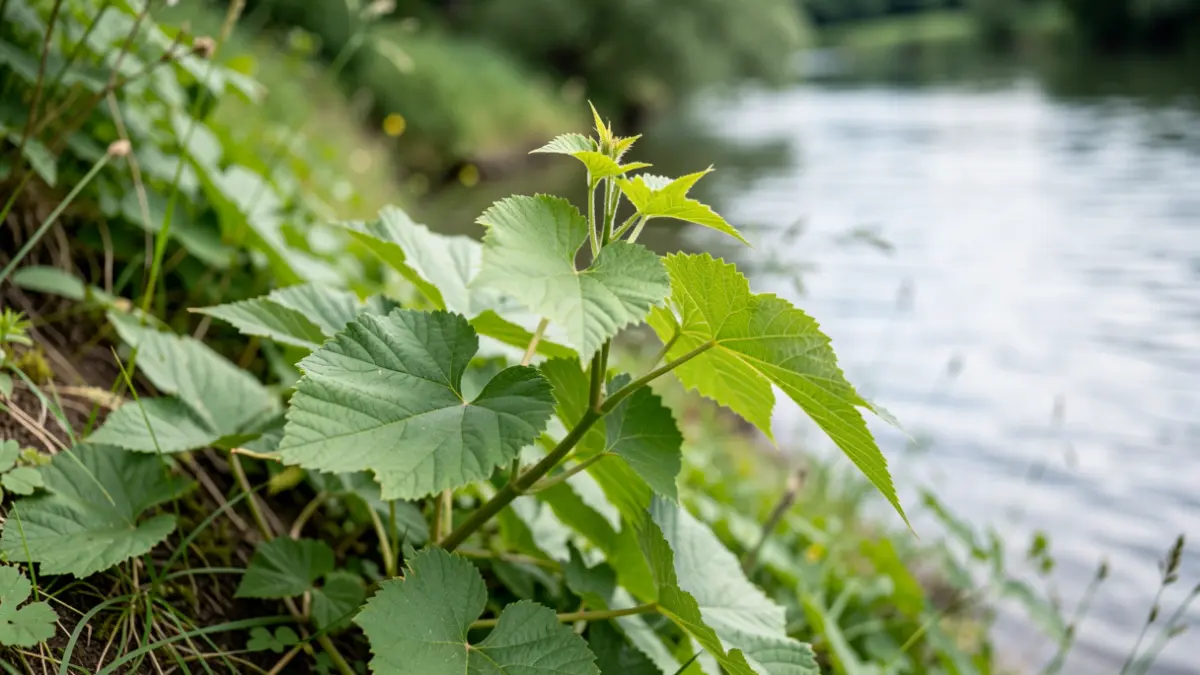
Fallopia japonica, commonly known as "Japanese knotweed," is an invasive plant with a high capacity for expansion, particularly in riverine environments and altered banks. It can reach several meters in height and develops an extensive rhizome system, making eradication challenging. It is considered one of the most aggressive plants in Euskadi's rivers, forming dense stands that displace native vegetation, disrupt riparian ecosystems, and rapidly colonize riverbeds and margins.
The control of invasive species is part of URA's routine environmental maintenance tasks on the river network, aimed at preserving the good condition and ecological functionality of rivers. These actions are integrated into URA's overall strategy for the conservation, restoration, and environmental improvement of river courses.