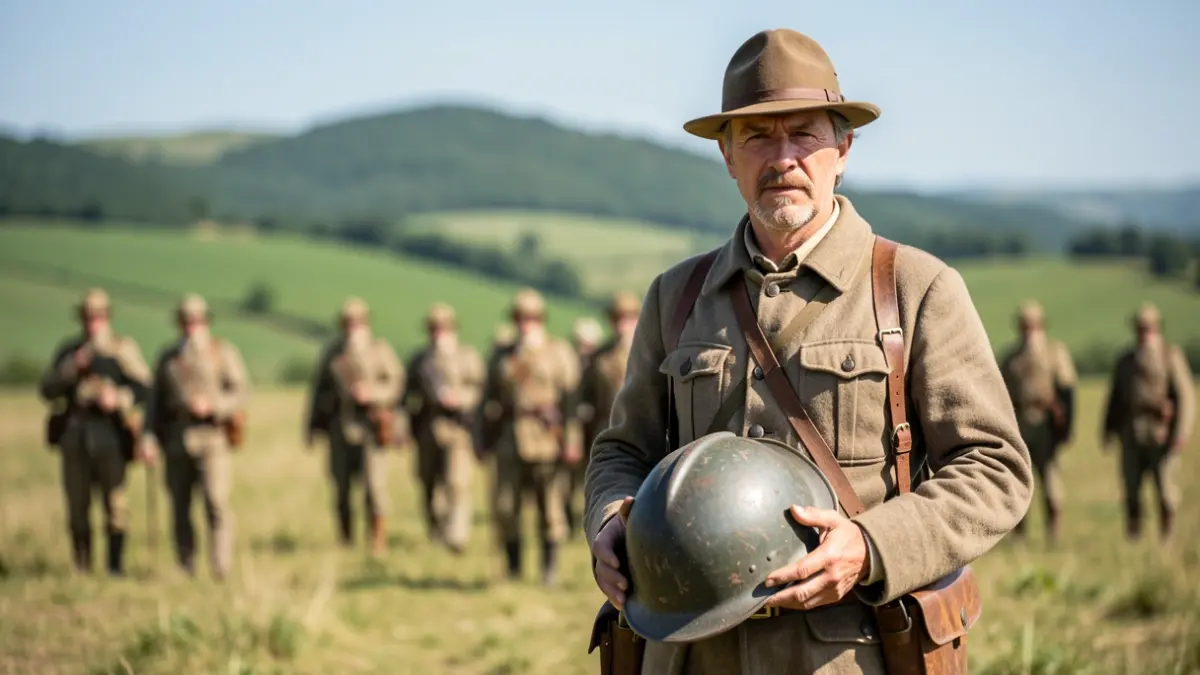
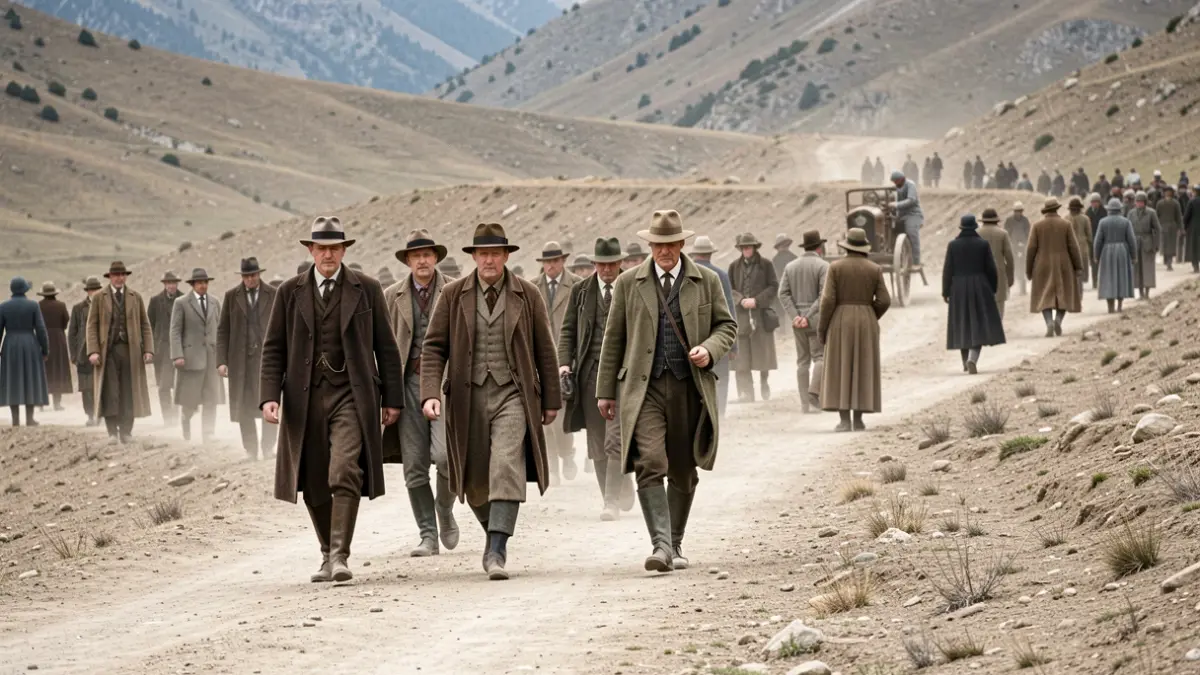
As they rounded a bend, a militiaman halted the forty people marching in single file. Amidst surprised exclamations, they stopped to regain strength while he activated a time machine. “There were no trees here, it was all bare because with vegetation a bomb could have started a fire,” explains Patxi, the alter ego of Jesús Pablo Domínguez Varona, an investigator from Aranzadi and promoter of the blog Crónicas a pie de fosa. The journey into the past halts in the summer of 1937, when the Civil War front threatened to descend upon Enkarterri after the fall of Bilbao to the Francoists, “precisely, on a day like today, June 19th,” notes Janire Rojo, a guide at the Museum of Encartaciones.
Participants in the tour stepped into the shoes of those who tried to defend the region “from the mountains,” clearly disadvantaged in terms of personnel and resources. To do so, they undertook a walking route to the so-called Cabezamonte-Bezi sector, in Sopuerta, where the remains of the deceased are still being sought.
Previously, at the Casa de Juntas de Abellaneda, Janire Rojo had contextualized how the proclamation of the Republic on April 14, 1931, resulted from widespread discontent and introduced “agrarian reforms, army professionalization, the proclamation of autonomies, and secular, public, mixed, and compulsory education,” among other measures. Meanwhile, a marked division persisted between cities where the new regime achieved an “overwhelming success” and the countryside where “the monarchy held significant weight, and one must also consider the influence of nationalism and that we had just emerged from the Carlist Wars”.
While Europe witnessed the rise of fascism and Nazism and “an absolute terror of Russian communism,” from 1933 onwards, a governmental shift occurred in Spain towards more conservative positions. Social polarization exploded with the military coup of July 18, 1936. The Basque Government sided with the Republic and began to mobilize.
The breach of the Iron Belt and the capture of Bilbao marked the turning point that Enkarterri feared: the conflict “shifted within days to the westernmost part of Bizkaia.” On June 21, 1937, Zalla, a transit point for tides of refugees, suffered bombings that killed dozens of residents. In their memory, at 12:00 PM, a floral offering will be laid in Plaza Euskadi, and an air-raid siren will sound, similar to those that then alerted the population to the urgency of running to shelters.
“A real chaos”
"You can imagine a Republican front with different battalions attached to different political parties, each with different rifles and ammunition. It was a real chaos. In fact, the rebels didn't capture them. At most, they destroyed them, but they weren't useful,” describes Varona. To the Cabezamonte-Bezi area, “the Santander brigade was sent, and later quite dissolved Basque brigades”.
Firstly, the Nationalists “took Larrea; if they managed to advance, they had the road coming from Balmaseda, so it was very important.” The objective was “to encircle Sopuerta and punish La Garbea, which was a Republican position.” Here, “medium-battery cannons were brought up; we know they fired towards the La Riva school, which had become a communications center, so there was a fifth column informing them where to attack”.
During the surveys, “we have found a quantity of war material: buttons from the regular rebel army, fired bullets, unfired bullets...” In fact, when hostilities ceased, “an order was issued prohibiting climbing for three months.” To conclude the itinerary, he shows some items, from helmets to emblems or a plate and spoon that humanize the horror: “To be told: go out there and take the mountain, often prisoners forced to fight for the opposing side...” And often the tragedy extended beyond the front lines; payrolls served as a vehicle to unleash repression in “trials or executions”.
Jesús Pablo Domínguez Varona is part of the memory table of Ortuella, which visits schools with an educational unit where the militiaman Patxi himself details what happened “so that what is happening now with the youth doesn't happen, those comments that life was better under Franco, viva España and little flags, we try to tell the truth”.