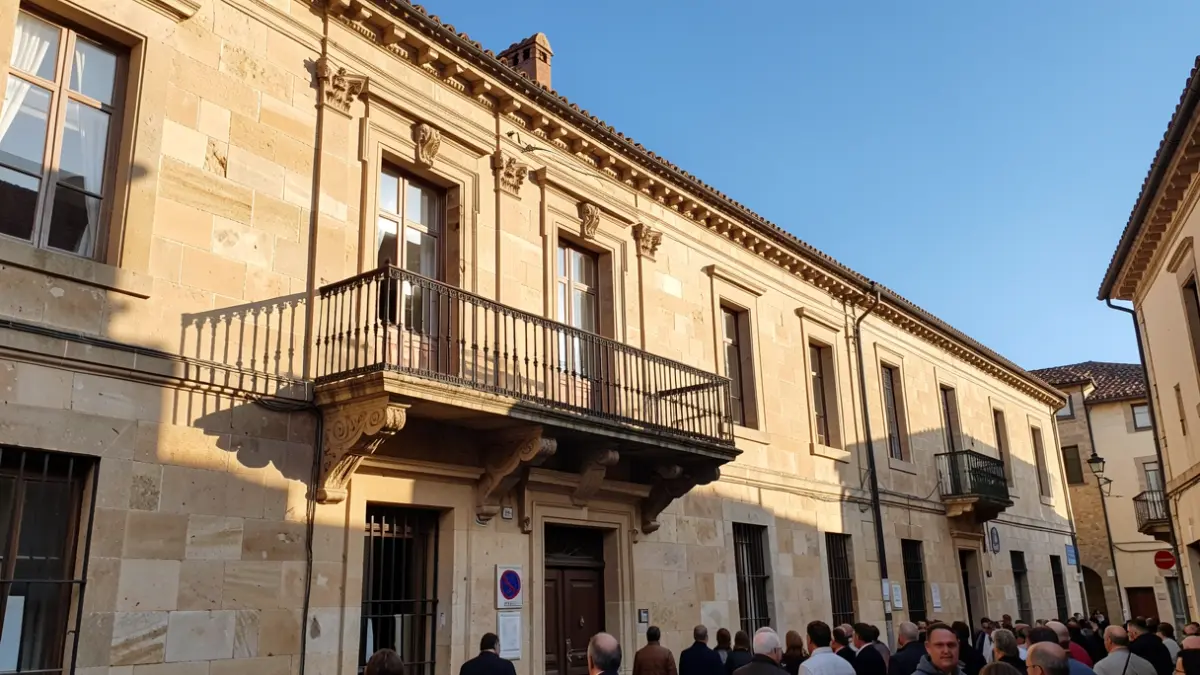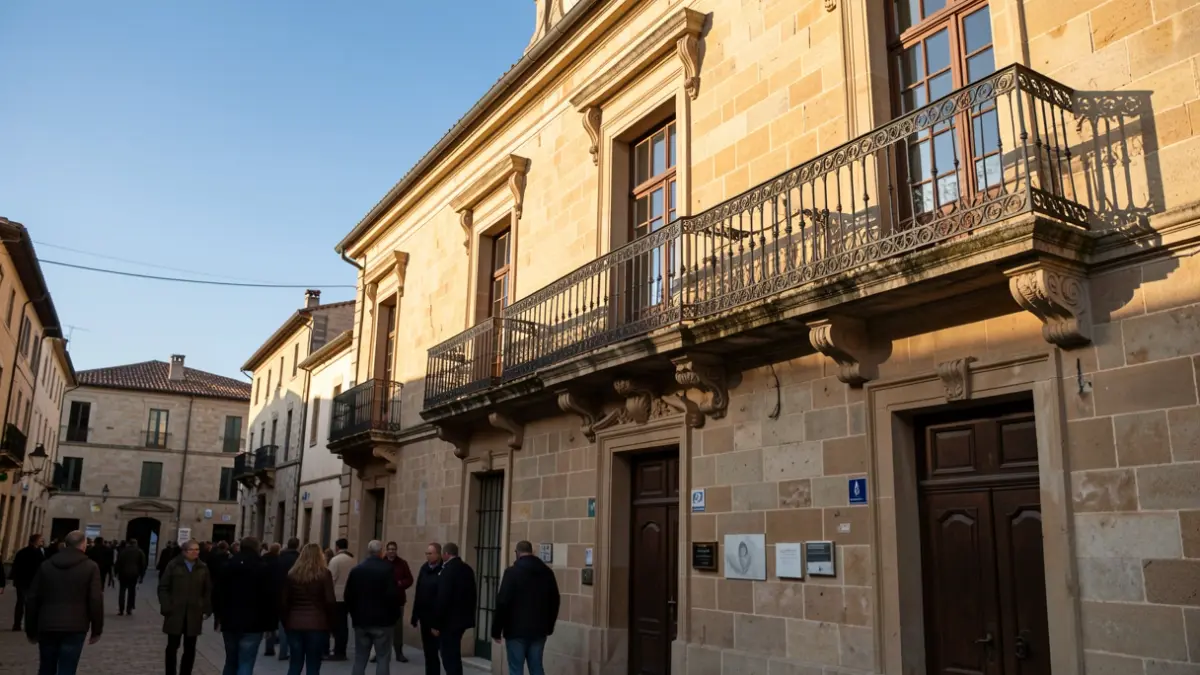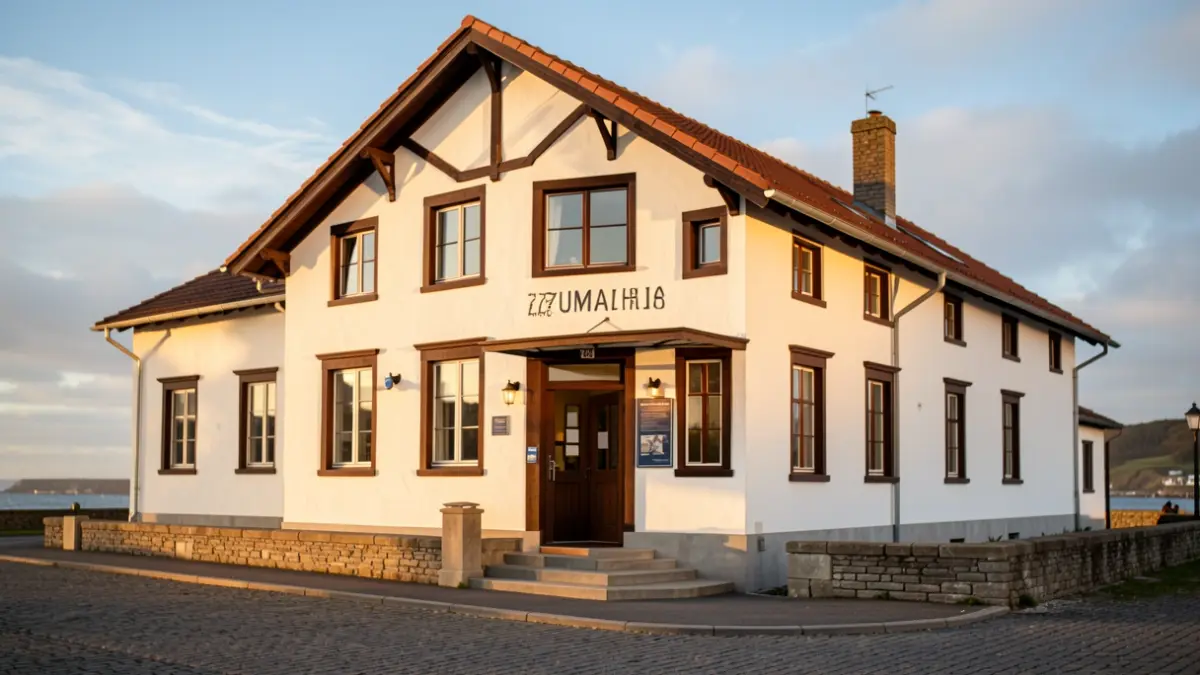
Where the Gernika park now stands, it was once a commercial pier where materials from the Urola valleys were loaded. In that context, with the launch of the Urola train, the train station was built a century ago in Moilaberri. Later, it served as the Zumaia Health Center, and now, after decades of being empty but protected as heritage, the building is given a third life: it will house the Zumaia Tourism Office and a museum showcasing historical passages of the town.
The official inauguration of the building took place this midday. The event, in addition to institutional representatives, invited former users of the old station. "When it was a station, people lived there, even gave birth, and we wanted to invite them. Also doctors, nurses, and administrative staff from when it was an outpatient clinic," explained mayor Iñaki Ostolaza. The event was enlivened by the music of local accordionist Maria Zubimendi.
Esti Irureta, tourism technician for the Zumaia City Council, recalled the establishment of the Tourism Department 25 years ago and expressed the excitement the move to this new building brings, even though the office has always been located near Moilaberri. She emphasized that the office serves not only visitors but also local residents, defining the emblematic building as a home that "citizens cherish".
Mayor Iñaki Ostolaza thanked the institutions that helped finance the renovation, the departments involved in the project, and the associations that contributed to the museography. He highlighted the goal of giving a third life to a building that, in its 100-year history, has been a station and a health center. "In its time, it was the gateway station to Zumaia, offering the first contact, and we felt it was appropriate to move the Tourism Office there as well," he stated. He added that the building is intended not only to serve visitors but also to be a "meeting point for citizens".
On the ground floor, information points have been set up for both visitors and residents, offering information not only about Zumaia but also about the valley and the Geopark, and inviting participation in other local services, such as the Flyschenea service being prepared in the old slaughterhouse.
On the first floor, a museum has been created to showcase Zumaia's industrial heritage. "Both those who come from outside, and locals, should know where we come from, what Zumaia's character is, and where we are heading," the mayor concluded.
Azahara Dominguez, Deputy of Mobility, Tourism, and Territorial Planning for the Provincial Council of Gipuzkoa, described the day as "an important day" for Zumaia and the entire Urola Kosta region. She pointed out that tourism offices are "our presentation letters," the "first doors visitors encounter." She also recalled that tourism is a key economic sector, employing 40,000 people in Gipuzkoa.
Javier Hurtado, Minister of Tourism, Commerce, and Consumption of the Basque Government, expressed his satisfaction at having witnessed both the beginning and the end of the project. "In politics, we rarely see the start and finish of some projects," he said. He recalled that the project has been financed in part by the European Union's Next Generation funds.