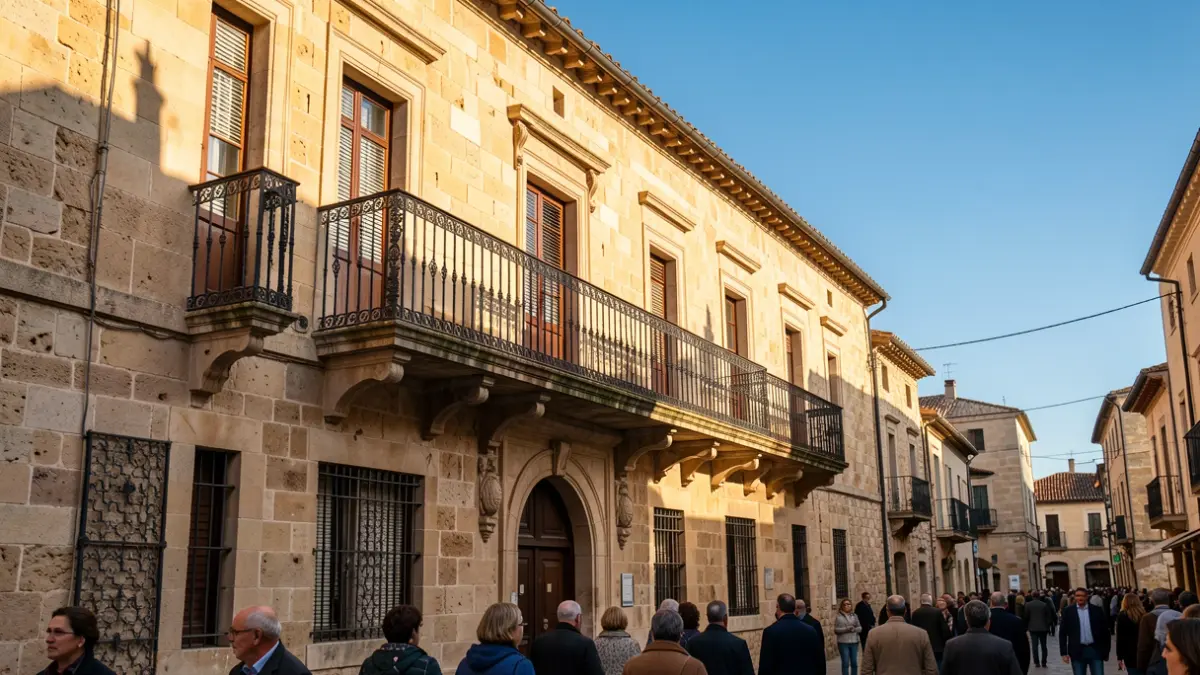
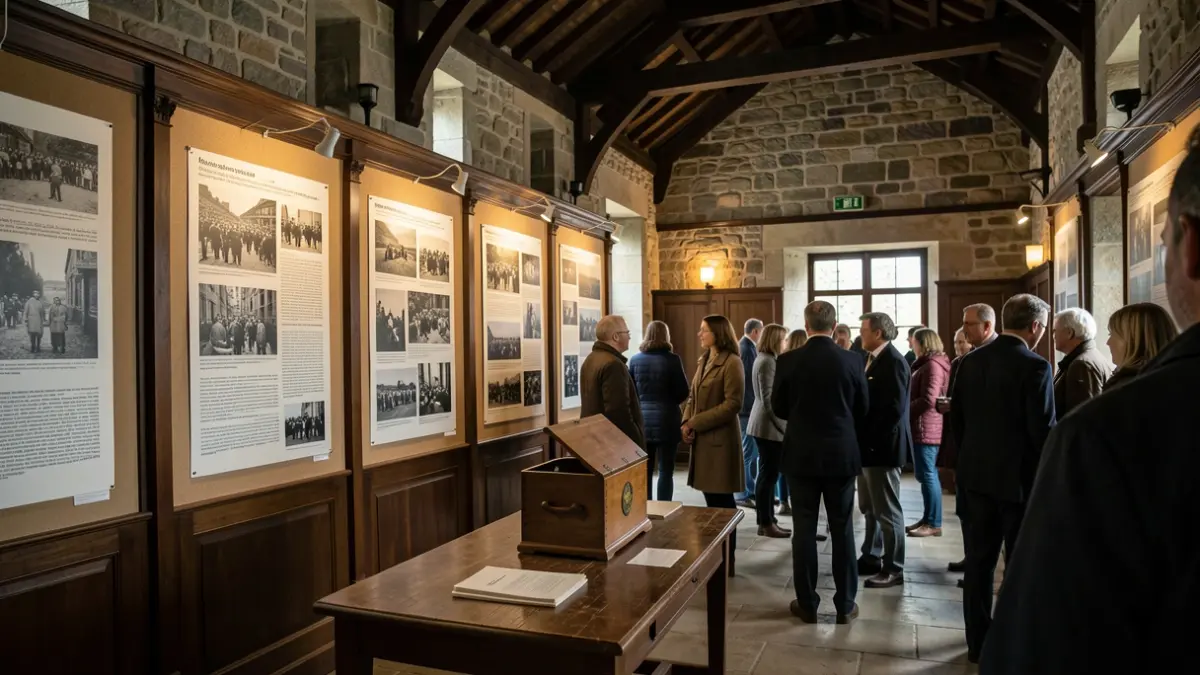
The Azpeitia City Council today opened the exhibition 'Women Repressed by Francoism: The Gipuzkoa Case' at the Foru Ibilbidea exhibition hall, which will be on display until September 27th. It is a work jointly developed by the Aranzadi science society and the Provincial Council of Gipuzkoa.
Along with the exhibition, two guided tours will be offered: on Thursday, at 5:00 PM, and on the 24th of the month, at 6:00 PM. Participation requires prior registration by filling out the form available at the following link.
The Azpeitia City Council and the Aranzadi science society have been collaborating on historical memory research since 2013. Within this agreement and linked to the Historical Memory Day, the exhibition has been organized. The mayor of Azpeitia, Nagore Alkorta, emphasized during the presentation that history has often been told from a male perspective, rendering women invisible, and highlighted the importance of addressing the gender perspective in historical memory.
The exhibition originates from the study 'Women Repressed by Francoism: The Gipuzkoa Case' published in 2023 by Ione Zuloaga, which examines the repression between 1936 and 1945. Javier Buces, a researcher at Aranzadi, noted that it is the first study at the Euskal Herria level to consider an entire territory.
The exhibition, however, covers the period up to the end of Francoism, until 1975. It is divided into four parts: the first contextualizes the historical period (between the World Wars and the II Republic) and the rights achieved by women, recalling that fascism annulled them.
The remaining three parts recount the repression suffered by women in different stages of Francoism: the "brutal cruelty" during the war, the indirect repression in the "dark post-war years," and Franco's response (torture, prison, murder) to the rise of antifranquism from the late 1960s to 1975.
To facilitate understanding, various elements and testimonies have been put on display. Buces explained that history often forgets that there are people with names and surnames behind it. Therefore, a ballot box and some forms have been placed in the first section of the exhibition, allowing visitors to report on repressed women and for Aranzadi to collect testimonies.