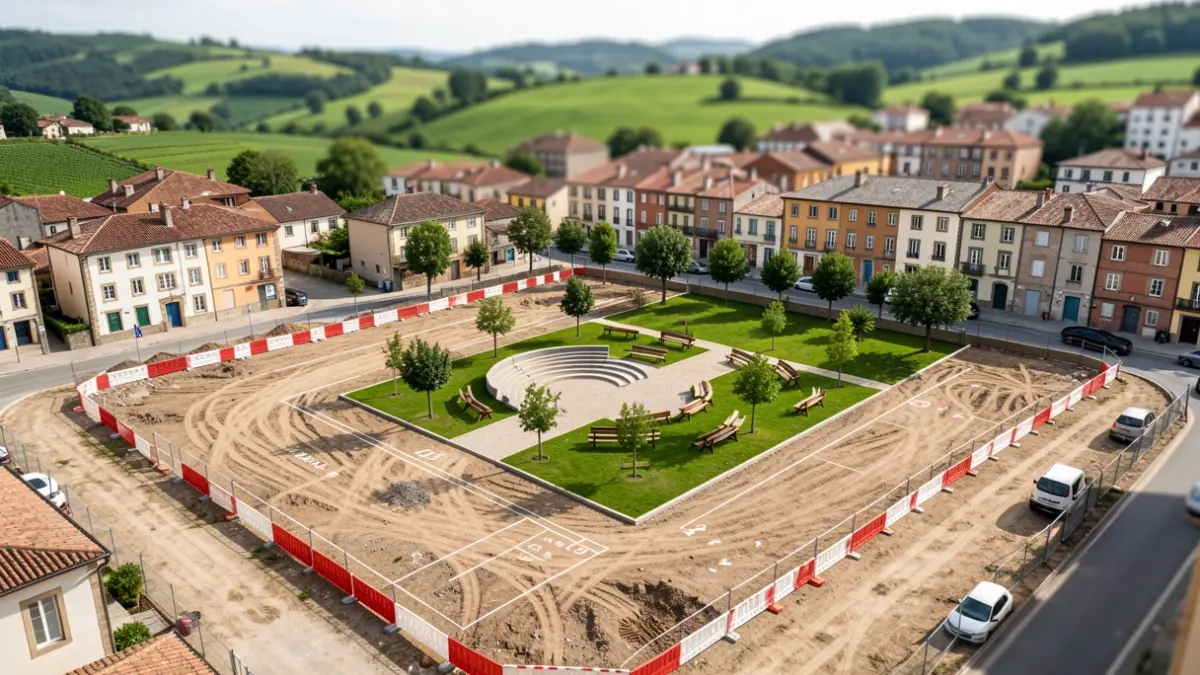
The void left by the demolition of the old Landarte building, next to the Municipal Conservatory and the old train tracks, will be transformed into a new green area with seating spaces and a small open-air amphitheater. The Durango City Council has approved a project budgeted at 83,707.72 euros, which will reclaim this urban area by creating pedestrian zones, garden areas, new furniture, and improvements in accessibility and lighting.
This action represents the final step in completing the development of the UE-7 Azoka-Montevideo Execution Unit, an urban planning area whose processing has spanned over twenty years and has progressively transformed various surrounding spaces. Once the objection period concludes and final approval is granted, works can be put out to tender from June, with commencement scheduled for next autumn. The execution period will be five months.
The intervention will focus on the so-called Zone D, located between the Municipal Conservatory and the old railway line. The objective is to integrate the space freed up after the demolition of Landarte with the future greenway being established over the old train tracks, creating a more pleasant environment for strolling and citizen gatherings.
One of the project's most notable features will be a central small square designed as a mini open-air amphitheater. This space will accommodate small-format cultural activities such as theatrical performances, concerts, poetry recitals, or film screenings.
Additionally, new sidewalks and pedestrian routes will be created, deteriorated pavements will be renovated, and seating areas will be established within the green space. The project also includes the installation of wooden and cast-iron benches, prefabricated concrete benches, litter bins, and new signage, reusing existing elements in good condition whenever possible.
The initiative will also involve the reorganization of various urban services, including the electrical ducting for Iberdrola, the relocation of connections to the new cabinet of the Municipal Conservatory, and the installation of public lighting in both the perimeter and garden areas.
The proposal reserves a significant role for gardening. The planting of four Liquidambar styraciflua specimens is planned, along with various shrub species, and the addition of topsoil to condition the ground. Concurrently, specific measures will be taken to protect existing trees during the works.
Accessibility will be another key focus of the project. Pedestrian routes will be designed with compatible gradients, non-slip pavements, and solutions to overcome changes in elevation without obstacles, ensuring comfortable and accessible journeys for everyone.
With this initiative, Durango will definitively close one of the remaining pending pieces of the Azoka-Montevideo urbanization, giving a new public utility to an empty space and strengthening the connection between the future greenway and the surrounding cultural facilities.