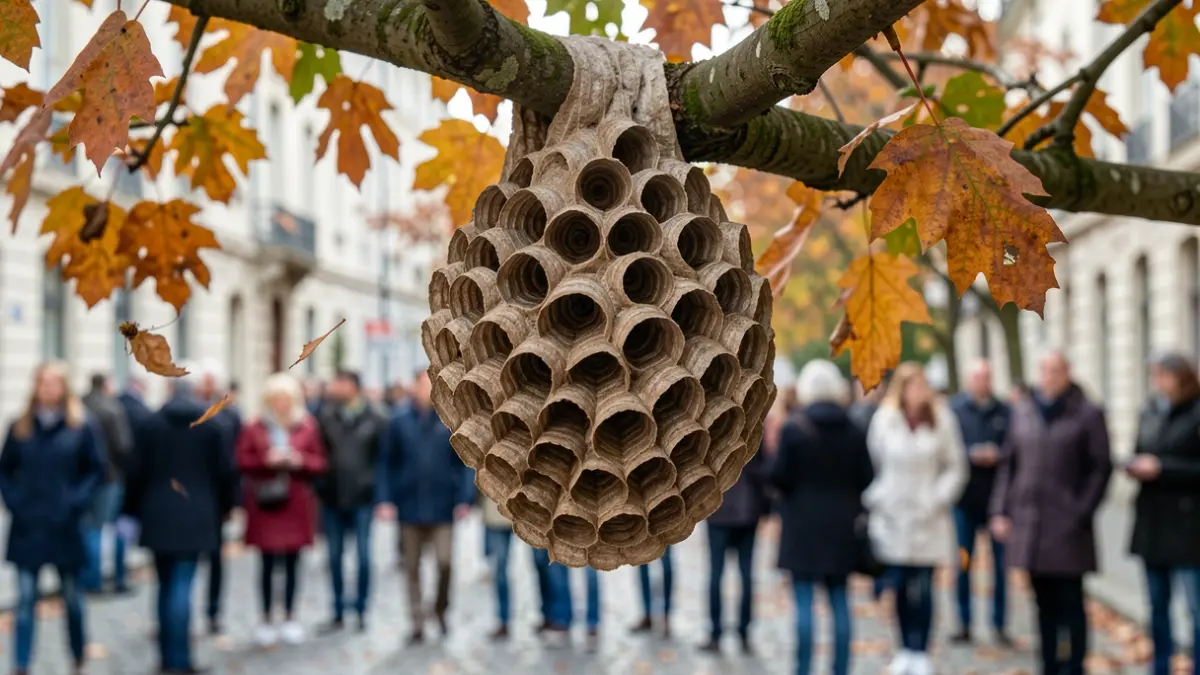
The Amezketa Town Council has requested residents to pay attention to the presence of the Asian hornet (Vespa velutina) and the European hornet (Vespa crabro). So far this year, fourteen nests of the Asian hornet and four nests of the European hornet have been deactivated in the municipality.
The council explains that as trees begin to lose their leaves, the nests are becoming more visible. The insects are preparing for winter and are currently creating the queens that will emerge next spring. Therefore, they indicate that this is a suitable time to act against the invasive Asian hornet.
This year's campaign has a greater impact. Measures began following a request from local beekeepers. Although traps placed in the spring yielded good results, experts suggest the hornet population has significantly increased.
While the Asian hornet is an invasive species, the European hornet, despite being native, can be dangerous to humans. Its presence and that of its nests are increasingly encroaching on human habitats, roads, and gathering places. Several residents have reported significant scares.
In this regard, the council urges residents to report any nests they find to the town hall. The council has a protocol for registering and deactivating nests, emphasizing the necessity of public cooperation to achieve effectiveness.