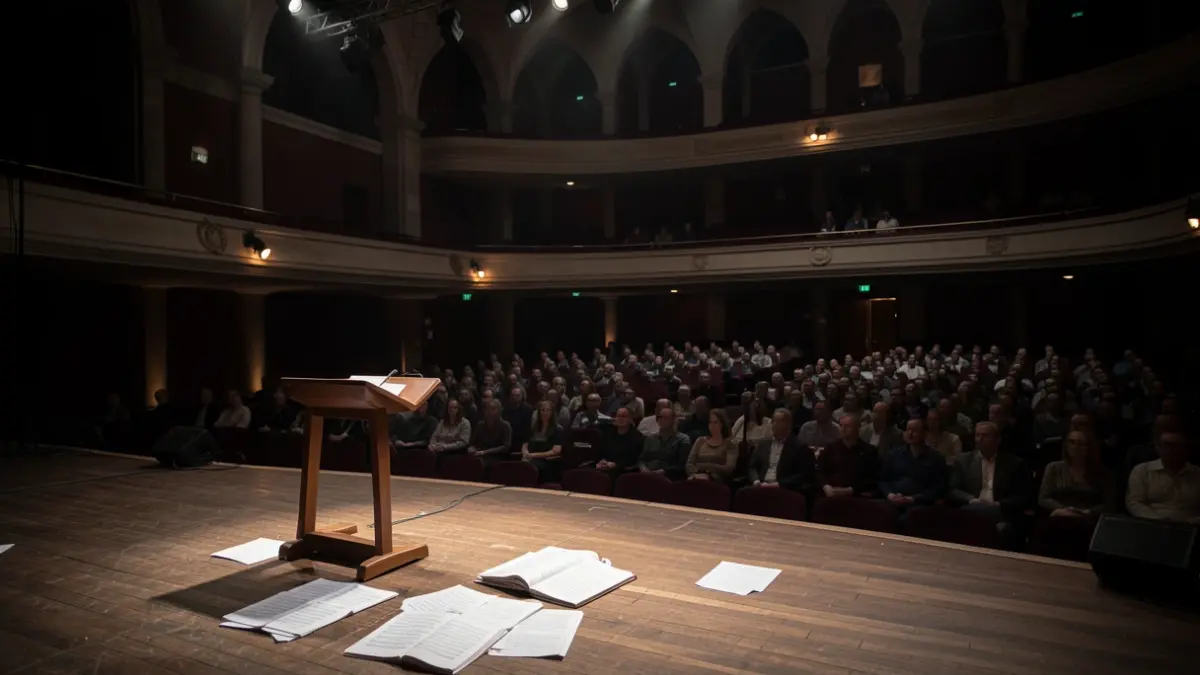

Transis Lab is a cross-border living lab for social innovation focused on longevity and intergenerational solidarity, spearheaded by the Department of Welfare, Youth, and Demographic Challenge of the Basque Government and co-financed by the European Interreg Poctefa program. Its mission is to design, experiment, evaluate, and transfer new solutions and tools that promote more autonomous, connected, and fulfilling lives throughout the entire life course.
At the IV Transis Lab meeting, held today in Donostia (Tabakalera), the results and learnings from this social innovation project for longevity, developed between 2024 and 2026 in Euskadi, Navarra, and the French Pyrenees, were announced. The work involved 165 elderly participants from 12 localities: Laguardia, Muskiz, and Aginaga (Euskadi), Sakana Valley (Navarra), Orthez, Garazi, and Urruña (French Pyrenees), and Haut-Adour and Val d'Adour (Hautes-Pyrénées).
Using the digital tool FRAGILAB, the participants' fragility was assessed based on their health, available support, activities, social connections, mobility, accessibility, and access to services. The initial global fragility index was 26 points, which dropped to 23.2 after the intervention. Access to municipal support services improved significantly, moving from 74.5% to 34.5%. Additionally, perceived well-being indicators such as not feeling sadness or loneliness improved from 55% to 65%, and satisfaction with social support increased from 73% to 80%.
“"The value of this tool lies precisely in connecting the assessment of fragility with agreed-upon support tailored to each individual. Its purpose is for what is learned to translate into better support and more opportunities for living well. It represents progress towards more personalized, preventive, and proximate care."
The current objective of the Transis Lab network is to build upon the knowledge generated by the pilot experience and facilitate its use in new interventions and public decisions. Among other actions, 5 guides have been developed for utilizing this knowledge.
“"Detecting fragility is only useful if it is followed by a comprehensive response like the one Transis Lab provides. Social services in Euskadi have transitioned from detection to prevention, and an example is betiON, which has evolved from detecting falls to allowing users to book appointments for flu vaccinations."
According to Larraza, well-being is not solely constructed by social services; it requires connections, a sense of belonging, a home, or employment. He added, "We must approach it with shared responsibility and it is our duty to work collaboratively and integrate this well-being."
The Transis Lab network is structured through a consortium of administrations and innovation agents from Euskadi, Navarra, and New Aquitaine, including the Basque Government, Government of Navarra, Département des Hautes-Pyrénées, University of Deusto, Garaian, Eusko Ikaskuntza, Zabalduz, and Gérontopole Nouvelle-Aquitaine, among others.