In Usurbil, in an effort to recover the impact of the Spanish Civil War that began on July 17, 1936, the association 1936ko Usurbil has organized a route. This group was founded five years ago with the aim of restoring the municipality's memory and investigating, documenting, and disseminating events related to the war.
The association, established in 2021 under the slogan Izan zinetelako gara (Because you were, we are), has been analyzing municipal archives and collecting testimonies from individuals who participated in the war and their family members. They have also conducted guided tours and events to shed light on the injustices that remained hidden and silent in Usurbil for years, always ensuring the paths of human rights, respect, reparation, coexistence, and justice.
The most recent guided tour took place in June and was the first conducted in Spanish. Although they will not have further events in August, they plan to hold a guided tour on September 6, titled War Memory Route: Anniversary of the Coup Occupation in Usurbil, starting at 11:00 AM in Mikel Laboa square.
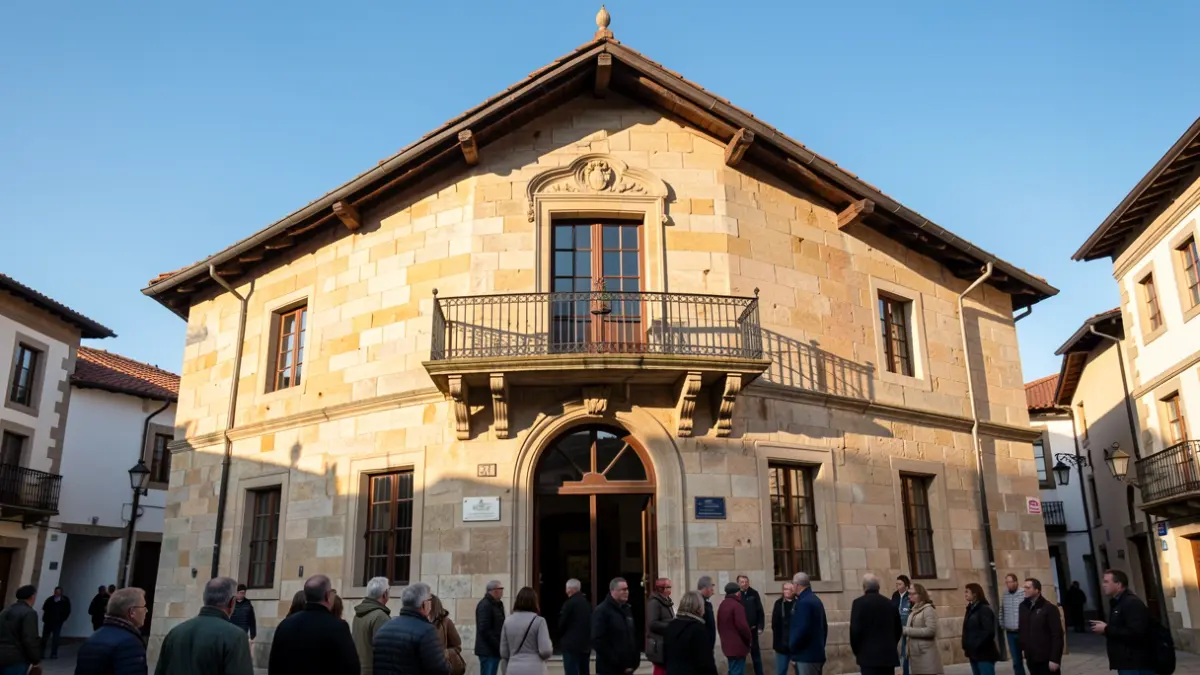
Today's Usurbil has a strong connection to the municipality during the civil war. For this reason, the association 1936ko Usurbil has prepared a route called Herriguneko memoria (Memory of the Town Center), divided into eight points. These locations include: Kontzeju Txiki, Frontoia (the pelota court), Saroe jauregia (Saroe Palace), Olano etxea (Olano House), Askatasuna plaza (Freedom Square), Bolatokia (bowling alley), Sutegi, and Udaletxea (Town Hall). Thanks to QR codes placed at each point, the route can be completed independently.
The route begins at Kontzeju Txiki, which was once the headquarters of the PNV (Basque Nationalist Party). Several events occurred here, both on the eve and during the war. For instance, they were forcibly entered and money was stolen in February 1936. On September 12 of the same year, as the coup forces were about to take the town, a PNV member was wounded by gunfire. After the coup troops entered Usurbil, this headquarters, a meeting point for nationalists, was occupied by the Carlists of the Traditionalist Communion.
The second stop is the town's pelota court. Citizens gathered here to organize Usurbil's defense and provide logistical support to the fronts in the Bordatxo and Andatza mountains. At that time, the Mixerikordia building, located to the right of the pelota court, was a Hospice where several wounded individuals were treated.
Saroe Palace is the third stop on the route. It belonged to the Murua family, but when the conflict broke out, they fled their home, and the Republican militias established their barracks there. On September 12, 1936, a forest ranger named Jose Barrenetxea from Hernani shot and killed communist militiaman Cesareo Martinez in the palace's garden. Immediately after, the Republicans stationed at the barracks killed the assailant. When the coup troops captured Usurbil on September 18, Saroe Palace became their operational center for several weeks.
After passing by Olano House, the next stop on the route is the area above the bowling alley. From here, Mount Andatza is visible, where a combat front composed of trenches existed to defend San Sebastián and obstruct the fascist advance from Buruntzaldia. Direct confrontations occurred from late August to September 16. For two weeks, fierce fighting took place, with 19 deaths and 55 wounded documented so far.
The association has also prepared routes for Mount Andatza. In 2022 and 2023, a team of archaeologists carried out restoration work on the trenches, and the discovered materials can be found in the Sutegi Hall. Additionally, several trenches were restored, and the Andatza Memory Route was signposted.
The route concludes at the Town Hall. On September 17, 1936, at 4:00 PM, the column led by coup commander Antonio Sagardia Ramos entered Usurbil, and a municipal council favorable to the fascists was appointed.