This publication, driven by Sanpedrotarra Arraun Elkartea and the Pasaia City Council, is the 11th volume in the municipal Sorginarri collection, dedicated to the municipality's history and heritage. It offers an extensive journey through more than 150 years of rowing tradition in Pasai San Pedro.
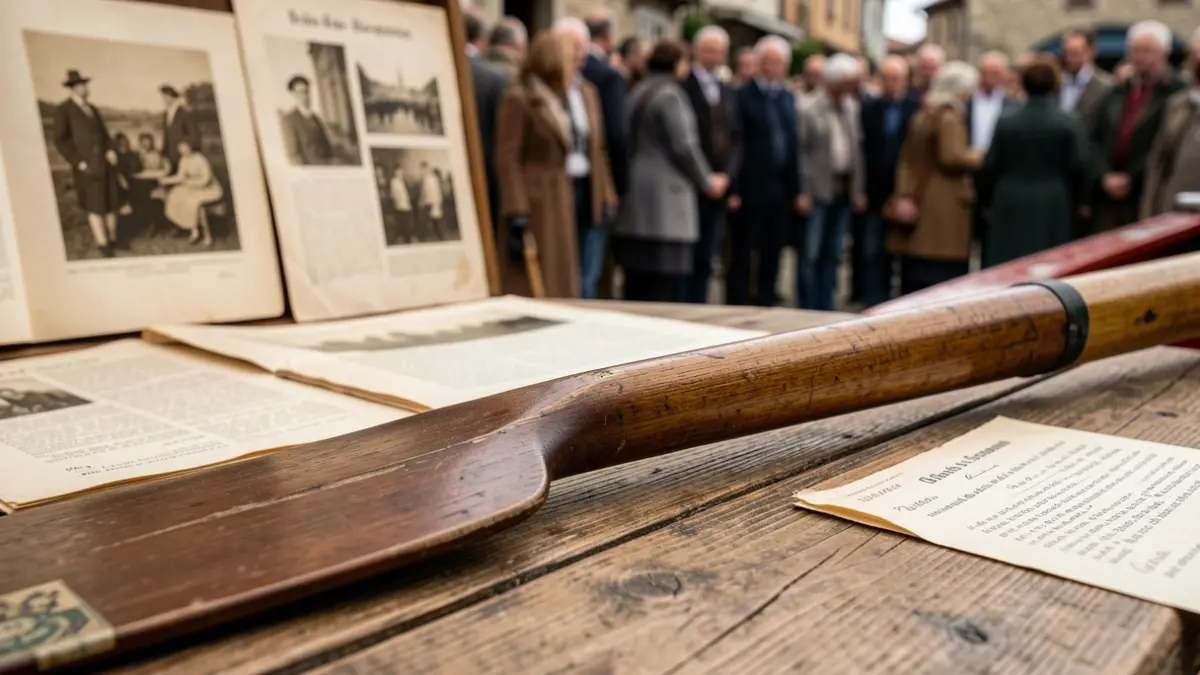
The book reconstructs the local rowing history using testimonies from rowers, chronicles of regattas published in the press and specialized magazines, as well as bertsopaperak (Basque poetic verses) and various historical documents related to the lives of fishermen and the social evolution of the town. The result transcends the purely sporting realm to become a portrait of Pasai San Pedro's collective memory.
The publication highlights the role rowing has played in shaping the town's identity. For many generations of Sanpedrotarras, this discipline has been more than just a sport, becoming a primary symbol of belonging and community cohesion.
Indeed, between 1876 and 2020, Pasai San Pedro's boats won numerous regattas and flags, many of which are featured in the work. Many of these trophies are currently preserved in the display cases of the Sanpedrotarra Arraun Elkartea social headquarters.
Beyond the list of victories, the book also champions the importance of continuous participation in competitions since the late 19th century and the effort made to build a solid sporting structure around rowing, an activity closely linked to the town's maritime history and character.
The work divides the history of Sanpedrotarra rowing into two main periods: the first, from 1854 until the outbreak of the Civil War in 1936, featuring the prominent figure of Aita Manuel; and the second, from the mid-Franco era to 2020, starting from the founding of the rowing club in 1958.
In this latter period, the figures of Julián Osa Arrillaga and Juan Carlos Fontán Tolosa, coach and skipper respectively, particularly stand out. The contribution of Patxi Aranzabal Aginagalde is also highlighted, whose work as a sports doctor helped introduce new methodologies into the club.
The author of the publication is Imanol Urdanbide, who collaborated with Sebastián Cano. Editorial coordination was handled by Xabier Baztarrika, while Begoña Olaskoaga, Agustín Osa, José Ignacio Elortegi, Eugenio Urdanbide, and Xabier Isasa also participated in the volume's creation, all linked to Sanpedrotarra Arraun Elkartea.
The compilation of historical information was particularly supported by the yearbooks prepared over the years by club members. This documentary work involved, among others, José Enrique Iriarte, Agustín Osa, José Antonio Sanbaudelio, José Manuel Santos, José Manuel Oiarbide, and Ignacio Etxeberria.
The graphic section brings together photographs from various archives and authors, including Alfonso Zarranz, Diaporama Estudio, Kutxa Fototeka, Sebastián Cano, Juan Luis Adrián, Aitor Brion, and different media outlets. The Basque translation and linguistic review were carried out by Aintzane Atela.
The cover reproduces an image of the La Concha regatta course based on a topographic map by Manuel Egitegi. The editorial design and layout were done by Marmol Estudioa, with the collaboration of Aritz Aranburu, while printing was handled by Michelena Artes Gráficas.
The publication's promoters have thanked the board of Sanpedrotarra Arraun Elkartea and the support of the Pasaia City Council, which made the inclusion of the work in the Sorginarri collection possible. The result is a volume that aims to preserve and disseminate a fundamental part of Pasai San Pedro's historical, sporting, and social heritage.