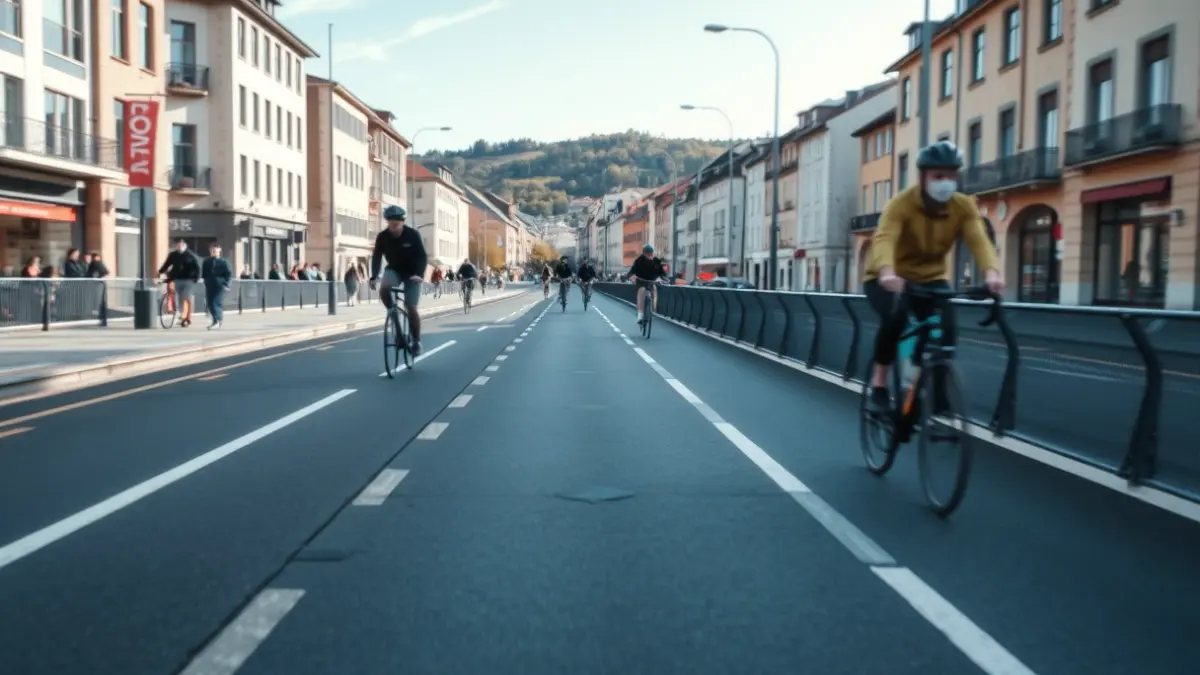
The recently inaugurated bike path on Pelotari street in Astigarraga, intended to reorganize urban mobility, has become a point of political contention. The local executive, headed by EH Bildu, and the opposition group EAJ/PNV, hold differing views on the infrastructure's implementation.
The opposition has highlighted deficiencies in the bike lane's design, claiming it allows vehicles to encroach on cyclist space, creating “risk situations” and traffic confusion. They have pointed to technical disagreements during the project's processing, referencing the municipal architect's stance, and accused the government of prioritizing political criteria over safety considerations.
“"One cannot play with safety."
The EAJ/PNV's concerns also extend to the daily use of the bike path, particularly by students who will use it for commuting to the future institute. The group has called for an urgent review of the design to correct problematic areas. Furthermore, they have warned about the economic impact on local businesses in Kale Nagusia and Pelotari Kalea due to the construction and new traffic arrangements, urging the Town Council to apply tax breaks for affected establishments.
In response, the municipal government has defended the project's technical soundness, accusing the opposition of creating alarm with “erroneous information.” They emphasized that the project was drafted by a specialized consultancy and involved municipal technical staff, including officials from Urban Planning, Works and Services, and the Local Police. They also noted that the initiative was unanimously approved in July 2025, with the support of EAJ/PNV itself, and meets the required safety standards for such infrastructures.
The executive stated that the works are still in the execution phase, which explains some of the detected dysfunctions. The first phase is expected to conclude within four to six weeks, with a second stage planned for May. They clarified that current signage is provisional and the final configuration will include more comprehensive painting and signage, improving readability and coexistence among users.
The municipal government acknowledged specific errors in the installation of elements like parking barriers but assured these deficiencies would be corrected soon. Additional reports have been requested from the Local Police and municipal technical services for analysis in upcoming committees. Regarding alleged accidents, the government stated that the Municipal Police has no record of any incidents to date and urged the opposition to channel concerns through official channels.