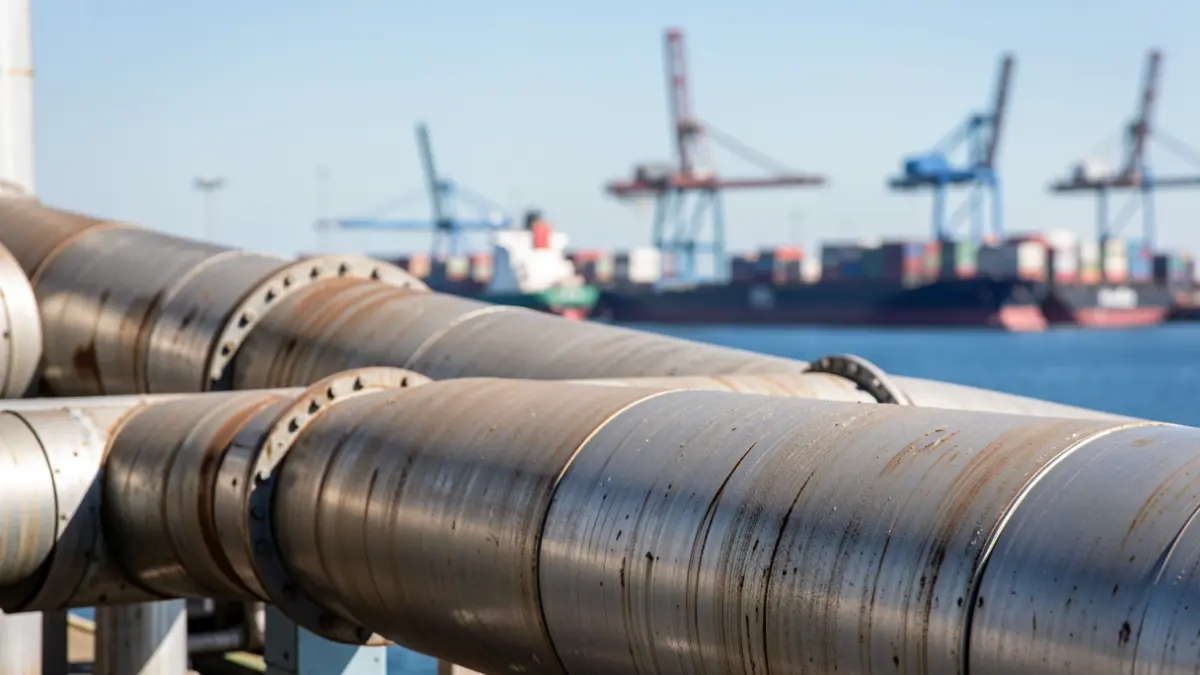
The Port of Pasaia moved more than 1.5 million tons of cargo by May, showing a 7.2% growth compared to the same period in the previous year. This positive trend is largely attributed to a significant nearly 18 percentage point increase in general cargo, with the steel industry regaining its traction role in the Gipuzkoa port.
Puertos del Estado, the state entity managing ports of general interest, reported that the cargo traffic balance for the first five months of the year is positive. This stands out against a national average increase of only 0.3%, with Pasaia registering advances in most of its cargo types.
The most notable increase is in general cargo, whose strong performance is significant as the steel industry maintains its leading position among the port's managed goods. Automobiles are the second most important cargo, but this sector shows a negative trend with a 7.5% drop and 78,088 vehicles handled, reflecting a downward tendency influenced by Chinese competition.
Another cargo type experiencing losses is fishing, with 7,674 tons landed by May, a 22% decrease from the previous year. Similarly, bulk solids, transported unpackaged, have seen a 16% drop in 2026, totaling 356,544 tons moved, though this volume remains the second highest after general cargo.
Anecdotally, data from Puertos del Estado counts four containers for import and export, a traffic that is non-existent in the Gipuzkoa docklands despite previous unsuccessful attempts. Transit cargo is also growing, increasing by 44% to 18,874 tons, despite not being a major component. Additionally, ro-ro traffic, transported on wheeled vehicles, has risen by six percentage points (228,601 tons), and liquid fuel bunkering by 15.2%.
Consequently, the number of vessels arriving at the Gipuzkoa port also increased by 2.4%, reaching 383.