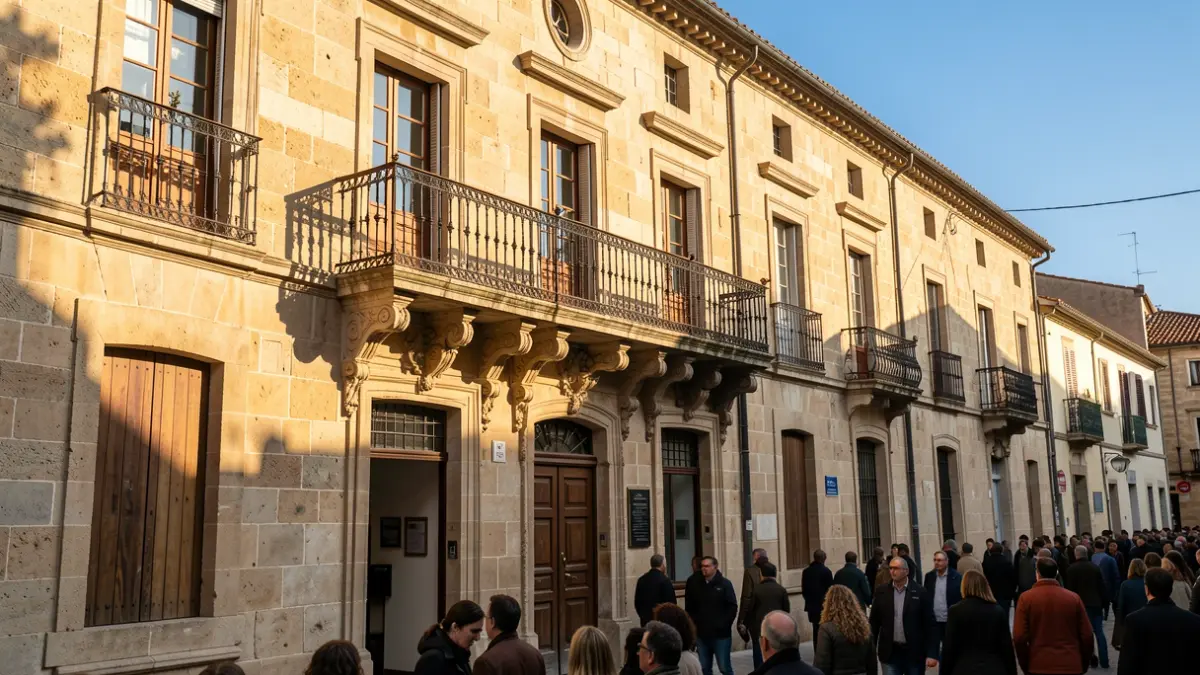
The Pentecost festivities in Bergara will commence this Friday, inaugurating five days of uninterrupted celebration. This year, the festivities introduce a notable change in venues while maintaining their traditional essence. The official opening will take place in Oxirondo square at 8:00 PM, where Bitorianatxo will descend from the Santa Marina church bell tower to announce the start of the celebrations. Lokatza Ziklismo Eskola will be responsible for launching the txupinazo, marking a special anniversary. As night falls, the local band Brigade Loco will kick off the main musical performances.
From Tuesday onwards, the program will offer little respite. Although it retains its usual spirit, some spaces have had to be reinvented due to ongoing construction in San Martín square. However, classic events will still take place, such as the bullfights in the bullring set up in the courtyard of the Real Seminario.
Several organizational adjustments have also been made. The morning bullfights will start an hour earlier, at 8:00 AM. This measure aims to reduce the waiting time between the closing of the txosnas (food stalls) and the commencement of activity in the portable bullring. Furthermore, the traditional Olympiads between groups, held on Monday and which were free for 15 years, will now require a three-euro entrance fee, aligning them with other bullfighting events.
According to the City Council, the introduction of an entrance fee aims to facilitate access to the event and ensure proper capacity control, avoiding the long queues and uncomfortable situations of previous years. In total, there will be seven bullfighting shows, organized by Betizu Zezenzale Elkartea. The program will kick off on Saturday at 6:30 PM with a display of bull-riders, and on Sunday, the bullfights will begin at 8:00 AM, followed by more displays in the afternoon. Monday will feature the XVI Olympiads between groups, and Tuesday will have young bull activities for children.
Behind the bullfighting events, there are also challenges. Last year, the Bergarako Zezenak operation was forced to sacrifice its cattle after a case of contagious nodular dermatosis was detected. Iñigo Almorza acknowledges that the recovery of the livestock herd is complex, having lost 90 heads and only managed to replace about 40, a process conditioned by strict legal requirements. Therefore, the cattle for the Bergara festivities will come from Manzarbeitia (Orozko), Lopene (Zestoa), and Ibiri (Mutriku).