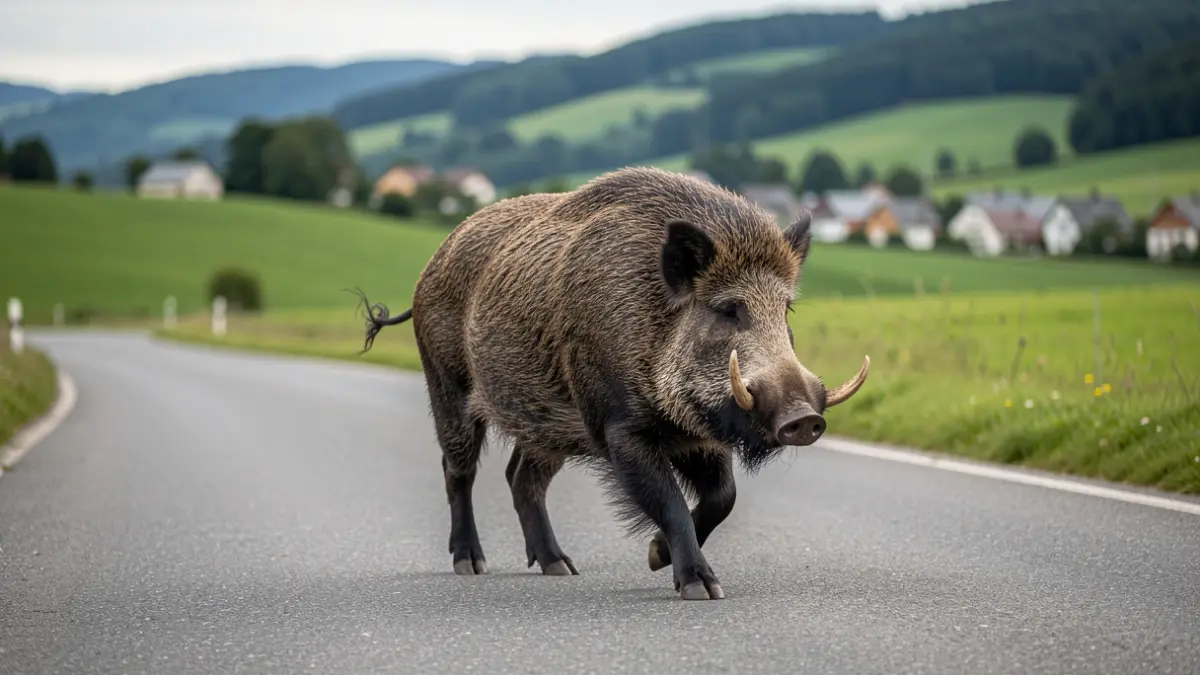
The number of these animals continues to rise, and it is increasingly common to see them in areas previously unfamiliar to them, such as the surroundings of towns and cities.
A clear example is a video published on social media by the agricultural union Enba, showing a herd crossing the road leading to Calvario, near Mutriku. A large group, consisting of several females and a numerous litter of piglets, crosses the road, observed by a surprised driver recording the scene.
Enba considers this incident not to be isolated but reflective of a broader situation. The video highlights the concern among the local baserritarras (farmers) in the Calvario area, who are witnessing significant damage to their crops caused by these animals.
The surge in the wild boar population has transformed it from a protected animal into what many environmental specialists describe as a true plague. A report by the Ministry of Agriculture, Fisheries and Food estimated the wild boar population in Spain at around 1.2 million. In addition to damage to wildlife, flora, and crops, they also act as vectors for diseases, such as African swine fever.
Hunting efforts yield spectacular results, with 450,000 wild boars culled annually. However, these figures are insufficient as the population continues to increase. While hunting pressure slows down some of the growth, it is not enough to reverse the trend, particularly in agricultural, urban, and peri-urban areas.