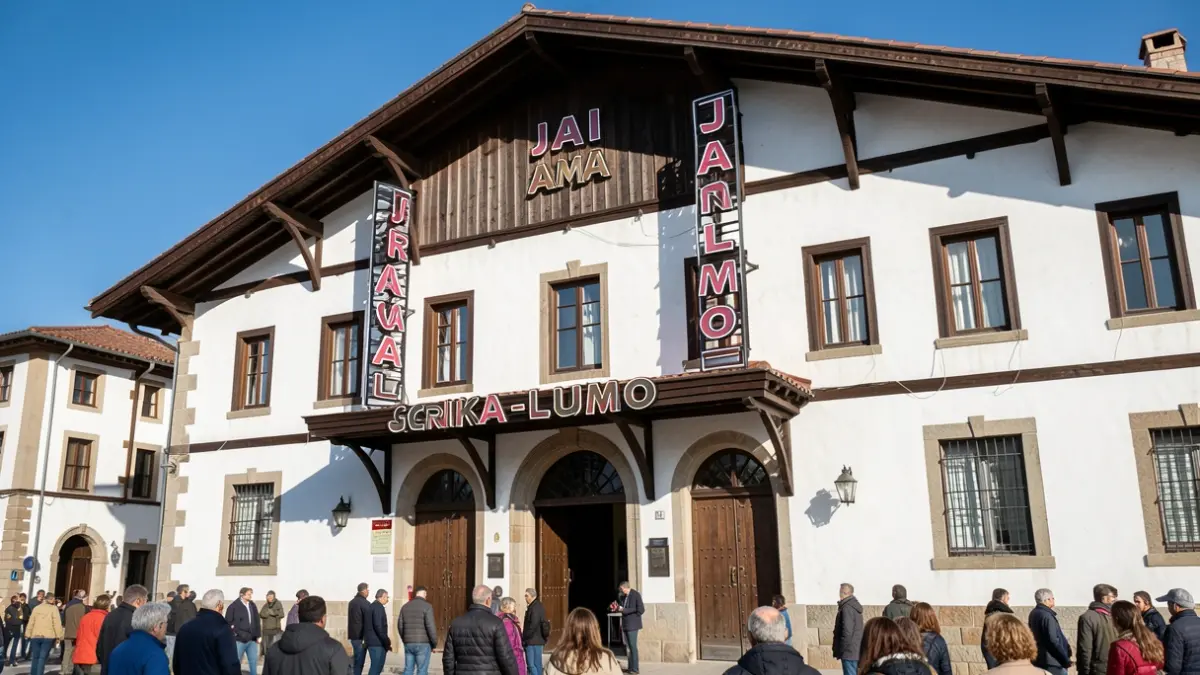
The Jai Alai fronton in Gernika-Lumo is regaining part of its original image following the installation of new illuminated signs on the building's facade and canopy. This action, promoted by the City Council, aimed to restore signage elements that were part of the property's original aesthetic configuration and reinforce its historical and architectural identity.
Inaugurated on June 29, 1963, and designed by architect Secundino Zuazo, the Jai Alai is one of Gernika-Lumo's most representative buildings and a space closely linked to the town's pelota tradition.
The intervention included the installation of two new illuminated signs. The first, a vertical one, has been placed on the canopy and measures 11 meters in length and 70 centimeters in width, illuminated on both sides. The second has been installed above the fronton's main entrance: it is a horizontal sign measuring 3.5 meters in length and 82 centimeters in height, illuminated on one side.
Both elements are made from materials prepared for outdoor installation and feature internal illumination using high-luminosity LED technology. The work also includes the supporting metal structures, electrical connections, and necessary components for their operation.
Through this intervention, the City Council seeks to recover signage elements that were part of the property's original aesthetic configuration, reinforcing its historical image. The intervention was processed considering the building's heritage protection, as it is cataloged as a cultural asset with the category of monumental complex.
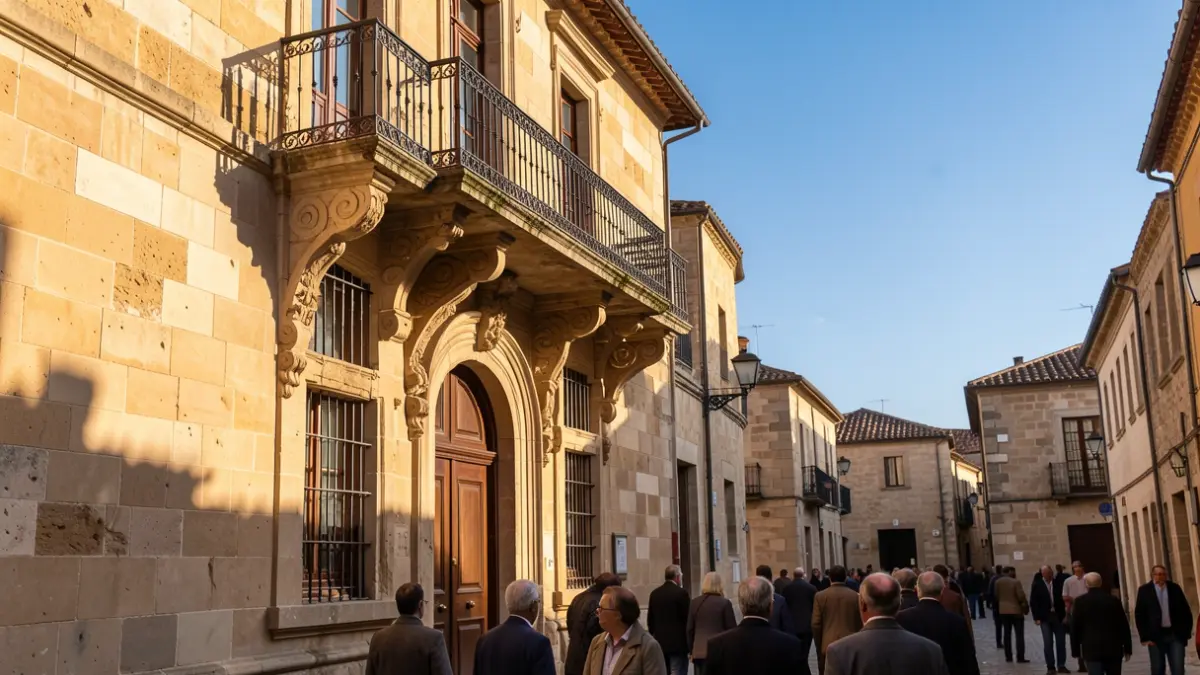
To mark this initiative, the Council organized a gathering with about fifty active and retired pelota players linked to the venue's history and trajectory.
“"The event served to highlight the history of the Jai Alai and its role as a sporting and architectural landmark of the town, as well as to present the recovery of a part of the image with which the fronton has been part of the town's collective memory."