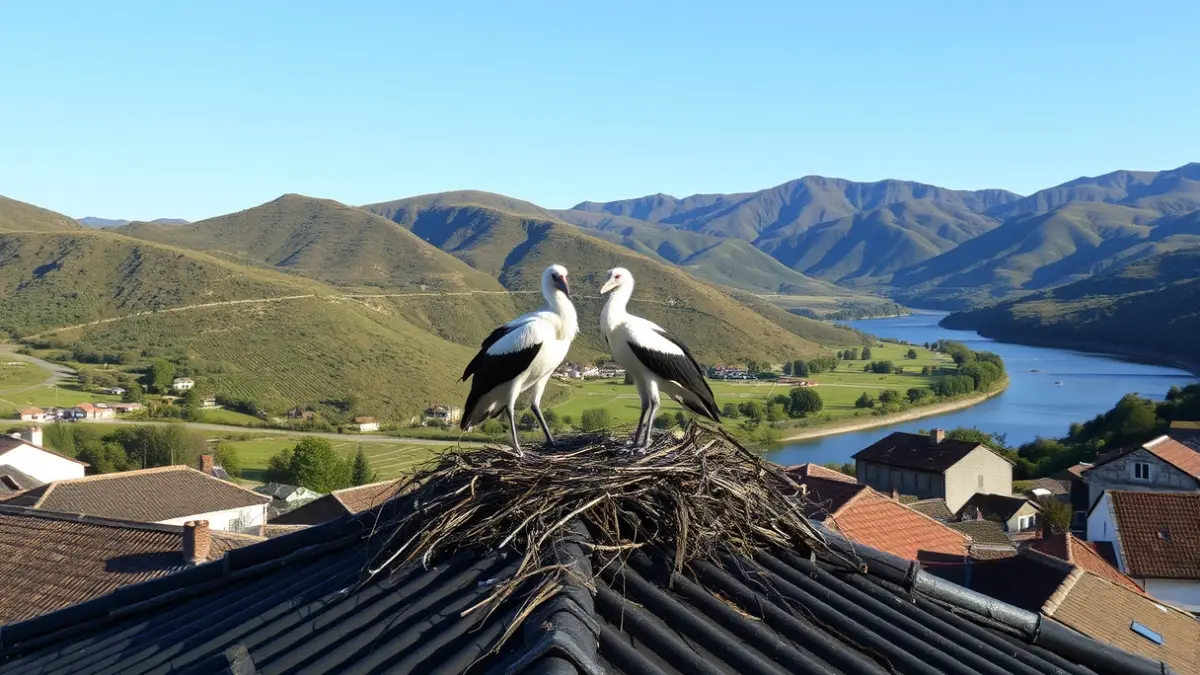
A pair of storks, Mauricio and Filomena, have been nesting in Gautegiz-Arteaga since 2018, becoming regular residents. Filomena, in particular, is noted for her punctuality, arriving this year on February 4th, just one day after her arrival last year, staying true to popular sayings.
However, climate change is altering the habits of migratory birds. According to experts, more and more birds do not need to migrate as they find food in the region during winter, such as storks in landfills. This leads some species to remain in Central Europe, while others, which previously inhabited warmer Mediterranean areas, are now arriving in Bizkaia.
Examples include flamingos, which had not been seen in Bizkaia until 2020 and are now sighted in Urdaibai and the Barbadún marshes. Black-winged stilts and blue-winged kites, southern species, are also increasingly observed in the region. Conversely, goose migrations, once common, have significantly decreased as these birds stay in Central Europe during winter.
These migratory birds are an essential part of the ecosystem and an indicator of biodiversity. For instance, swallow populations have significantly declined in recent years, mainly due to chick mortality caused by cold fronts and lack of food. Nevertheless, swallows and swifts, birds that live in the air, are a testament to the richness of our environment.