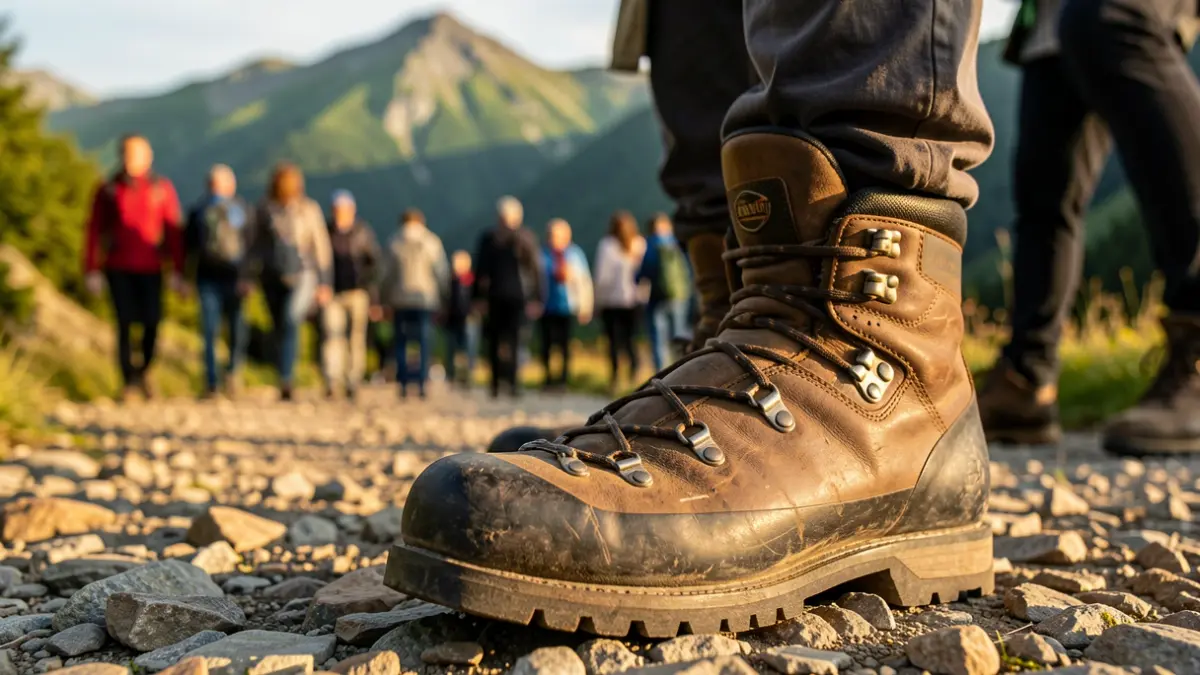
Last Saturday, June 13th, mountaineers from this historic club held a fellowship meal at Txakoli Artxanda. The atmosphere was described as excellent, fostering camaraderie and shared memories.
This article follows two previous installments; the first, published on January 1st, reviewed its origins (1925-1929), and the second, on April 5th, covered the years 1942 to 1960.
Through this historical chronology, the aim is to pay tribute to the many members of "Los Luises," true mountaineers who sacrificed personal ambitions to fulfill their Sunday commitment to children, the elderly, and the sick. This Bilbao-based group was an institution, notable for its solidarity within the broader essence of mountaineering.
In 1955, Sopeña awarded the finalist medal to Santiago Laespada during a significant celebration. Laespada is a distinguished figure within Aldatz Gora. The club's members were few but consistent. They understood that mountaineering wasn't a primary activity within the Congregation, yet it helped them discover the profound human value of overcoming challenges through effort. Their motto was: "We do not want to reward the strongest or the fastest, but the one who practices with constancy, who knows how to find in nature and the landscape the compensation for his efforts and draws life lessons from the excursions."
In addition to contests for climbing 15 mountains, achieving 15,000 meters of altitude, and undertaking treks, this year, being a Marian Year, a contest focused on Marian hermitages was organized. It was highly successful, with 110 mountaineers participating and 80 completing it. They represented clubs such as Juventus, Bilbao Alpino Club, Antiguos Alumnos de la Santa Casa Misericordia, Tavira, Ganguren, Iberduero, and Aldatz-Gora itself. Two children from Iurreta, Ignacio and Begoña Sopelana, created a notebook documenting all the reports along with a photograph of each hermitage entered in the contest (this event was also held in Iruña and Gasteiz).
Pope Pius XII addressed the mountaineering clubs, stating: "Be docile to the lesson of spiritual elevation from the mountain and of both physical and moral energy. Excelsior! Aldatz-Gora!"
In the summer of 1958, camps were initiated in Gredos for young members of the Marian Congregations, and these were repeated in 1959. Participants were enthusiastic, leading to the decision to institutionalize them, even though most of their respective groups lacked an alpinism section.
During Christmas 1959, the Montañeros de Santa María (MSM) were formed. The central committee entrusted them with organizing the First Official March through the Basque-Navarrese mountains in stages. This event took place from August 14th to 20th, 1961, from Huarte Arakil to the Sanctuary of Urkiola, with 27 mountaineers participating in patrols from Tudela, Bilbao, Pamplona, Eibar, Elgoibar, San Sebastián, and Burgos.
Each patrol received explanatory brochures detailing itineraries, history, legends, and topographic maps. Upon arrival, the president of the Federation of Friends of Education (FAE), Ignacio Arrillaga López Puigcerver, closed the event and presented the awards. The march was long and arduous, with a rest day in Desao. Conditions were generally cloudy, with thick fog in Aralar, strong winds in Urbia (which damaged a tent), and hail in Urkilla. They celebrated Mass at every hermitage they passed. Campfires were lit each night, fostering a strong sense of intimacy.
The MSM had a regulation and a "Montañero's Manual." Article one stated: "We are an organization to which all mountaineering groups within the Congregations can affiliate."
Article three encouraged the creation of these groups to facilitate mountaineering practice and instill an exemplary style, serving as a school of life where generosity, solidarity, companionship, and self-mastery are learned and practiced, offering a way to discover God in the wonders of creation. The Virgin Mary is held as a model, having journeyed to the mountains to assist her cousin Elizabeth, who was awaiting the birth of John the Baptist. Not all members of Aldatz-Gora were part of the MSM.
(1) Los Luises. When you encounter "Grupo Alpino Luises" or "Mendirik Mendi" in mountaineering literature, it refers to Aldatz Gora. The media, at various times, used the name of the club that held greater social relevance.