A legend from the 9th century tells of a Scottish princess arriving by ship in Mundaka. She had a son, Jaun Zuria, noted for his pale skin and blond hair, unusual for the region. This brave young man led the army against the Asturian troops who had ravaged the Biscayan coast.
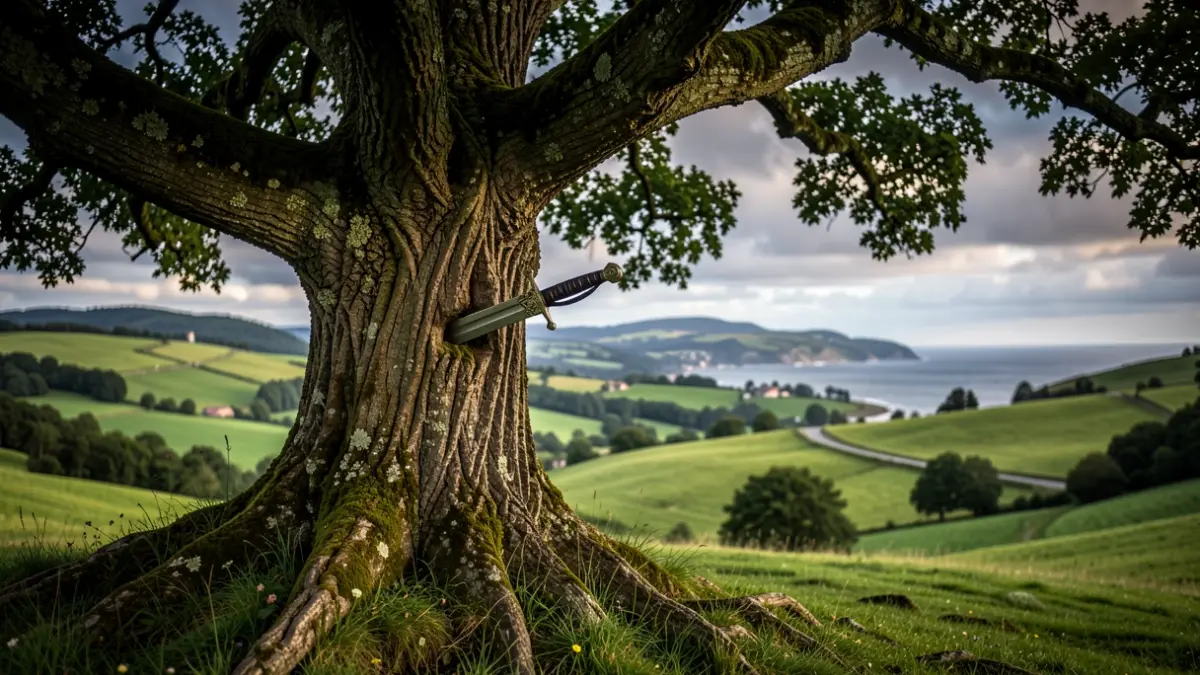
The bloody battle of Padura led to the area being named Arrigorriaga, meaning 'place of red stones'. The retreating enemy army was pursued to Luyando, where Jaun Zuria planted a sword in an oak tree, the Árbol Malato, marking the limit beyond which Biscayans were not obliged to follow the Lord without pay.
The Fuero was the legal code governing the Lordship of Bizkaia, a general law encompassing constitutional, civil, criminal, and procedural rights. It was first written down in 1452 (Fuero Viejo) and consolidated in a 1526 reform, establishing an advanced model that lasted until the late 19th century, built on equality, liberty, and institutional pacts.
The Fuero included the 'Universal Hidalguía', declaring civil equality among Biscayan residents, prohibiting torture, and exempting them from taxes. The 'Pase Foral' mechanism controlled seignorial power, invalidating resolutions against the Fuero with the formula 'It is obeyed but not fulfilled'. It also recognized women's right to inherit and start businesses.
The Second Carlist War (1872-1876) marked the end of a long period of tension between foral institutions and the governments in Madrid. The Carlist defeat served as a pretext for the complete abolition of the foral system. The law of July 21, 1876, consummated the dispossession of fueros, leading to the disappearance of the Juntas Generales and Diputaciones Forales in Bizkaia, Gipuzkoa, and Araba.