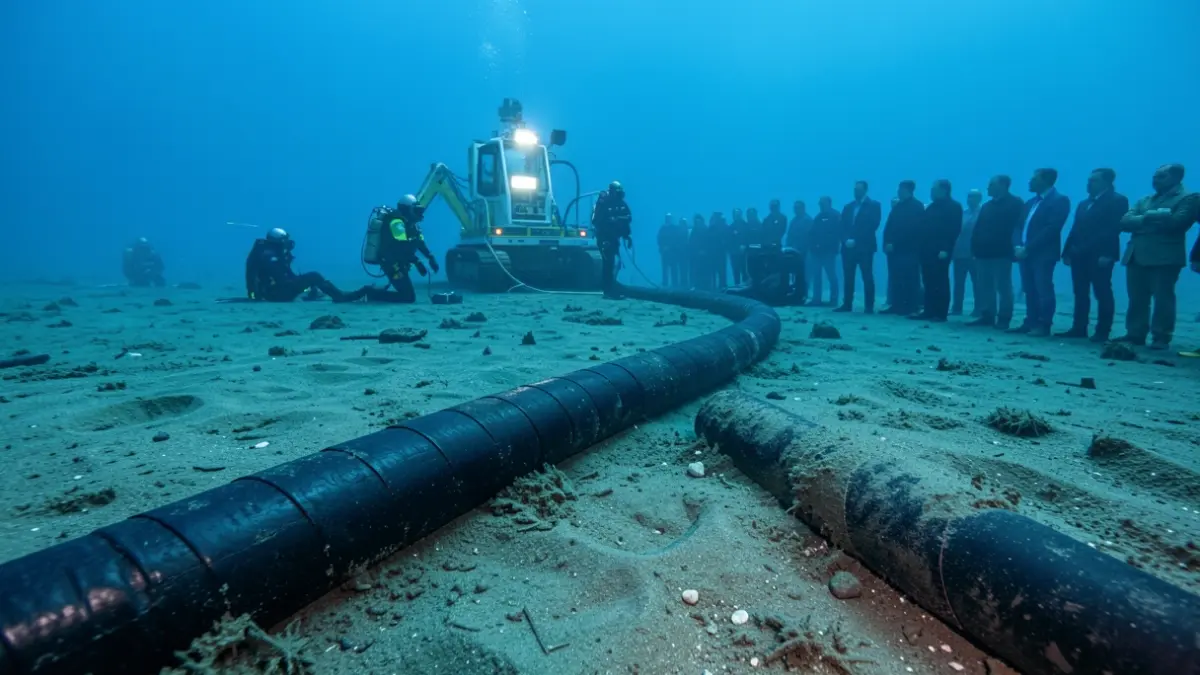
The laying of cables for the high-voltage electrical line connecting Gatika (Bizkaia) and Cubnezais (Gironde, France) in the Bay of Biscay has begun. The initiative, promoted by the society Inelfe, is already 60% complete, with an expected finish date in 2028. The project aims to increase the electricity exchange capacity between France and the Iberian Peninsula from the current 2,800 MW to 5,000 MW.
The underwater section will span a total of 276 kilometers. However, due to the Capbreton underwater canyon, 27 kilometers will need to be laid underground. This obstacle has led to delays and cost increases; the initial budget of 1.750 million euros has risen to 2.850 million euros, a 63% increase, attributed to the pandemic, inflation, and the rising cost of raw materials.
The European Union has designated the interconnection as a project of common interest and is co-financing it, aiming to strengthen electrical links between member states. The marine works will be carried out in several phases until the summer of 2027. A total of four electrical cables and one fiber optic cable will be installed. The initial phase along the Biscay coast is being undertaken by the Danish company NKT using the vessel Victoria.
Red Eléctrica has completed a technically complex construction project in the municipality of Lemoiz, involving over a kilometer of drilling beneath the cliff face to bring the cables ashore. These operations were conducted approximately 500 meters from the coast to minimize environmental impact. From there, the cables will reach the Gatika converter substation via the underground line.
Members of the platform Interconexión Eléctrica No (No Electrical Interconnection) have voiced concerns about the potential environmental and health impacts of the infrastructure on the surrounding area and its inhabitants. The platform's spokesperson stated that the project will "destroy rural areas and protected woodlands" and affect marine fauna. They also criticized the installation of 400,000-volt cables that will generate harmful electromagnetic fields in Jaizkibel, an area protected under the Natura 2000 network.
The platform alleges that Red Eléctrica is undertaking interventions beyond what was planned, without consulting affected citizens, and has identified several irregularities in the construction. They also condemn the project's model, arguing it will lead to higher electricity prices in the south. Environmental groups advocate for a decentralized approach to renewable energy, focusing on energy sovereignty.