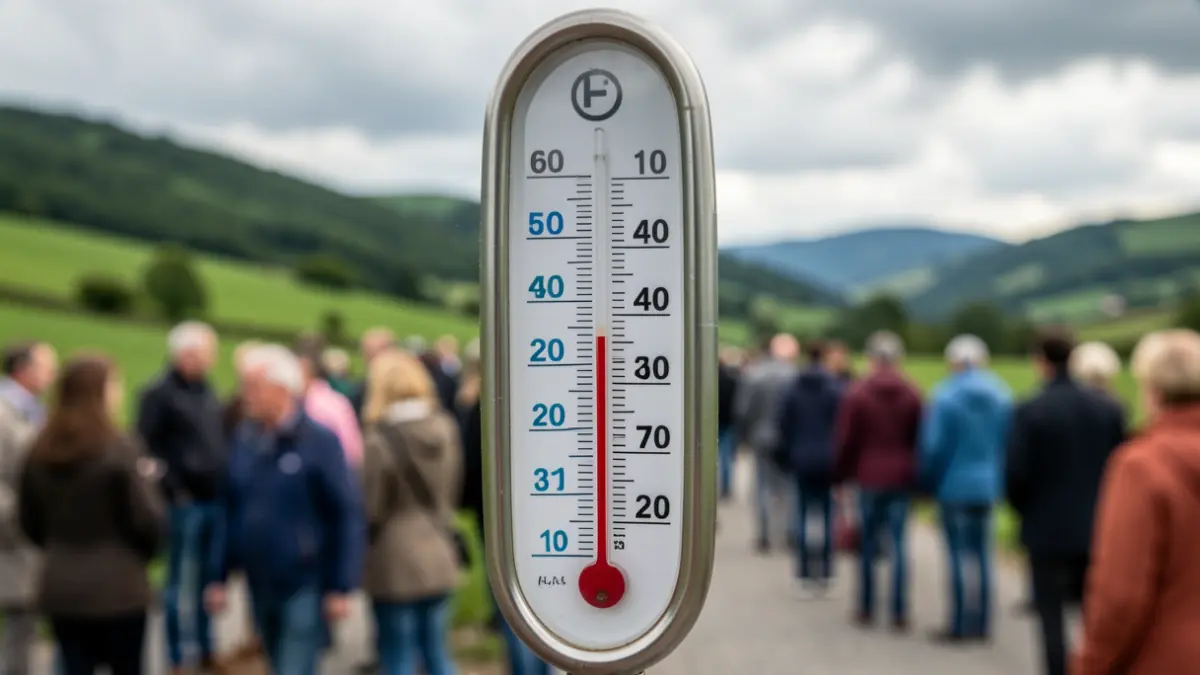
The heatwave that struck the peninsula in May resulted in the deaths of nearly a hundred people in Spain. The majority, 97%, resided in northern communities such as Euskadi, Asturias, Galicia, and Cantabria; areas where temperatures exceeding 35 degrees Celsius traditionally occurred only on specific days during the peak summer weeks, between July and August.
Experts have been warning for decades about a changing trend where heat is here to stay. The summer season is extending beyond the usual, and mercury levels are reaching unprecedented values. This directly impacts a population unaccustomed to enduring high temperatures for several days, with oppressive heat persisting even through the night. In Euskadi, 31 deaths were attributed to heat last May: 26 in Bizkaia and 5 in Gipuzkoa. This figure approaches the 39 deaths recorded in Asturias during the same period and surpasses the 18 in Galicia and 9 in Cantabria, according to statistics from the Institute Carlos III's System for the Monitoring of Daily Mortality (MoMo).
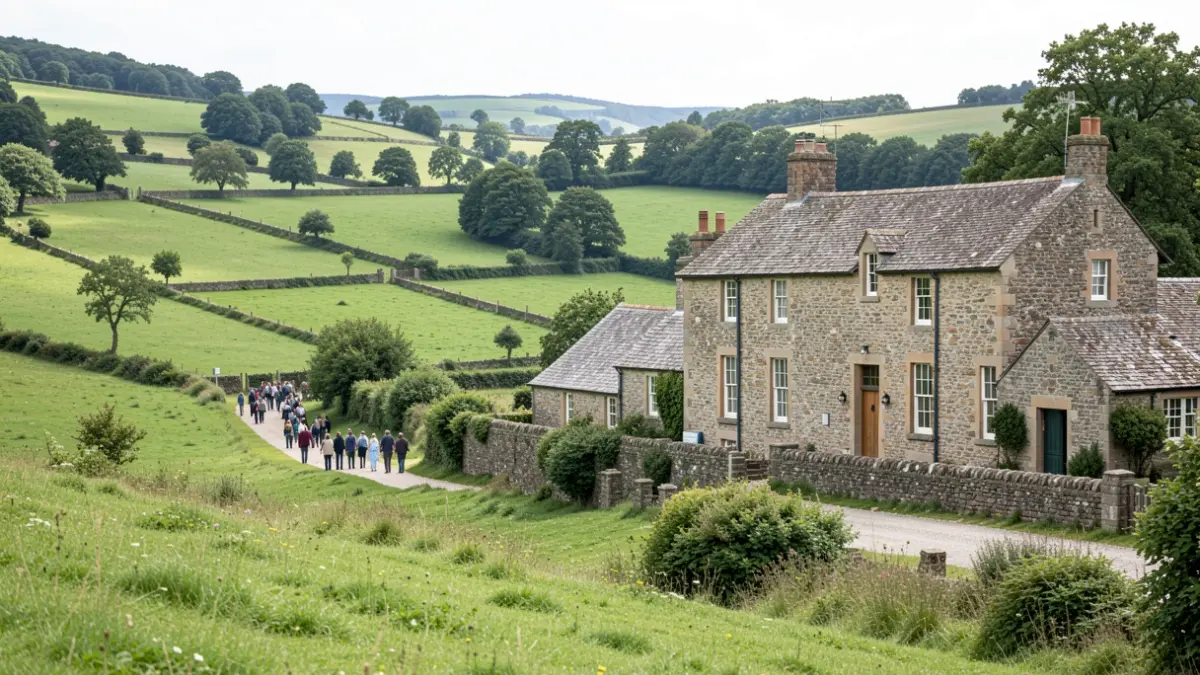
But why does the North concentrate 97% of heat-attributable deaths in Spain? Héctor Tejero, head of Health and Climate Change for the central government, points to the absence of "a heat culture" in the Cantabrian communities, which translates into less adapted homes and routines contrary to those in warmer regions.
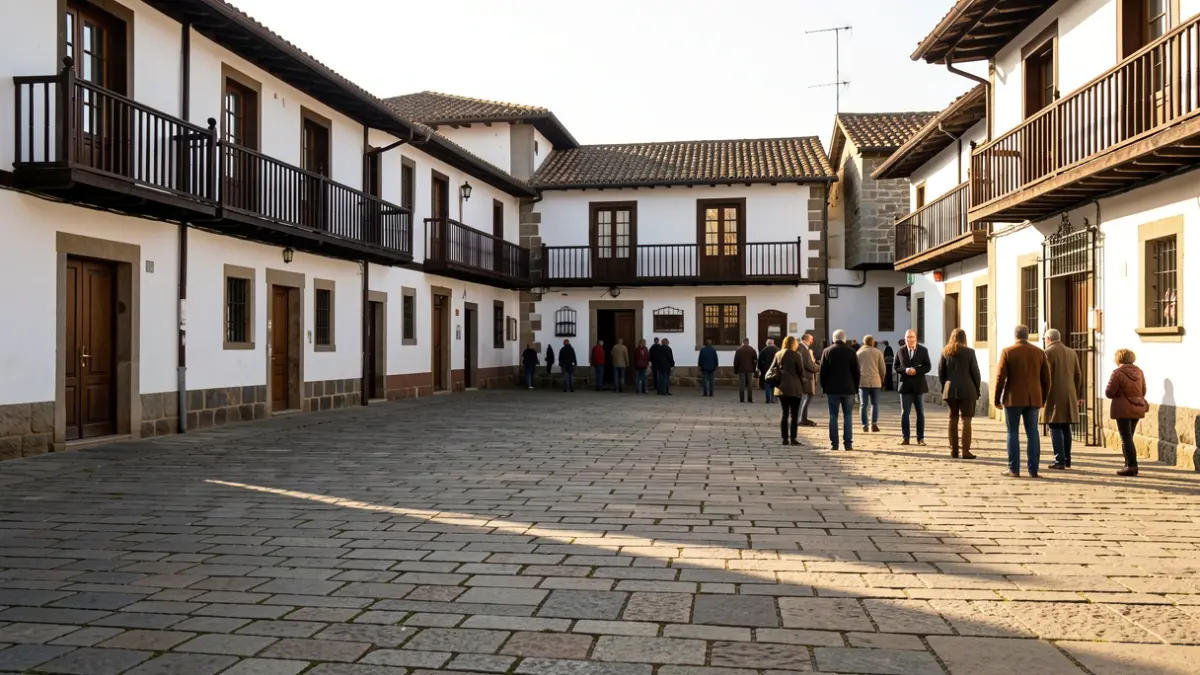
Tejero explains that houses "are better prepared for the cold" in this region. Materials aim to "retain heat indoors" to withstand harsh winters but become ovens when the thermometer rises excessively. Furthermore, many buildings are very old and do not insulate well, promoting heat accumulation. Air conditioning is a resource to alleviate the heat, but it is scarce in most homes. Meanwhile, in cities like Seville, Cordoba, Jaen, Valencia, Madrid, or Palma de Mallorca, around 70% of households have these devices, while in Bilbao or Vitoria, homes with air conditioning do not reach 5%, according to the latest study by Idealista. In neighboring communities, this figure does not exceed 2%.
In the case of Bilbao, installing air conditioning can have certain constraints and is not permitted in all buildings. Restrictions are related to the visual impact on exterior facades and the noise level that may affect other residents.
"We need to change our mindset"
Tejero adds another factor influencing the risk of death: "Routines are also not adapted" to the heat. Consequently, people can be seen going about their normal lives during the central hours of the day, something unthinkable in places like Andalusia, where streets are deserted between noon and early afternoon. The lack of preparation for temperatures around 40 degrees in the North can cost lives.
Guillermo Herrero, director of Public Health for the Basque Government, clarifies that when discussing deaths attributable to high temperatures, "they are not from heatstroke," which he assures is "very rare, and neither this year nor last year have we registered any." What happens when the mercury exceeds certain thresholds is that "some circulatory or respiratory diseases become complicated," potentially leading to fatalities.
“"We are not very prepared to withstand high temperatures. We need to change our mindset and adapt cities and homes. For example, in the south, floors are made of tile or ceramic. The heat has come to stay."
Tejero, agreeing with Herrero, recommends paying attention to the most vulnerable groups – infants under six months, children, and the elderly – when unusual maximum and minimum temperatures are recorded, and advises against any type of "physical exertion during the hottest hours, even for young people." He also stresses the importance of "checking on those who live alone, calling or visiting them frequently" and "not leaving any living being in a closed vehicle," as it can be fatal not only for people but also for animals because "very high temperatures are reached."
For those living in homes where heat accumulates particularly, he advises taking "cold showers, lowering blinds, drinking plenty of water even without thirst, and taking refuge during the worst hours in well-adapted public buildings," known as 'climate shelters.' In Bilbao, facilities like La Alhóndiga, civic centers, libraries, municipal markets, and large stores are considered as such.
The Basque Government activated its plan to implement anti-heat measures on May 21st, one day before the high-temperature episode settled in Euskadi and ten days earlier than scheduled. "We do not rule out having to bring it forward in the coming years," assures Herrero, who emphasizes that "temperatures are getting higher for longer periods."
In the case of the Ministry of Health, the Heat Plan came into effect on May 13th and will initially extend until September 30th. This document includes the daily maximum temperatures used to define a heatwave. The organization divides Bizkaia into three zones – coastal, inland, and the Nervión river basin – and in all of them, the heat episode at the end of May led to historically high maximums for the season.
On Friday, May 22nd, and Monday, May 25th, the hottest days, record values were registered in half of the measurement points in the territory. On the first day, records were broken in stations such as Balmaseda (36.9º), Sestao (36.3º), Mungia (35.7º), Abusu (35.4º), Amorebieta (35.3º), and Orduña (30.7º), among others. While Tuesday was the day when marks were surpassed in Amoroto (36.6º), Berriatua (35.4º), Punta Galea (34.2º), and Bermeo (32.5º).
Since the 1970s, heatwaves have increased by one day per decade.
At the Basque Meteorology Agency, Santiago Gaztelumendi, Director of Strategy and Coordination, warns that the trend for heatwaves or episodes indicates they are increasingly "lasting longer and have greater intensity." He provides the following data: "The number of heatwave days has gone from four annually during the period 1971-2000 to more than double in the decade 2014-2023." This means that since the 1970s, "they have increased by one day per decade."
Climate change has also caused mercury to mark very high values during the day. Currently, there are 85% more very warm days compared to the 1970s. But thermometers also fail to drop during the nights. Comparing the period 1971-2000 again, warm nighttime temperatures have grown by 75% in the last decade. Compared to the period 1991-2020, the growth would be 35%.
These figures do not surprise the expert, as climate change brings three phenomena affecting Euskadi: "an increase in average temperature, both maximums and minimums, an increase in sea water temperature, and sea level rise." And looking ahead to the short and medium term, Gaztelumendi assures that "no radical turn" is expected. "The trend will continue."