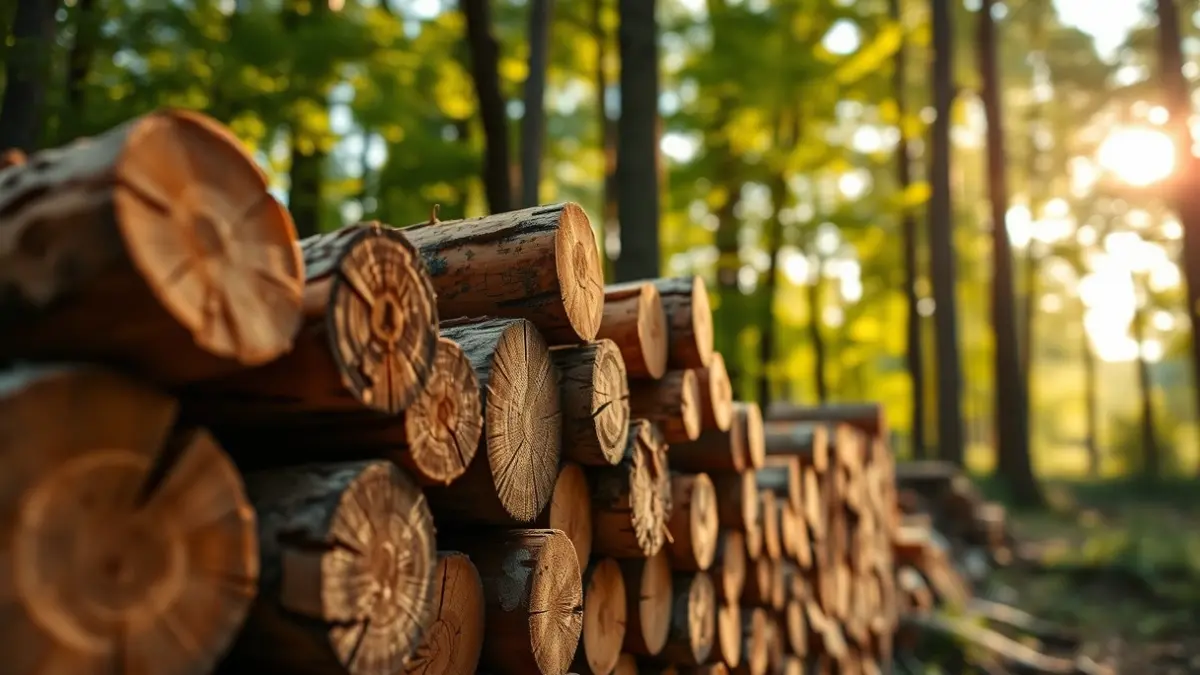
The utilization of forest resources in Bizkaia has always been an integral part of human history. Initially, fruits such as chestnuts, acorns, and hazelnuts were gathered, along with mushrooms. Wood was used for tools, weapons, and furniture. Charcoal production and its use as fuel in trench and clay kilns were essential for iron ore reduction from ancient times.
From the Middle Ages, the provincial council and municipalities managed large forests to supply quality timber for shipyards. The construction of caravels and galleons directly depended on the condition and replenishment of these forests. With industrialization, this model shifted, and the introduction of foreign species like Pinus radiata marked a turning point, adapting rapidly to Bizkaia's humid and temperate climate.
By the mid-19th century, with seeds brought from California, the pine boom occurred. Modern exploitation was consolidated when the forestry sector became closely linked to the Cellulose and Paper industry in Durango and along the Nervión riverbanks. For decades, Pinus radiata, or Monterey Pine, was almost a monoculture, sustaining farmhouses and industries. However, the brown band fungus exposed the vulnerability of this single-species plantation, severely affecting regions like Busturialdea and Lea-Artibai.
Currently, the Foral Council of Bizkaia is promoting a shift towards more resilient species, such as maritime pine. Eucalyptus generates debate due to its rapid growth versus concerns about biodiversity. Bizkaia's forested area covers 132,000 hectares, accounting for 60% of the territory, one of the highest forest density rates in Europe.
The forest-wood sector generates nearly 6,500 direct jobs in Bizkaia, and over 19,000 professionals across the entire value chain in Euskadi. This sector is a pillar of rural employment and contributes approximately 1.5% of the territory's GDP. Furthermore, forests act as carbon sinks, protect aquifers, and prevent soil erosion.
The sector demands professionalization, digitalization, and a commitment to added value, transforming wood locally. Research laboratories are already extracting nanocellulose and lignin for compostable bioplastics and technical fabrics. Small projects are experimenting with local wood barrels and cabinetmaking. For 2026, the Council has allocated 5.05 million euros for forest protection, implementing the Bizkaia Forest Fire Prevention and Extinction Plan (INFOBI), which aims to transform the forest structure with mosaic plantations to prevent fires.