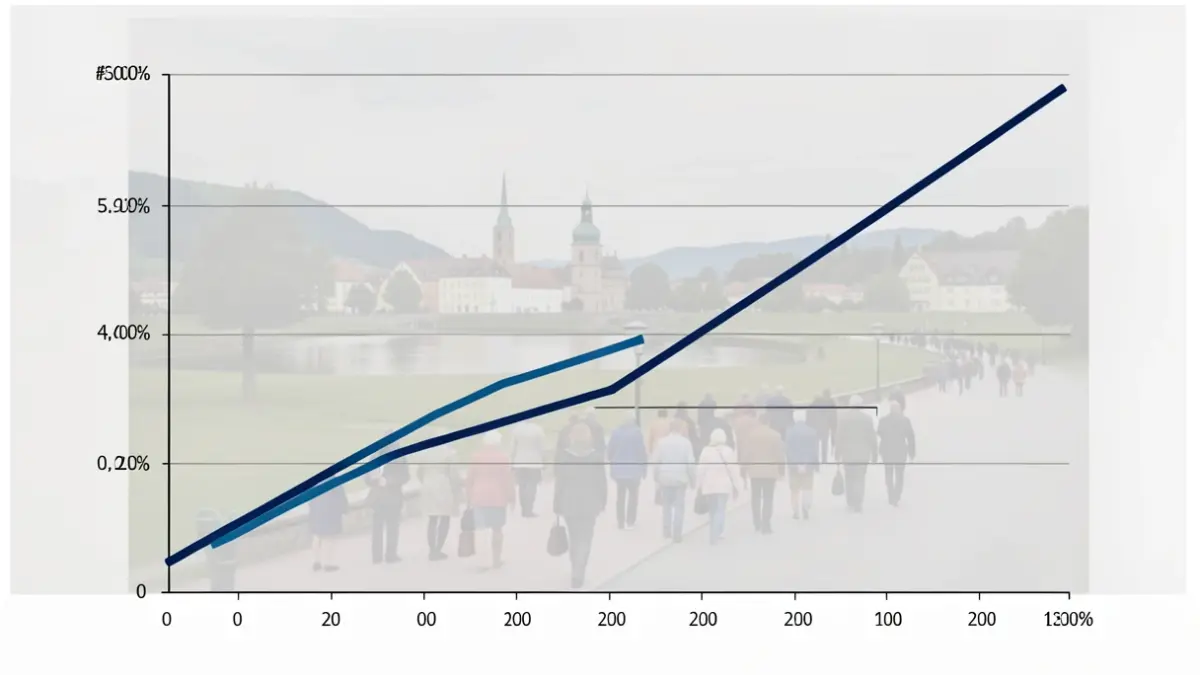
The demographic future of Bizkaia presents new challenges. According to the latest projections from the National Statistics Institute (INE), the territory will continue to age over the next 15 years, with the average age rising from 47 to 49 by 2041. Although the birth rate and the number of immigrants will see a slight increase, they will not be sufficient to counteract the unstoppable process of population aging.
By 2041, Bizkaia will be home to 1,190,653 people, a 1.5% increase compared to current estimates. This growth will primarily occur among people born abroad, whose numbers will rise by 64.5%, from 173,313 to 285,073. Conversely, the native population will decrease from nearly one million to 905,000.
The pace of migrant population incorporation will slow down and will not be enough to rejuvenate Bizkaia's society. This year, nearly 21,000 people are expected to migrate to Bizkaia, a figure that will gradually decrease to 12,834 in a decade and a half. Mothers born abroad already account for one in four women giving birth in Bizkaia.
The fertility rate will not see a significant recovery; from the 6,662 newborns expected this year, the number will rise to 7,738 in 15 years. The average age of motherhood will also increase slightly, from 33.6 to 33.8 years. The percentage of mothers under 30 will decrease (from 23.2% to 19.6%), while that of mothers over 40 will slightly increase (from 11.4% to 12.3%).
Consequently, the population will be older than ever. The average age will rise from 47 to 49, and life expectancy at birth will go from 84 to 86 years. The over-65s group will experience sustained growth, parallel to the decrease in minors. Those in their senior years will reach 370,667 (31.13% of the total), compared to 141,367 children and adolescents (11.8%).
All of this will significantly increase the dependency ratio, which represents the proportion of inactive individuals (under 16 and over 65) relative to the working-age population. This indicator will jump from the current 59.37% to 71.21% by 2041; meaning, for every ten people of working age, there will be seven who are not.
The aging population will also impact housing. Households will become smaller (from 2.32 to 2.23 people per household), leading to an increase in the total number of households (5.5%), especially single-person households. These will represent 36% of the total, surpassing two-person households, which have been the most numerous until now.