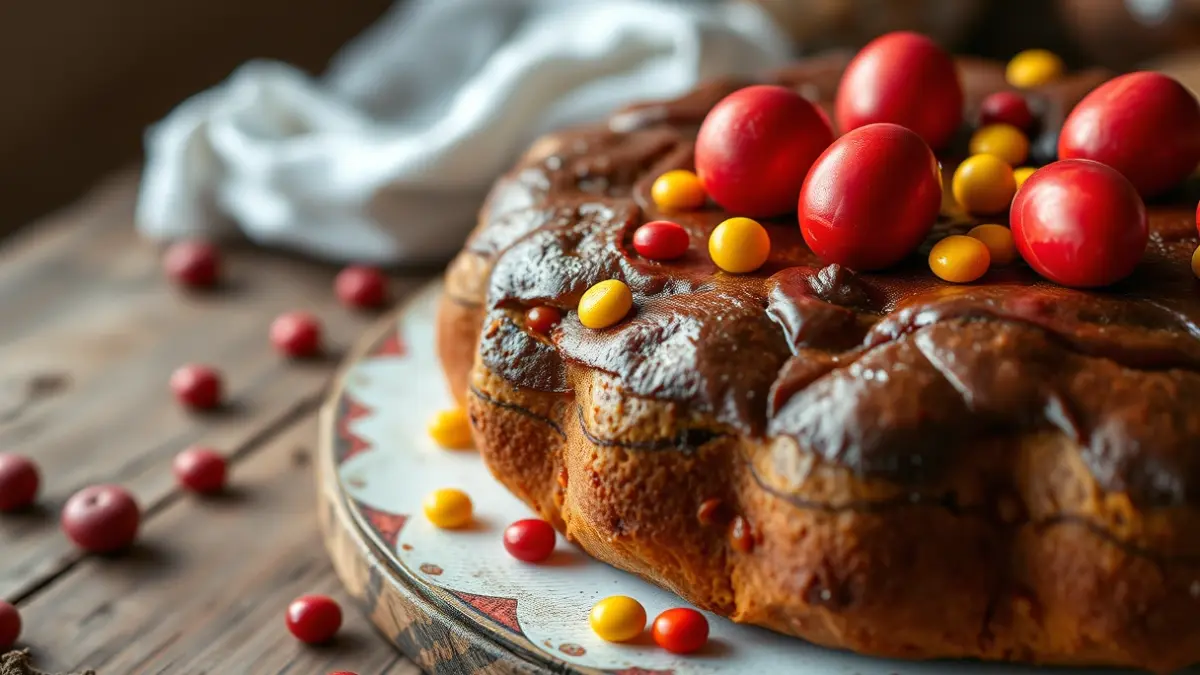
Every April 25th, the regions of Bidasoa and Oarsoaldea come alive to celebrate Saint Mark's Day. A cherished tradition on this day involves godmothers presenting their godchildren with an 'opilla', a special sponge cake decorated with red-dyed boiled eggs and candies.
The origins of Saint Mark's Day are linked to the ancient Roman pagan festival known as Robigalia. In towns like Hondarribia, as early as the 16th century, processions were held on Saint Mark's Day to bless the fields and ensure the protection of harvests.
According to custom, the 'opilla' features as many eggs as the godchild's age, and godmothers continue this tradition until their godchildren marry. Over time, the preparation of the 'opilla' has evolved; once a homemade delicacy, it is now commonly found in local bakeries, and the colored boiled eggs have often been replaced by chocolate eggs.
For those wishing to prepare 'opilla' at home, a recipe by Martín Berasategui is available for six servings. Key ingredients include butter, sugar, lemon zest, ground almonds, flour, and eggs. The preparation process involves mixing the ingredients, baking the dough, and once cooled, decorating it with a glaze and festive embellishments such as chocolate eggs or colorful feathers.