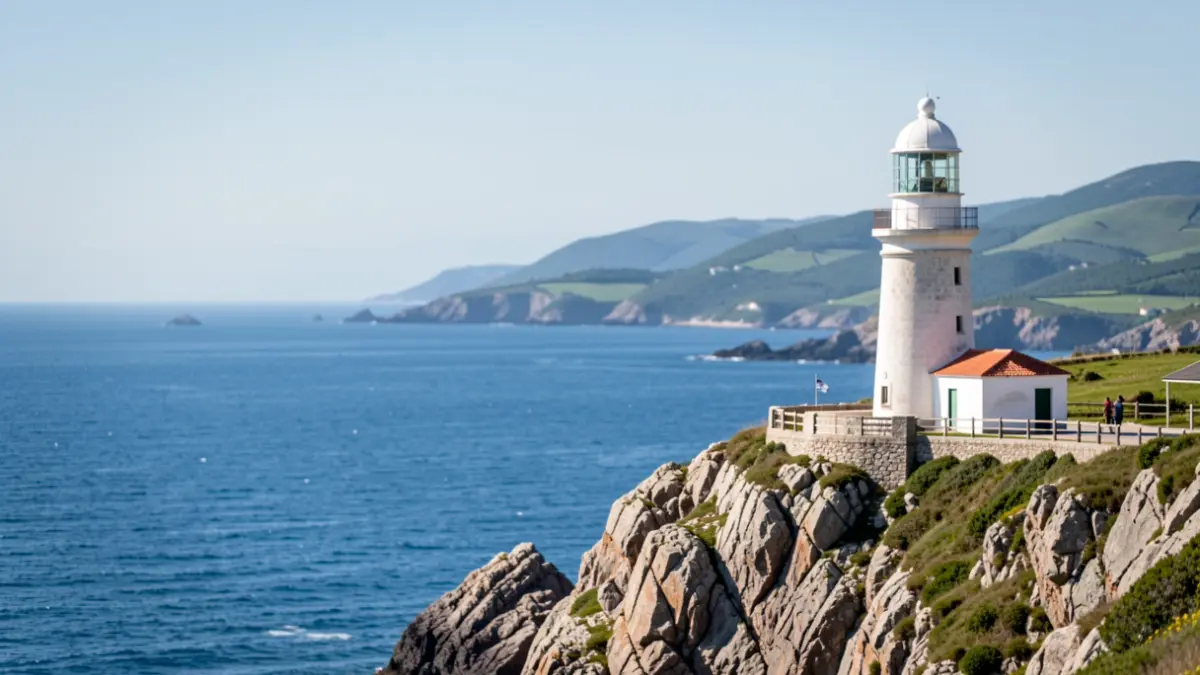
The Faro de Higuer, situated on the easternmost cape of the Cantabrian Sea, is set to embark on a new chapter. The Port Authority of Pasaia, the infrastructure's owner, has granted a 30-year management concession to the Hondarribia City Council to transform it into a cultural, educational, and outreach center.
The project includes the rehabilitation of the building, which has been affected by humidity, and its opening to the public starting in 2027. Perched 65 meters above the rugged coast, the lighthouse offers privileged views of the Bay of Txingudi.
On clear days, the panorama extends from the Biscay coast to Matxitxako and the landscape of the French Landes, a popular spot due to its spectacular cliffs. The current lighthouse was inaugurated in 1881, replacing its predecessor which was demolished during the Carlist Wars in 1874.
Designed by engineer Francisco Lafarga, its primary mission has always been to warn navigators of the dangers posed by the rocks surrounding the cape and the small island of Amuitz at the entrance to the Bidasoa River.
The structure comprises a single-story rectangular building that housed the engine room and the lighthouse keepers' dwellings. A 21-meter stone tower rises from it, featuring an impressive viewpoint accessible via a spiral staircase. Its light emits two flashes every 10 seconds with a range of 23 nautical miles.
The Basque coast is illuminated by nine main lighthouses, active and automated thanks to technology, in addition to several smaller ones. These include in Bizkaia: Punta Galea, Gorliz, Matxitxako, and Santa Catalina in Lekeitio; and in Gipuzkoa: Zumaia, Getaria, San Sebastián, Pasaia, and Hondarribia.
“"In the Basque Country, all the lighthouses are operational, from when they were built until now. The lighthouse not only guides at night; it also guides during the day, as it is marked on the charts."
The electrification of lighthouses has led to the near extinction of the lighthouse keeper profession. In the Basque Country, only two remain: Pablo in Igeldo and Cristina in Matxitxako, after the profession was declared to be phased out in 1991. Their duties are no longer limited to a single lighthouse; they are responsible for the maintenance and visits of several of these infrastructures in Gipuzkoa and Bizkaia.
“"Many of the rescues carried out by lighthouse keepers involved risking their lives, and it was not their duty."
The history of these structures dates back to the Lighthouse of Alexandria, one of the seven wonders of the ancient world. In Spain, a major impetus came in 1847 with the General Plan for Maritime Lighting of Isabel II, which expanded the network from about twenty lighthouses to over 120 that illuminated the Spanish coast.