“All that is solid melts into air, all that is holy becomes profaned, and, finally, man is forced to confront with his own conditions of life and his relations with his fellow creatures”. These words echo as two students, deep in their selective exam preparation, share a fleeting glance in the library. Amidst the stress and worry over grades, an unexpected impulse leads them to a moment of rebellion, momentarily setting aside their studies to confront a mutual passion.
Shortly before the exam, they realize they've neglected the study of historical materialism. As time runs out and no further study is possible, they understand that copying will be their only path to passing if that topic appears. They feel like members of a generation that has forgotten a centuries-old tradition: everything solid has been digitized, everything sacred too, and the student is forced to face the stark reality of not knowing how to make 'chuletas' (cheat sheets).
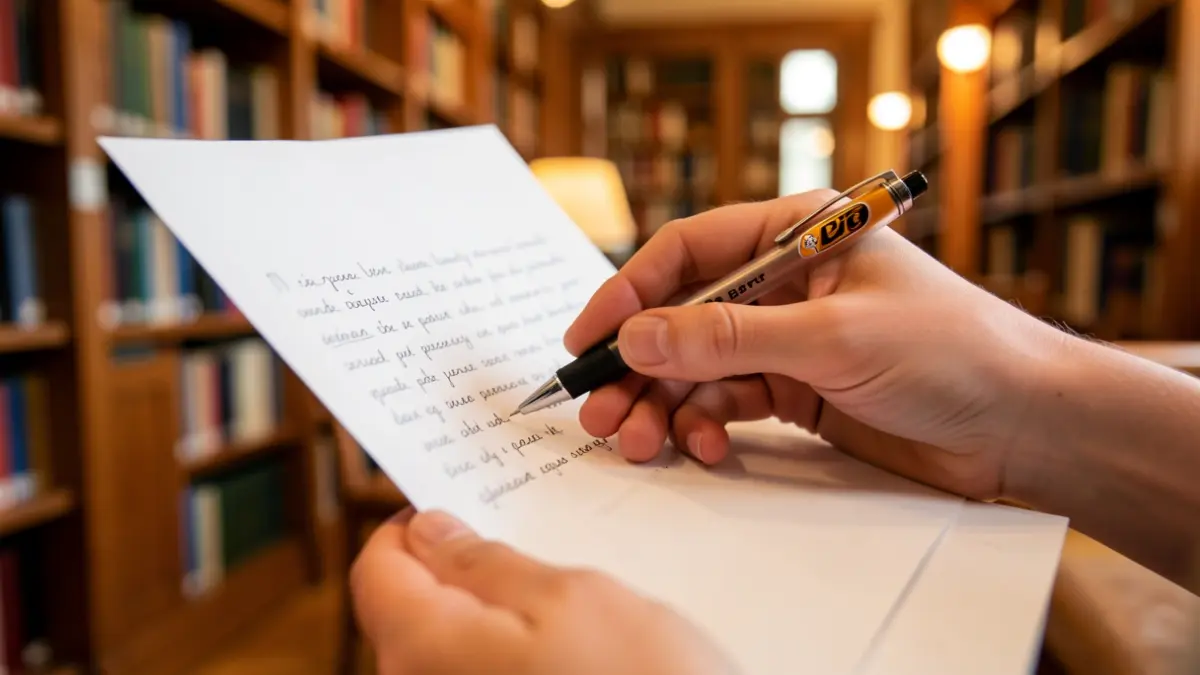
In a recent article published in the newspaper Berria, Peru Amorrortu Barrenetxea laments the decline of the art of 'chuletas' – the microscopic notes used for cheating in exams. The advent of smartwatches, ChatGPT, and smart glasses has displaced these traditional methods. The author highlights how student creativity was paramount in this battle against teachers, employing ingenious techniques like writing mathematical formulas on the folds of their hands or transforming a Bic pen into Mendeleev's table.
The techniques of 'chuleta' making were passed down through generations, with each new cohort striving to perfect what they inherited, often dedicating more time to the fabrication of the cheat sheet than to studying the subject itself. Mastering this art also fostered a peculiar faith, as illustrated by the memory of a classmate who prepared a 'chuleta' solely for Plato and was fortunate enough to have that author appear on his Philosophy exam.
Finally, the author suggests that the analog art of 'chuletas' might find a way to survive through tattoos. Today's youth could easily conceal their exam aids among the permanent illustrations etched onto their bodies. While perhaps not the simplest method for copying, previous generations of 'chuleta' makers would look on with pride, proclaiming, 'the chain has not been broken'.