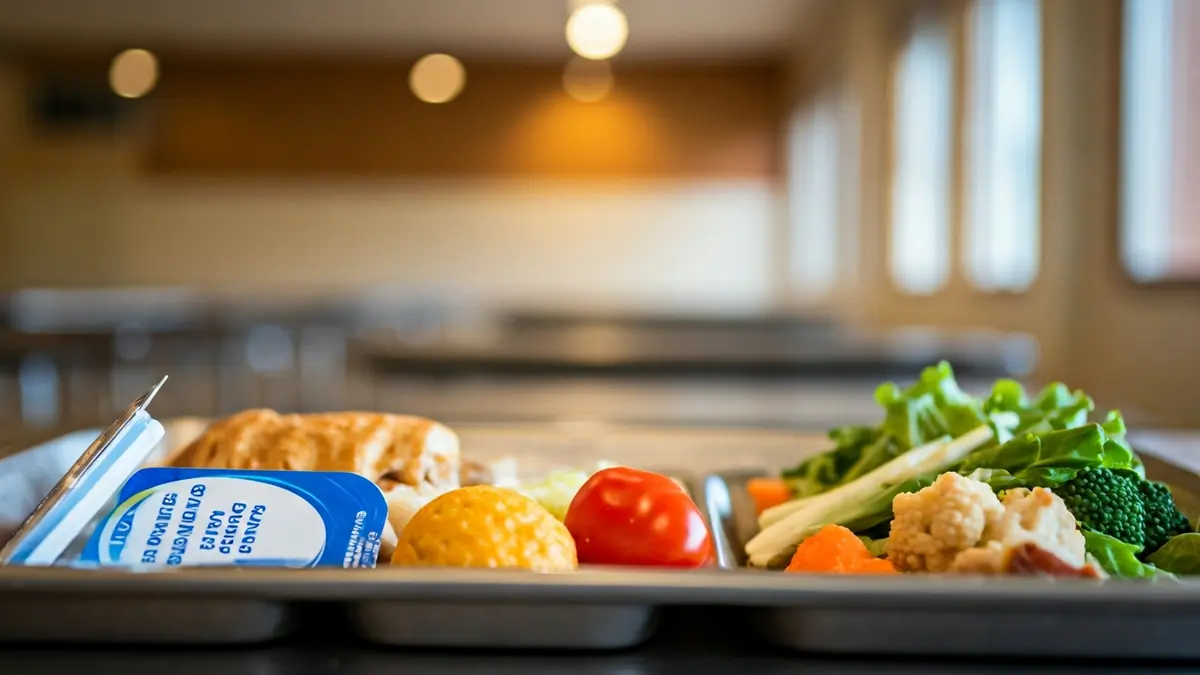
The report, published on April 15, 2026, by the Vitoria-Gasteiz School Kitchen Platform, which comprises families from public schools in the city, has analyzed the tender specifications governing school canteen services. The main conclusion is that the Basque Government's regulations encourage industrial-scale and low-quality food, primarily due to the prices set for menus and the nutritional requirements.
The study highlights that the Basque Government sets a maximum price of 2.95 euros per menu for service contracts, favoring companies that submit the lowest economic bids. This price must cover raw materials, preparation, kitchen staff, facility depreciation, transport from the central kitchen, logistics, distribution, administrative management costs, and economic profit. This price is not reviewed during the contract's duration, which inevitably pushes for a reduction in raw material costs, leading to increased use of ultra-processed or low-cost products at the expense of fresh, local produce.
The system inevitably pushes for a reduction in raw material costs, which means a greater use of ultra-processed or low-cost products.
The analysis also underscores that technical specifications related to food quality are vague and ambiguous. For instance, the Basque Government's tenders state that “fresh fish will be used as far as possible, at least once a month,” meaning fresh fish is only guaranteed once a month. Similar conditions apply to meat, vegetables, and dairy products, without establishing minimum proportions or frequencies, leaving ample room for interpretation and imposing no real obligations.
Furthermore, the tender system awards up to 52 points out of 100 for using organic, fair trade, or quality-certified products, but it does not specify the frequency or minimum proportion of these products in the menu. This allows companies to achieve a high score by including some of these products occasionally, even if the majority of the menu remains industrial. The impact of transport is also criticized, as the tenders do not establish a maximum transport distance to the educational center or a maximum time between cooking and serving. For example, 8,700 school meals travel approximately 70 kilometers daily from the central kitchen in Derio to school canteens in Vitoria-Gasteiz.
Contracts awarded in 2022 are set to expire in June 2026. Families in Vitoria-Gasteiz believe this is an opportune moment to tighten and improve the tender specifications. They have urged the Department of Education to revise the requirements and conditions of current contracts to ensure healthy and sustainable food, addressing the long-standing demand for on-site kitchens in schools.