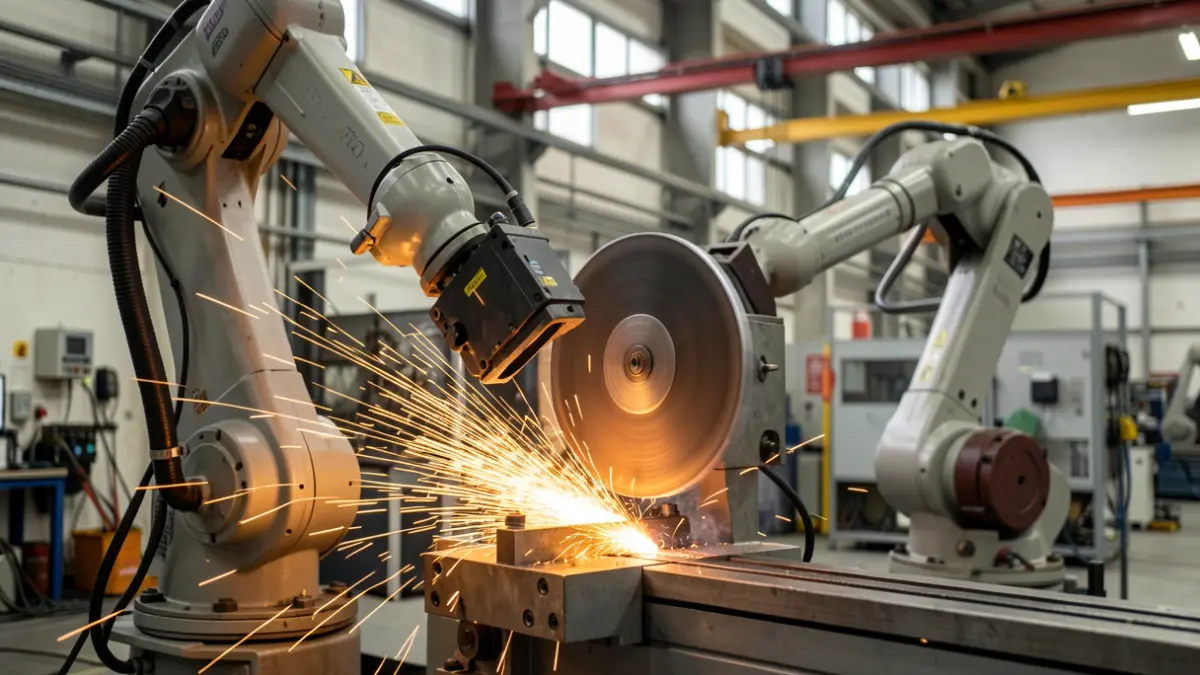
PFERD-Rüggeberg, historically known as Caballito, has embarked on a significant industrial transformation at its Vitoria-Gasteiz facility. The company is investing around seven million euros to modernize its production processes and maintain its competitive edge in an increasingly demanding global market.
CEO Jacek Andreas Michalec explained that this investment is primarily directed towards a deep technological overhaul of the cutting and grinding disc manufacturing lines. The previous technology was more energy-intensive, generated more waste, and required near-constant manual intervention from operators for material handling.
The new lines are designed to significantly reduce electricity consumption, minimize waste, and improve product quality and stability. Furthermore, the role of employees will evolve from manual loading and unloading to becoming process supervisors and controllers, undertaking tasks of higher qualification and added value.
The company has already successfully implemented five new machines, with two more in the installation phase and two additional units expected by year-end. These upgrades will largely complete the investment in grinding discs, small-diameter cutting discs, and stationary discs, reinforcing the core objectives of enhanced quality, cost reduction for increased competitiveness, and progress in sustainability.
Key priorities for PFERD include automation, digitalization, and sustainability. The company is integrating artificial intelligence tools to streamline administrative and documentation tasks, freeing up employees for higher-value activities. Significant investments are also being made in renewable energy, including the installation of solar panels at both the Vitoria-Gasteiz and Araya sites.
PFERD aims to remain a leading international reference in the abrasive tools industry by continuously evolving and developing products tailored to changing customer needs. Its strategy focuses on competing through quality, safety, innovation, and customer service, offering tools that provide the best results and the lowest total cost of use.
Looking ahead for the industry in Araba, the company emphasizes the importance of preserving the industrial ecosystem's competitiveness. Challenges such as absenteeism and labor disputes are highlighted, advocating for shared responsibility among companies, employees, and administrations to ensure a robust industrial future with quality employment.