The recently concluded Holy Week has been exceptional in Euskadi. Beyond the notable public attendance, the brotherhoods of the Basque Country have experienced significant internal growth, with a visible increase in the number of members participating in processions. This phenomenon is particularly evident in the capital cities: Bilbao, Vitoria and San Sebastián, the latter having revived its processions after more than half a century of absence.
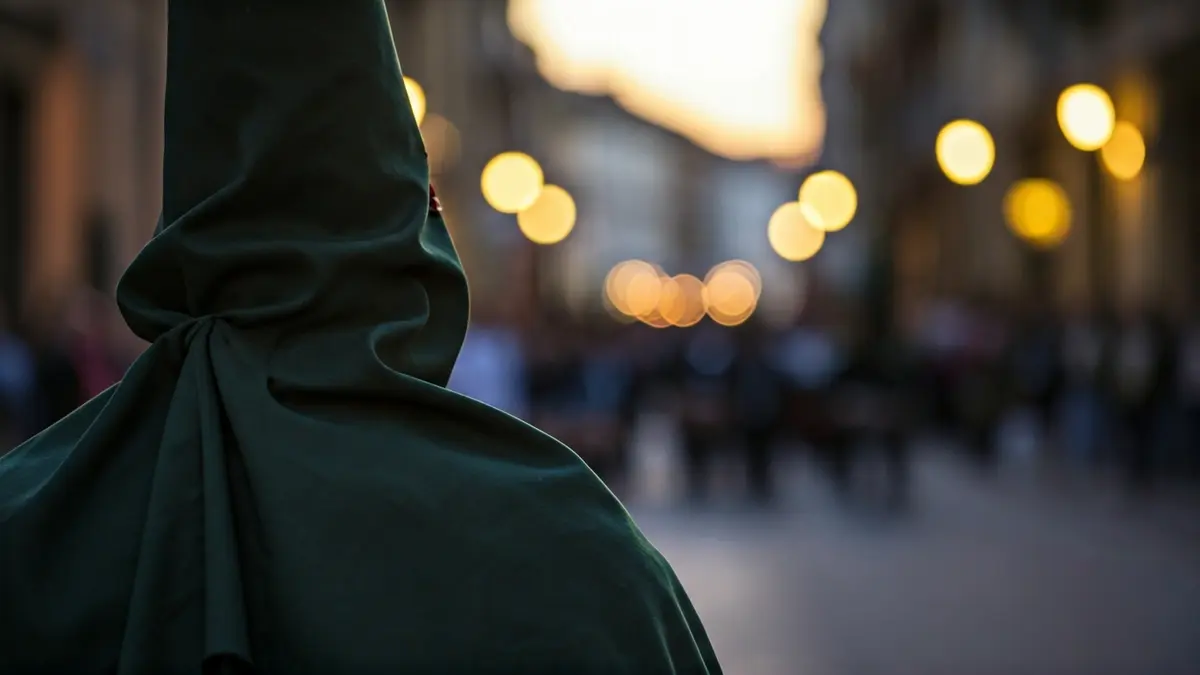
In Bilbao, the increase has been "very evident," according to Javier Diago, spokesperson for the Brotherhood of Penitential Confraternities in the city. The number of members has risen from approximately 4,100 to nearly 4,350. This growth is not only numerical but also generational. "You can see the age of the cofrades who participate in the streets," states Diago, referring to the presence of children and young people who ensure continuity: "When a cofrade lifts with the capirote on 75 centimeters, you say, 'hey, it seems there's a future here'."
“"They approach it in an absolutely fresh way. They see directly what is there; if they like it, they stay, and if they don't like it, they don't stay."
One of the key factors in this resurgence is the way young people approach this tradition. As Diago explains, the new generations do not carry the "negative historical associations" that might have existed in the past. This lack of knowledge of other eras allows them to value the experience for what it is in the present. This fresh approach, free from inherited biases, is a magnet for many. The diversity of profiles, with people "from one end to the other, with different economic, social, political, and cultural levels," is another element that, according to him, attracts attention and enriches the brotherhoods.
The trend is confirmed in Vitoria, where interest has been so great that it has exceeded expectations. Iñaki Ruiz de Azúa, spokesperson for the Vitoria brotherhoods, confirms that the growth has been "symptomatic." "We have distributed all the habits to all the brotherhoods," he points out as proof of this year's successful call. The Holy Thursday procession in Vitoria gathered a hundred cofrades who carried six floats through the streets. On Good Friday, six brotherhoods processed with about 200 members carrying nine floats.
The case of San Sebastián is particularly significant. After almost 60 years without processions, the city has recovered the tradition with unexpected force. Thais Munuera, from the promoting group, reports that since the announcement in December, almost 500 people have registered with the brotherhood, of whom 260 participated in the procession. The public's response has exceeded all expectations.
“"We are still overwhelmed; the smile hasn't left our faces."
"We are still overwhelmed; the smile hasn't left our faces," confesses Munuera, who highlights the "unity," "enthusiasm," and "respect" experienced in the streets of San Sebastián. The reception has been so positive that there is already a waiting list for next year, and the team is working to improve the experience in the future.