Humans and nature have always been connected, ever since the emergence of the Homo genus around 2.8 million years ago. Technological advancements and environmental transformation have not severed this bond. This is the central idea behind the exhibition 'Inseparables: ser humano y naturaleza. Una historia compartida', an initiative driven by Aranzadi Zientzia Elkartea and the Department of Sustainability of the Provincial Council of Gipuzkoa.
The exhibition will be on display in the coastal town of Zarautz until next Monday. Afterwards, it will travel to Irun, starting the following Wednesday. Comprising nine informative panels and five display cases, the exhibition narrates the shared history between humanity and nature, explaining what the world was like before our species appeared and how this connection has evolved to the present day.
Suberri Matelo and Maite Errarte, members of Aranzadi's Ethnography department, were present at the exhibition's unveiling. Although several institutional representatives from the Provincial Council of Gipuzkoa were initially scheduled to attend, they did not appear at the event following the institution's decision to cancel part of its official agenda due to the serious traffic accident that occurred this Wednesday in Elgoibar.
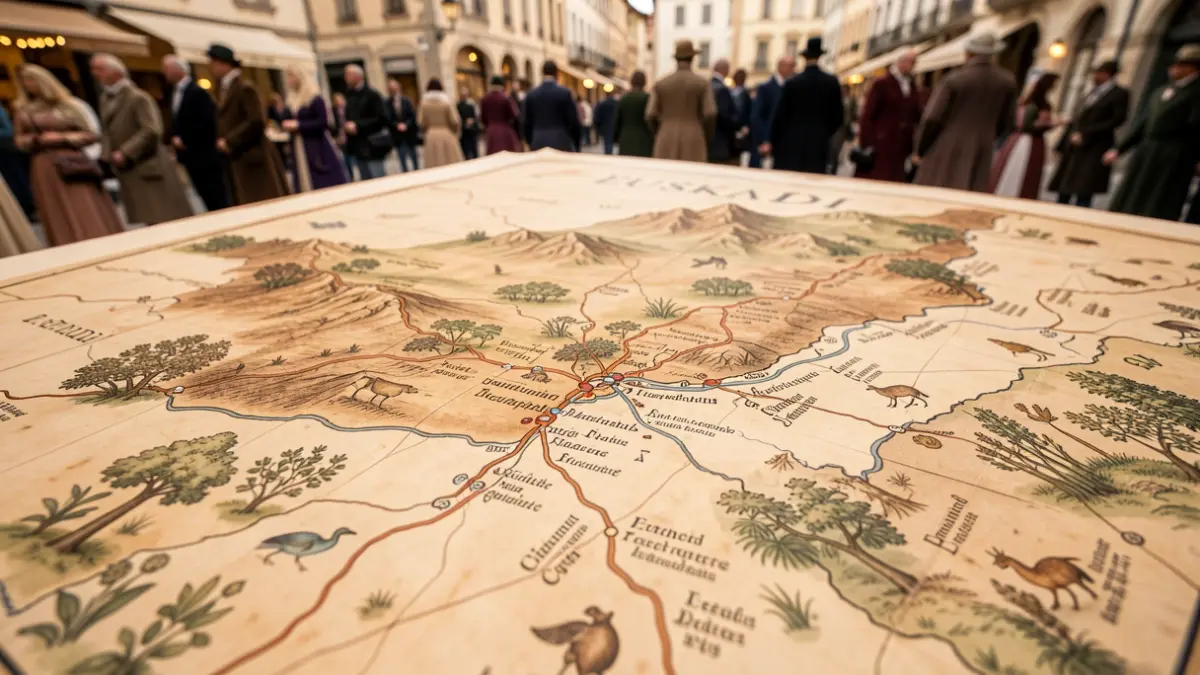
The panels cover various historical periods, from Prehistory to the present day. They analyze how humans have utilized natural resources, transformed the land, and developed knowledge to better understand their surroundings. The exhibition concludes with a reflection on the role of science in nature conservation and the measures taken to protect ecosystems and species.
However, the exhibition does not shy away from a critical perspective. It also focuses on the consequences of certain human activities on the natural environment, particularly in recent centuries. The construction of large infrastructure projects, industrialization, and landscape transformation serve as clear examples of how human action has modified the environment and altered numerous ecosystems.
The five display cases complement the journey with materials from various Aranzadi departments. Historical, ethnographic, and scientific pieces and documents are featured, providing context to the panels' content and offering tangible examples of the relationship between people and nature.
“"More than social criticism, the goal is to generate reflection. We often think we have evolved with our backs to nature, and that's not true. Our history with it has been shared. We want to convey a positive message. Not everything is catastrophic; we have also done good things, and science has contributed to that."
The exhibition began its preparation at the end of last year, with the participation of most of Aranzadi's departments, including botany, archaeology, ornithology, and ethnography. After its stop in Zarautz, the exhibition will travel to Irun and subsequently to other towns in Gipuzkoa such as Zumarraga, Tolosa, or Beasain, although dates are yet to be confirmed. The objective is "to bring it closer to as many municipalities as possible."