A chance encounter at the intersection of Alameda Mazarredo and Ibáñez de Bilbao between María Esther Solabarrieta, former Minister of Environment, and doctor Patxi Letamendi Urresti has raised the prospect of Txomin Letamendi's iconic trumpet becoming part of the collective Basque heritage.
Both share common family ties rooted in Ondarroa and the Basque exile in Venezuela. Patxi is the son of the historic musicians Karmele Urresti and Txomin Letamendi. María Esther gratefully recalled how Karmele, a nurse by profession, pierced her ears for earrings when she was a newborn.
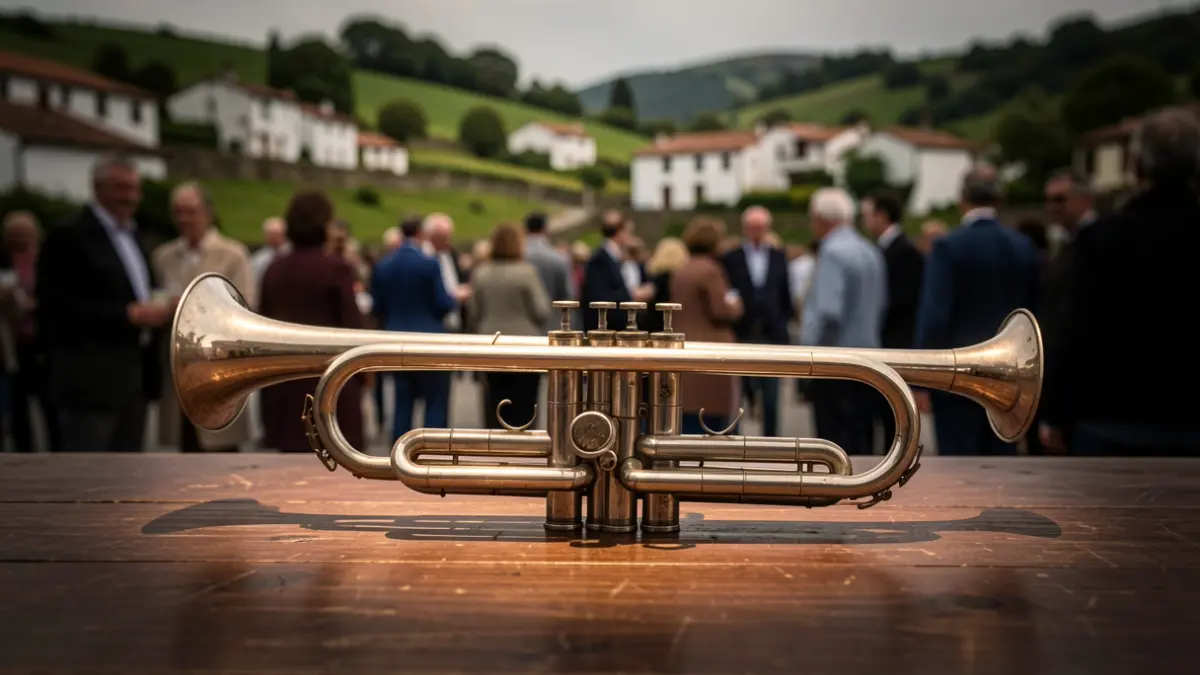
The conversation focused on Txomin Letamendi's silver Conn trumpet, a piece nearly a century old. Solabarrieta suggested that the instrument, a witness to an extraordinary life, should be donated to the Basque Museum for exhibition, allowing the story of the great trumpeter to be known. Txomin Letamendi, nicknamed 'Turuta', summarized a significant part of the 20th-century Basque experience, being primarily remembered as a musician before his roles as a gudari commander, anti-Franco resistance fighter, or political prisoner.
Born in Bilbao in 1901, the same year as Louis Armstrong, Txomin Letamendi studied at the Bilbao Conservatory and always defined himself as a 'music professor'. Although he mastered several instruments, the trumpet became his hallmark, as his son Patxi explains, 'strings were for rich children and wind instruments for the poor'.
At just 21 years old, he joined the newly created Bilbao Symphony Orchestra as principal trumpet in 1922. During the symphony season breaks, he was part of the prestigious Elola brothers' ensemble, which sailed for several seasons on the transatlantic liner Alfonso XII, covering the route between Bilbao, New York, and Havana during the 'happy twenties'.
According to family tradition, during one of their stays in New York, Txomin Letamendi was encouraged to enter a competition for trumpeters. He performed several pieces at sight, winning several gold coins – the popular 'sovereigns', known in Venezuela as 'morocotas' – and a silver Conn trumpet manufactured in Pennsylvania, the instrument the family still preserves today.
The story gained renewed relevance recently when the manager of the Bilbao Orkestra Sinfonikoa invited the Letamendi family to a season-closing concert. Afterwards, Patxi had the opportunity to speak with Venezuelan trumpeter Pacho Flores and show him photographs of the historic Conn, with Flores confirming the instrument's quality.
Flores mentioned he had composed a waltz titled 'Morocota', dedicated to his mother, which sparked Patxi and María Esther's interest as they recalled the gold coins that many Basque women exiled in Venezuela proudly wore during celebrations like Aberri Eguna.
Following the outbreak of the 1936 war, Letamendi joined the Basque Army and later went into exile. In Paris, he participated in the cultural activities of Eresoinka, an artistic ensemble promoted by the Basque Government.
A now-legendary photograph taken during the 1939 Aberri Eguna at Belloy Castle shows him playing the trumpet while sharing a table with Lehendakari José Antonio Agirre, Jesús María Leizaola, and Catalan president Lluís Companys. He also introduced the young singer Luis Mariano in exile.
At the request of Lehendakari Aguirre, he returned clandestinely to join the Basque Government's Information Services, collaborating with the Allies during World War II. This decision marked his destiny; he was arrested and subjected to harsh interrogations and torture, causing severe physical and neurological sequelae.
He died in 1951, at only 49 years old, after passing through the prisons of Barcelona, Carabanchel, and Guadalajara. His wife Karmele Urresti, widowed with three young children, returned to Venezuela, a country the children remember as 'the happiest years of our lives'.
Over time, Karmele Urresti's life inspired the novel 'La hora de despertarnos juntos' by Kirmen Uribe and the film of the same name.
The family also preserves a reproduction of a caricature made in Paris in 1938 by Luciano Quintana 'NIK' (or 'Iñor'), recently recovered thanks to Araceli Echevarría.
Txomin Letamendi's trumpet, guarded by his children, may leave the family sphere to join a museum's collection following the chance encounter between Solabarrieta and Patxi.