
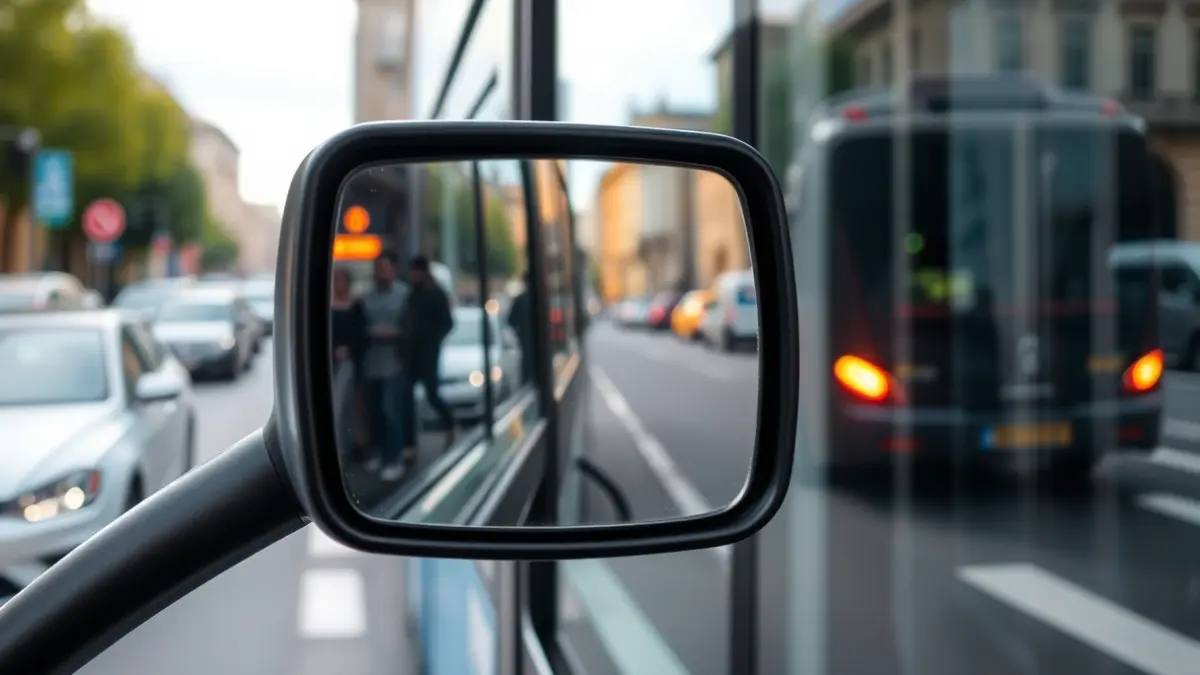
This new system will debut on the A3323 line between Muskiz and Portugalete, a route that largely covers urban areas. It is anticipated that by June, ten more buses will have the system installed, with the goal that by January 1, 2029, the entire fleet, expanding from 368 to approximately 400 units, will be equipped with this technology.
The investment for each device, estimated at around 20,000 euros, is already included in the preliminary projects for the six concessions. The primary objective of this system is to minimize accident risks in urban sections, particularly at bus stops, pedestrian crossings, and intersections, where the bus's size creates blind spots and compromises visibility.
“"It adds an additional layer of security that does not solely depend on the driver's actions, but also influences the behavior of other vehicles and pedestrians."
The system emits an audible warning to alert pedestrians of a vehicle on the bus's side that they might not see at an intersection, and simultaneously notifies the driver of a pedestrian crossing. Furthermore, depending on the vehicle's speed, orange or red light signals are emitted, further enhancing safety.
Although not legally mandated, Bizkaibus is the first operator in Spain to implement this system. The Deputy for Transport, Sustainable Mobility and Tourism emphasized the institution's commitment, stating that they have always been pioneers in adopting safety measures.
“"In a context where new forms of urban mobility are increasing the number of pedestrians, bicycles, and scooters, and thus the accident rate linked to these so-called 'vulnerable users,' it is necessary to take measures to prevent these indices from continuing to grow and to facilitate peaceful coexistence with public transport."