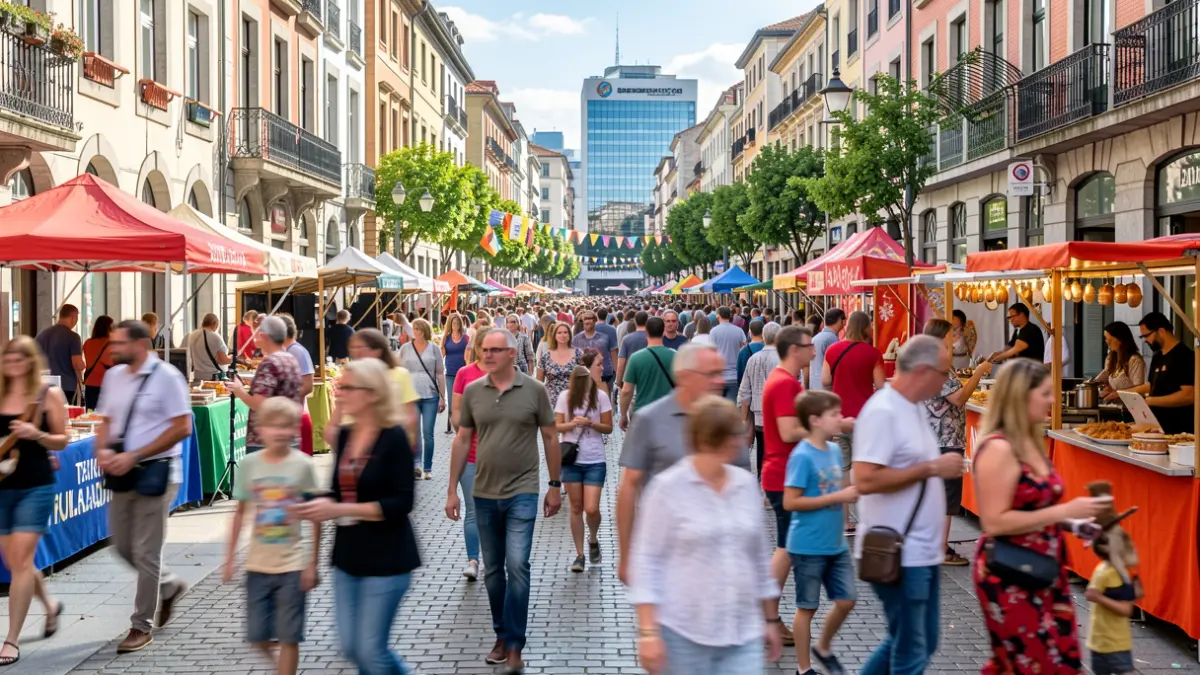
The city of Bilbao is enduring a severe heatwave, with temperatures soaring close to 40 degrees Celsius, marking the hottest May in the last three decades. In response, the City Council has activated its heatwave plan, providing 134 climate shelters (68 outdoors and 66 indoors) and advancing the activation of water features to offer relief to residents.
However, expert voices caution that these measures are insufficient. A study by Tecnalia has identified the areas most exposed to thermal stress within the city. The research indicates that 14 out of Bilbao's 40 neighborhoods have zones exceeding risk thresholds, particularly in dense areas with extensive pavement. Conversely, areas with more trees or proximity to the Nervión River act as natural regulators.
The study also proposes structural solutions, including the creation of more green spaces, reducing hard surfaces, and establishing ventilation corridors. These measures are deemed essential for adapting the city to a climate it was not originally designed for.
The impact of the heat extends beyond the urban center. The rural areas of Bizkaia are also adapting to a changing climate. The Department of Sustainability and Natural Environment of the Provincial Council of Bizkaia notes rising temperatures and stable, yet more intense, rainfall patterns. This affects the rural economy, potentially reducing the yield of certain crops dependent on specific thermal cycles. For the approximately 450 hectares of vineyards, primarily for txakoli production, discussions are underway regarding crop adaptation or the introduction of more heat-resistant varieties.
Institutions are working to mitigate the effects and prepare for a future that appears increasingly routine. The Provincial Council emphasizes the need to "decelerate climate change" and foster a more resilient society, as what was once exceptional is becoming commonplace. The prevailing sentiment on the streets is clear: "Too hot for May."