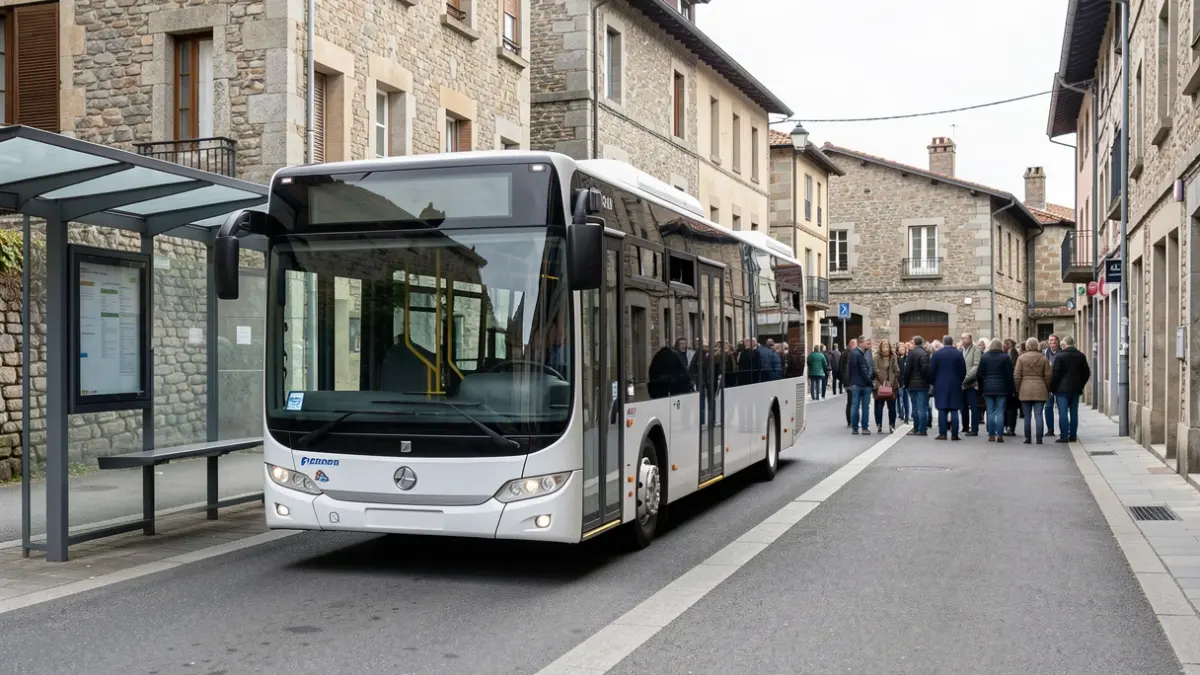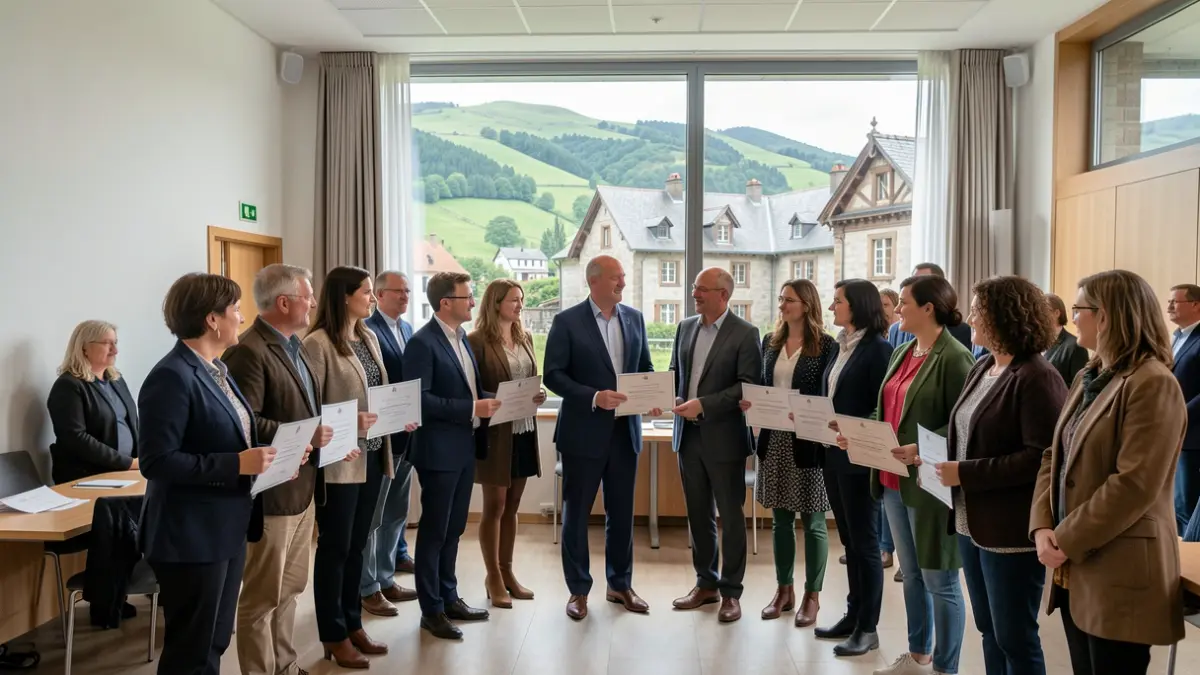

Residents of Arrigorriaga, with the backing of the City Council, appeared this morning before the Commission for Sustainable Mobility to outline the drawbacks of the project and request changes. They presented to representatives of various parties the issues they believe this work will create as currently planned: "an increase in traffic, a rise in noise pollution, health risks, and the urban divide it would create by splitting the municipality in two".
The objective of the Southern Variant Railway is to create a new route to prevent freight trains departing from the port of Bilbao from crossing the urban centers of certain municipalities, particularly in the Margen Izquierda, and to connect it with the future high-speed network. The first phase, linking the port with Olabeaga, is already underway in some sections. Last February, the study for the second phase was presented and opened for public consultation, proposing two variants: one in Arrigorriaga and another in Ollargan. Both, however, have faced strong opposition in the locality. Residents and the City Council submitted 2,283 objections to the preliminary project in April, as it did not propose burying the route in that area.
“"The name 'variant' itself indicates its function is to avoid passing through urban centers, and that is not being met for our town," stated Tamayo. "96 trains would pass through Arrigorriaga every day. If we currently use 40% of our circulation capacity, with this change we would reach 73%, two points from the legal limit"."
According to their calculations, this would represent "five hours of transit each day," an increase that would also create "health risks, as some of these goods are dangerous, such as chemicals, fuels, or industrial waste".
Residents also emphasized the acoustic impact. "Currently, in some areas of Arrigorriaga, the decibel levels set by regulations are already exceeded, as noted in various studies by Adif or the Provincial Council in recent years, and with this project, the noise would be even greater," explained Gómez. They also referred to the short distance between the tracks and certain relevant buildings: "There are only 33 meters to the haurreskola, 20 to the ambulatory, and 33 to the school". Finally, they denounced the comparative disadvantage compared to other towns: "In Basauri and Ortuella, there was the same problem with this project, and it was indeed buried," pointed out Ramírez.
In their opinion, "the best solution" is to bury the route. Currently, the train tracks divide the municipality of Arrigorriaga in two, so creating a tunnel "would eliminate the barrier effect, restoring the continuity of the urban fabric".
Ramírez explained that this would allow for "the creation of green spaces or civic facilities on that freed-up surface area". Another concern, which could be resolved by implementing this solution, is "the loss of residential and economic attractiveness of Arrigorriaga". Regarding the cost of burying the route, they argued that not only the specific investment should be considered, but "the complete cost of living, as open-air facilities suffer greater deterioration". The residents' representatives wanted to make it clear that "we are not against the Southern Variant, but against the current proposal for our town. That is why we ask ETS and the Basque Government to consider the alternatives".