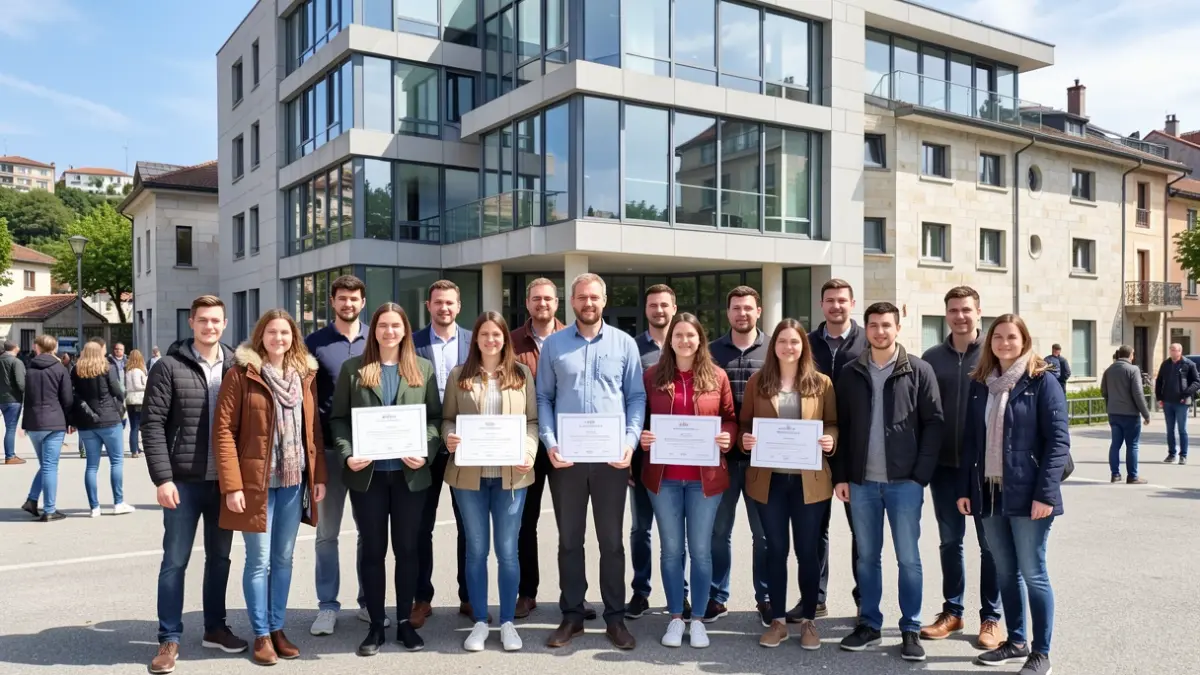
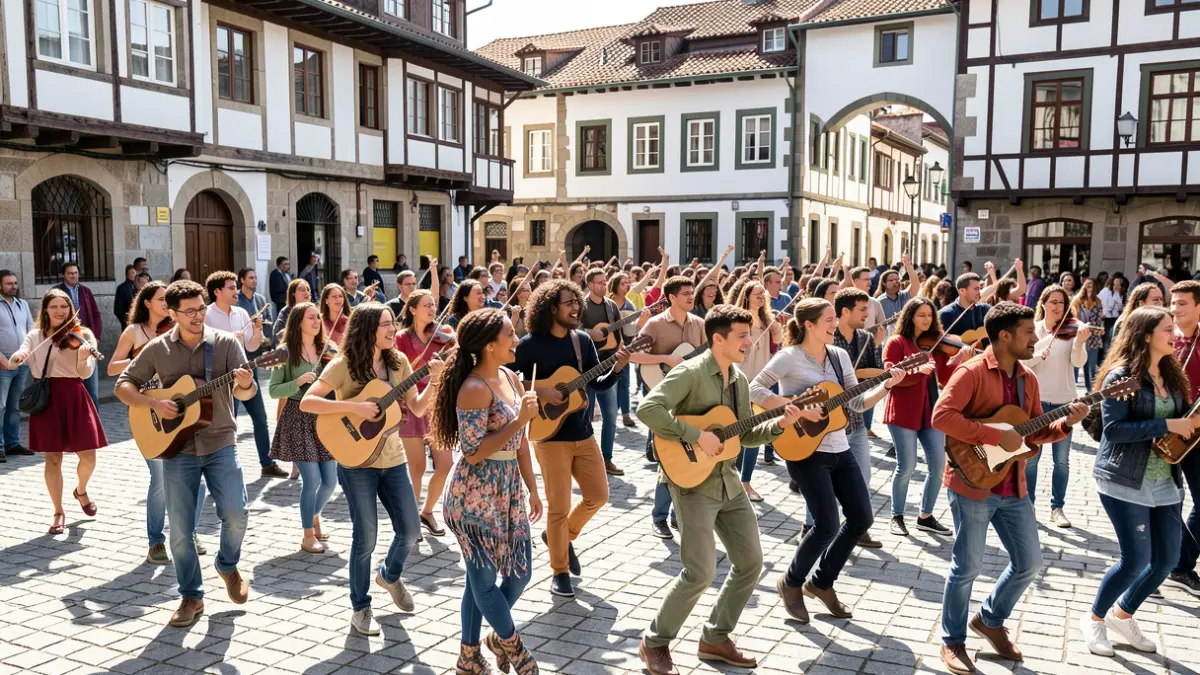
Legazpi hosted a new edition of Musikaldia today, the biannual gathering of music and dance schools from Euskadi organized by Euskal Herriko Musika eta Dantza Elkartea. Nearly 1,700 students from 34 music and dance schools participated throughout the morning in concerts, street parades, and performances held in various locations across the municipality.
This year's edition focused on interculturality. In this context, Doinua Musika Eskola, in collaboration with educational centers in Legazpia, developed a project with Primary school students to explore cultural diversity through music.
The Minister of Education of the Basque Government, Begoña Pedrosa, participated in the opening ceremony alongside the mayor of Legazpi, Eric Galvez; the president of Euskal Herriko Musika eta Dantza Elkartea, Mikel Romero; the mayor of Durango, Mireia Elkoroiribe; and the director of Centers and Planning of the Basque Government, Eugenio Jiménez.
During her speech, Pedrosa highlighted the educational and social value of music, especially when learned and practiced in a group. “Playing with other people requires listening, waiting, coordinating, and being part of something common. Music brings together very different people and teaches them to listen to each other,” she stated.
The minister linked this idea to one of the current challenges of the Basque education system: building coexistence in increasingly diverse classrooms. Pedrosa recalled that the education system currently has students from 145 different countries and argued that the Basque language and culture play a central role in fostering cohesion. “All children who arrive in our schools and our towns must feel that they have a place here. And in this journey, the Basque language and culture are fundamental,” she affirmed.
Pedrosa also emphasized the role of the students themselves in welcoming those who come from other countries and cultures. “Many children help their classmates every day to learn the Basque language, customs, and culture,” she said.
Throughout the day, bands and orchestras, choirs, chamber groups, txistularis, trikitilaris, and dance groups performed in various locations in Legazpi, bringing music to the streets and citizens.
Coinciding with the closing of the inaugural ceremony, the symbolic handover for the next edition of Musikaldia also took place, which will be held in Durango in two years.