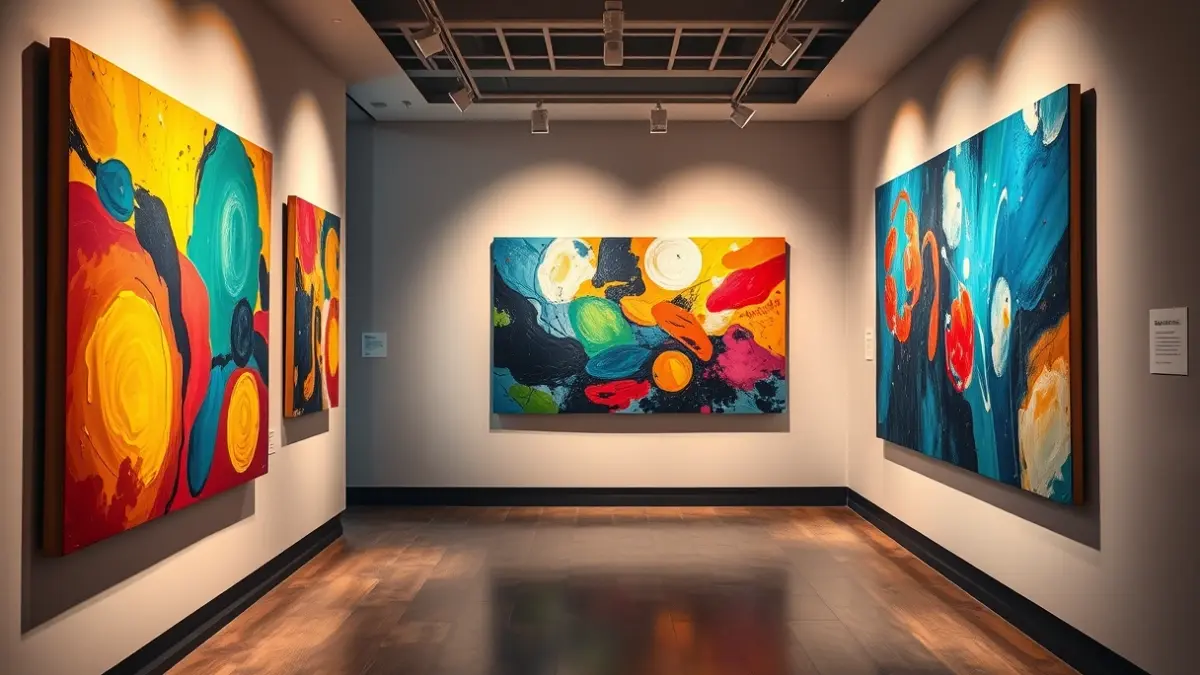
The exhibition brings together a significant part of the artistic career of painter Marta Cárdenas (Donostia, 1944), featuring works ranging from her beginnings, associated with New Figurations and Realisms, such as her self-portrait Yo (1970), rendered in ochres and grays, to her latest abstract Fauvist creations like her Bailarinas (2014), characterized by powerful luminous colors.
The artist, with an extensive body of work consolidated by the market and historiography, presents a series of pieces starting from 1997, including Ropa tendida and Pesquero detalle de la cubierta. In these works, while always grounded in reality, she delves into the paths and syntax of abstraction, creating a fertile and successful tandem. She transitions from the everyday to the universal, from reality to abstraction, from the concrete object to the conforming.
In Marta Cárdenas's painting, there are many hours of contemplation of reality and struggle with the medium, as well as the ability to capture the magical instant when it allows itself to be seized by her. This includes capturing the magical moment of painting the movement of cats and animals, or depicting forms and colors from India and other places she visited during her travels with her husband, the musician Luis de Pablo.
Rastro, ropa a la venta and Ropa a la venta en el rastro (2009) are some of the works created within these parameters, where the explosion of forms and colors references other hues and continents through which her work has transcended, bringing new chromatic scents and flavors to the Central European galaxy.
Vidriera en óvalos (2000) stands as the pinnacle and most complex work presented in this exhibition. It features organic forms and lilac, violet, and purple colors, only broken by some yellows and reds. A silent explosion of color that would well deserve to be realized in a temple somewhere in the world.
Calas and Vegetal (2014) are two powerful works filled with strong and deep colors, as well as soft and delicate ones, almost like harmonious contrasts. Her latest works, created with mixed media and collage, seem to focus on nature and hint at ecological proposals. A complete painting for the enjoyment of color and sound.