Finding a lifelong hobby is not always easy. However, athlete Izaskun Bengoa, born in Bilbao but originally from Amurrio, is someone who has defied the unwritten rule of giving up. Over the decades, sports have not only occupied a central position in her life but have also become an asset to her personal and professional life.
It all began at the ikastola in Amurrio. There, amidst breaks, school activities, and afternoons with friends, a passion for physical activity grew, ultimately shaping her career. This passion not only led her to study for a degree in Physical Activity and Sports Sciences at the EHU in Gasteiz but also opened doors to elite sports, taking her to the 1996 Atlanta Olympic Games on a bicycle. Three decades later, that same competitive drive has led her to become the state champion in Nordic walking, a discipline that has reignited her sporting passion.
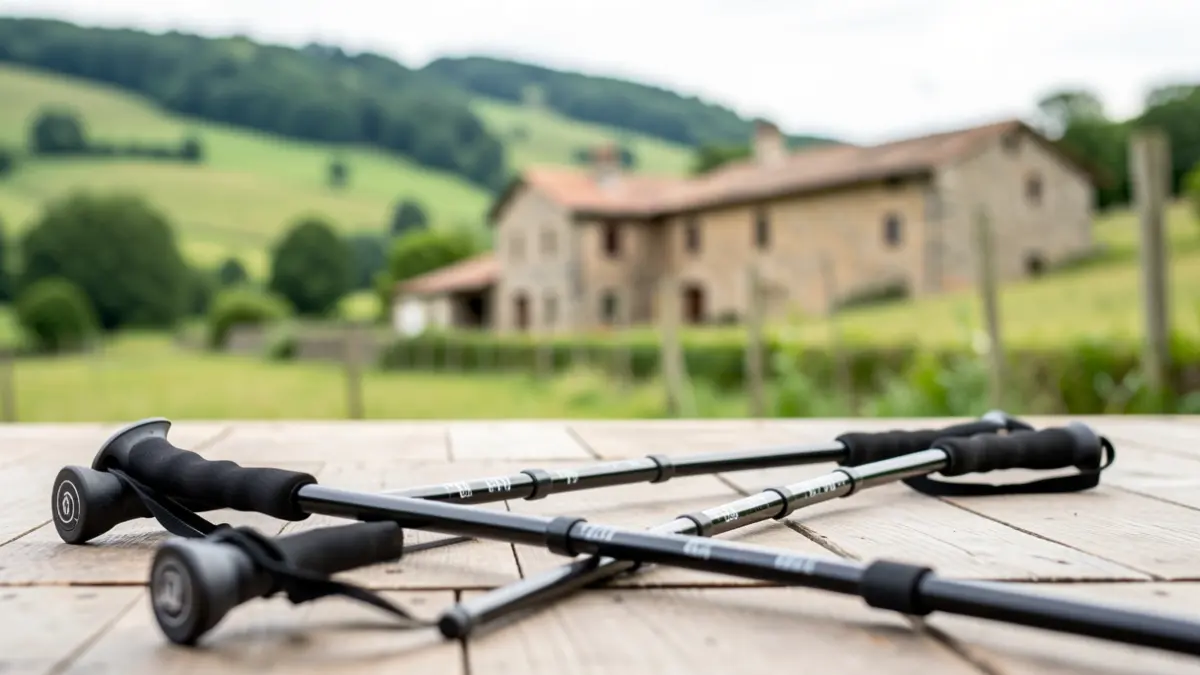
Bengoa states she has been competing in this sport for six years, with poles becoming her main allies. At the end of May, she reaffirmed her level by retaining the state title in the absolute women's category at the Valdebebas Forest Park in Madrid. This latest success keeps her immersed in upcoming calendar events and confirms the excellent form she is in within a modality still little known to the general public.
This is not the first time the versatile athlete has managed significant training loads and competitive pressure. Evidence of this is the demanding career she developed in professional cycling. During those years, she was crowned Spanish time trial champion on several occasions, in addition to winning the national road championship and the national speed title. She also participated in some of the most prestigious events on the international women's calendar, including the Tour de France and the Giro d'Italia.
However, that intense period on the bike has now been relegated to a weekly ride used for unwinding and enjoying another of her great passions. Her main focus is now on competing in the sport of Scandinavian origin.
Bengoa, now considered one of the leading state figures in this discipline, recalls discovering Nordic walking in 2000. The poles have taken her to compete across a significant part of the country. However, building a sports career in a minority discipline is not always easy. As she points out, internationally, "an international federation is yet to be determined."
Competitions typically take place over courses of 12 to 15 kilometers. "We go at very high heart rates. It's not a sprint, but it requires a lot of effort," she explains.
After a career in professional cycling, Bengoa continues to compete at the highest level with her poles and impart training.
Beyond competition, one of the keys to Bengoa's career has been synergistically integrating sport into all facets of her life. She currently works in training and physical health, offering fitness, strength, and Nordic walking sessions, as well as providing training related to proprioception and body awareness. "Just by looking at a person's feet, you can tell a lot about their lifestyle," she remarks.
Furthermore, the high-level athlete understands that the best way to teach sport is by example, which is why she maintains a demanding weekly routine. Her plan includes three specific days of Nordic walking training, three strength sessions spread throughout the week, and one day dedicated to cycling.
Her passion for cycling persists as strong as ever. However, Nordic walking has allowed her to redirect her sporting challenges. For those who seek her advice, she conveys an idea she considers fundamental: performance does not depend solely on exercise. "Nowadays, we wake up very early and need to rest. It is as important to be physically active as it is to recover and eat well," she emphasizes.
Finally, with her sights set on her next competition in Huelva, Izaskun Bengoa continues to tread a path built on enthusiasm and consistency. A path that began decades ago in Amurrio and continues to advance with the same energy as when she first discovered sports. For her, physical activity has never been just a competition, but a way of understanding life. "Sport demands values of discipline and effort, and I feel very represented by them. I couldn't live without them," she concludes.