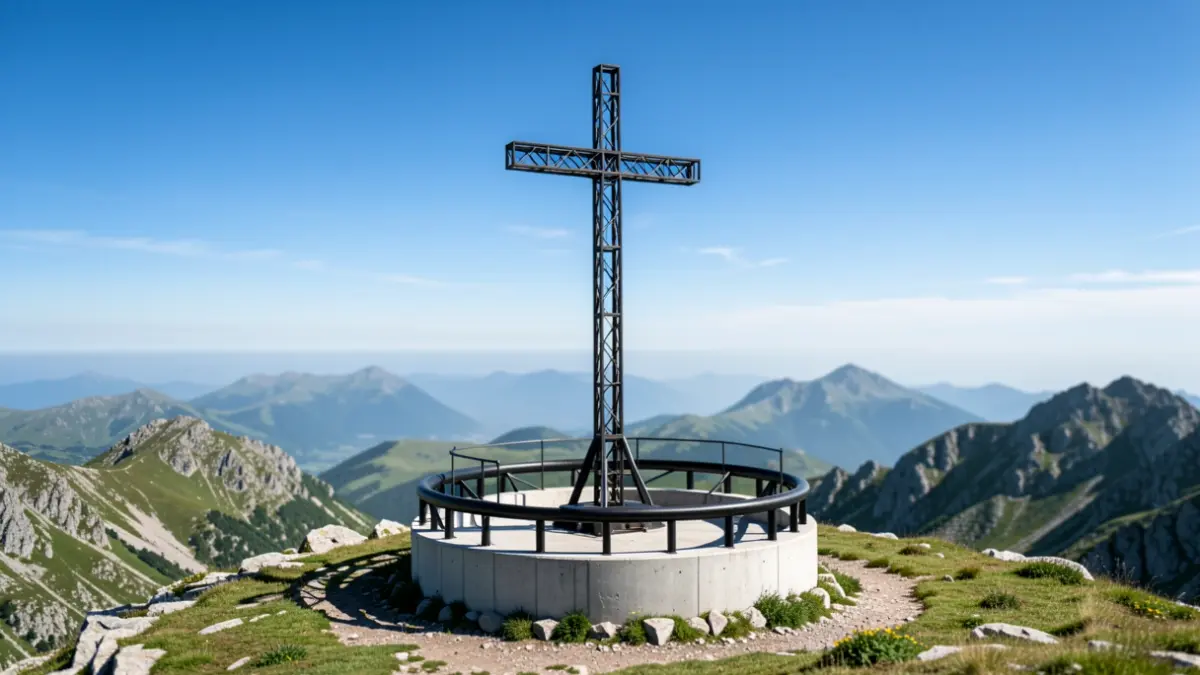
The Gorbea Cross, situated at an altitude of 1,482 meters and a prominent symbol of Bizkaia and all of Euskadi, is set to undergo rehabilitation. This structure, initially 33 meters high, represented an unprecedented architectural milestone when it was built in the early 20th century.
Over the years, erosion caused by both people and animals (particularly cows and horses) has significantly weakened its foundations. Consequently, the provincial councils of Bizkaia and Araba have decided to undertake repair work. The objective is both aesthetic and functional, aiming to ensure the stability of the base given the extreme climate conditions and the high volume of visitors and livestock in the area.
The solution agreed upon by both institutions combines the structural and aesthetic aspects of the monument, which stands on the administrative border. A concrete ring will be constructed around the existing foundations, linking them to ensure joint functionality and greater stability. Furthermore, a black vitrified steel perimeter, matching the Cross's appearance, will surround it to provide visual continuity.
A layer of stones (known technically as 'encachado') will be placed around this ring to protect high-traffic areas and prevent further erosion. The ring's surface also allows for the future incorporation of symbolism to mark territorial boundaries or cardinal points.
Transporting materials and personnel for the works presents a significant challenge due to difficult access. Various options will be analyzed, including aerial and high-mountain terrestrial routes, or a combination thereof. The access route starting from the Sarria Interpretation Center is expected to be the primary one used.
Attention will also be paid to archaeological remains in the vicinity, such as dolmens and Civil War trenches, which will be clearly marked before work begins to prevent damage. Designated areas for material storage and perimeter fencing will also be established.
The project, with a total investment of 167,742.78 euros shared equally by both diputaciones (83,871.39 euros each), is expected to commence around September or October and will last for three and a half months.