
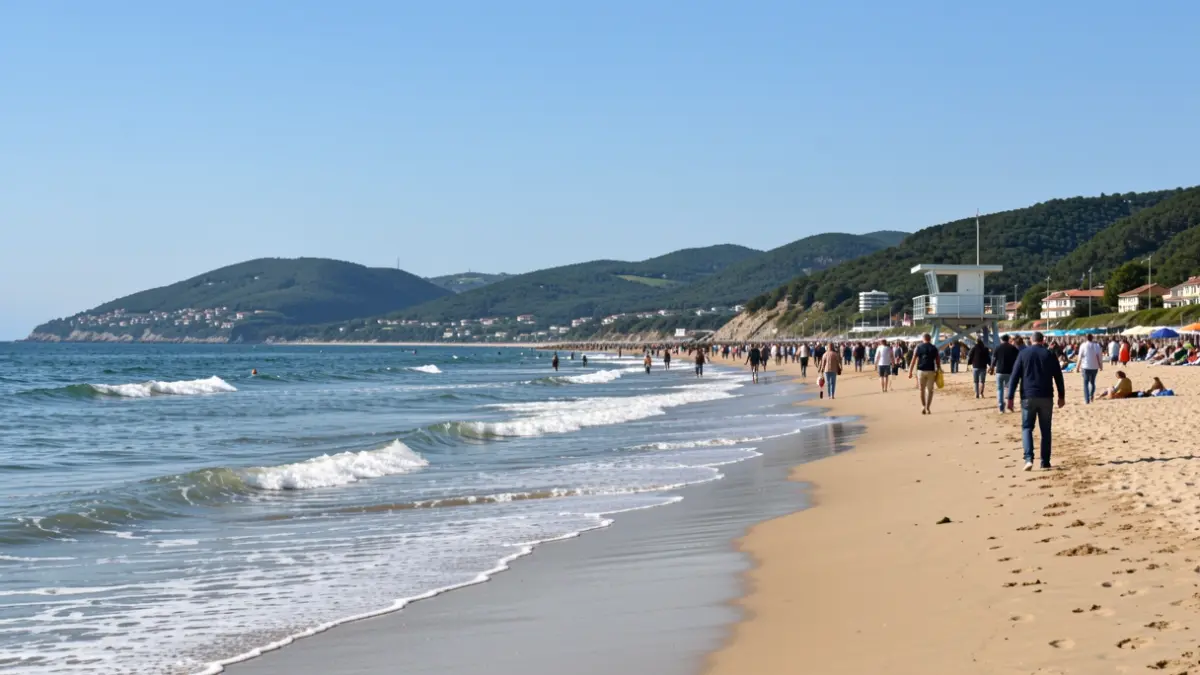
Arantza Atutxa, the Provincial Deputy for Natural Environment and Agriculture of Bizkaia, has emphasized that the Provincial Council will examine how to make the beach season more flexible and adaptable. This initiative aims to address the increasingly early heatwaves caused by climate change and the significant influx of people to the beaches.
Atutxa explained that the lifeguard service requires planning, training, and hiring, and cannot be activated from one day to the next. Therefore, the aim is to find more flexible solutions to better respond to «exceptional» situations, although maintaining a maximum deployment for extended periods is not «viable».
The deputy reminded that the sea always demands prudence and respect, and that good weather can create a false sense of security, especially outside the official bathing season. For this reason, she stressed the importance of «individual responsibility» and the role of the administration in prevention and signage.
Regarding the general condition of the beaches, Atutxa stated that it is good, although there is always room for improvement. The high attendance in May necessitated increased cleaning efforts, and collaboration with local councils and services is underway to prepare for the summer.
In the areas of Agriculture and Forests, she highlighted the approval of the new Forestry Law, developed through broad consensus with experts and stakeholders. This law aims for a «resilient, sustainable, and modern» sector, ensuring local production and seeking a balance between public and private forests, valuing private ownership and considering potential land acquisitions, particularly for conservation.
Concerning the prevalence of eucalyptus and pine trees, Atutxa clarified that it is not a conflict between species but about «good management». She acknowledged that the growth of eucalyptus has been limited but warned that an «abrupt» transition to other species would harm the timber industry. Instead, the focus is on achieving balance among species and in management.
Finally, regarding the state of livestock farming, she linked the spread of diseases to globalization and climate change. She noted that vaccination against dermatosis is not authorized and called for further measures. She also explained that initiatives are being implemented for generational succession, although this is a «long-term» effort. Regarding wolf and vulture attacks, she admitted that the administration lacks instruments to act but is working to ensure damages are compensated as quickly as possible.