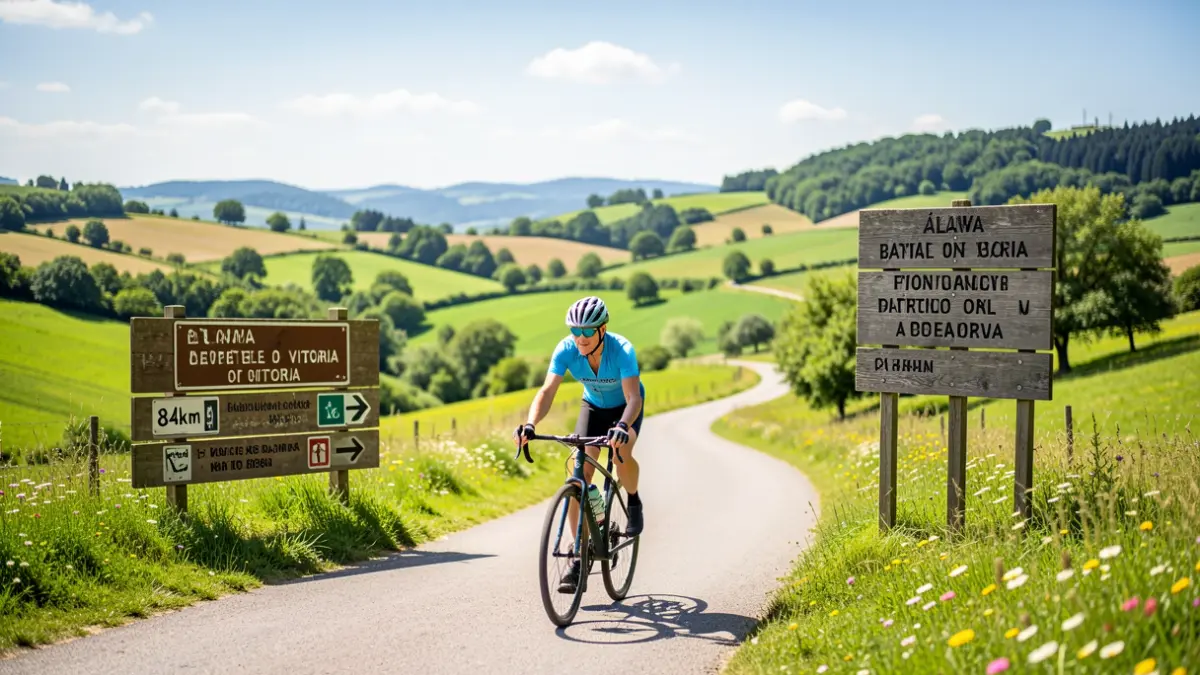
The new cycling route, named '1813, la Batalla de Vitoria', starts in Vitoria-Gasteiz and covers 84 kilometers, connecting key points of interest such as La Llanada occidental, the Zadorra River area, Trespuentes, and Argómaniz. It also integrates into the Álava Greenways Network.
The initiative serves a dual purpose: firstly, to preserve and disseminate the memory of the Battle of Vitoria of 1813, a significant episode of the Peninsular War; and secondly, to enhance the region's cycling tourism offerings and its model of sustainable tourism in Euskadi.
The circular route begins at the Álava Museum of Arms and is divided into two main sections. The first focuses on the main battlefront and combat sites, passing through villages in the municipalities of Vitoria-Gasteiz and Iruña de Oca. The second section, heading east, traces the French army's retreat and episodes of looting, traversing rural areas and open landscapes towards Argómaniz.
For the most part, the route follows already signposted paths and low-traffic roads, offering an accessible profile with gentle gradients. The journey concludes in Vitoria-Gasteiz, where the Monument to the Battle of Vitoria marks the end of the experience.
The route utilizes the Álava Greenways Network, ensuring a safe and environmentally respectful journey. It complements the territory's existing cycling tourism offerings, such as the Route of Romanesque Art or the Route of the Dolmens of Rioja Alavesa.
“"It integrates history, landscape, and mobility into a cycling experience. It will help revitalize the rural environment with more visitors and raise awareness of combat sites."
“"It aims to consolidate a sustainable and accessible destination. It seeks to increase overnight stays and average length of stay, as well as distribute tourism across all regions of Álava."
Cristina González highlighted that 2025 will close with historic figures and the trend continues in 2026: overnight stays in accommodations have increased by 2.5% between January and April, with an average stay of nearly 2.4 days, the highest in Euskadi. Particularly noteworthy are the less touristy regions, with a 28% increase, confirming that tourism is reaching more parts of the Territory.