The Basque Water Agency (URA), attached to the Department of Industry, Energy Transition and Sustainability of the Basque Government, has made a significant advancement in the sanitation of the Biscayan municipalities of Ermua and Mallabia with the commissioning of the Goitondo-Ermua collector. This new infrastructure will allow wastewater to be directed to the general sanitation system and the Apraiz treatment plant in Elgoibar (Gipuzkoa) for proper treatment.
This action will considerably reduce the polluting pressure on the Ego river, which has historically been affected by urban and industrial discharges. Now, wastewater from the Goitondo industrial estate and the Arandoño neighborhood (Mallabia) will be collected in the Ermua network and transported directly to the treatment plant.
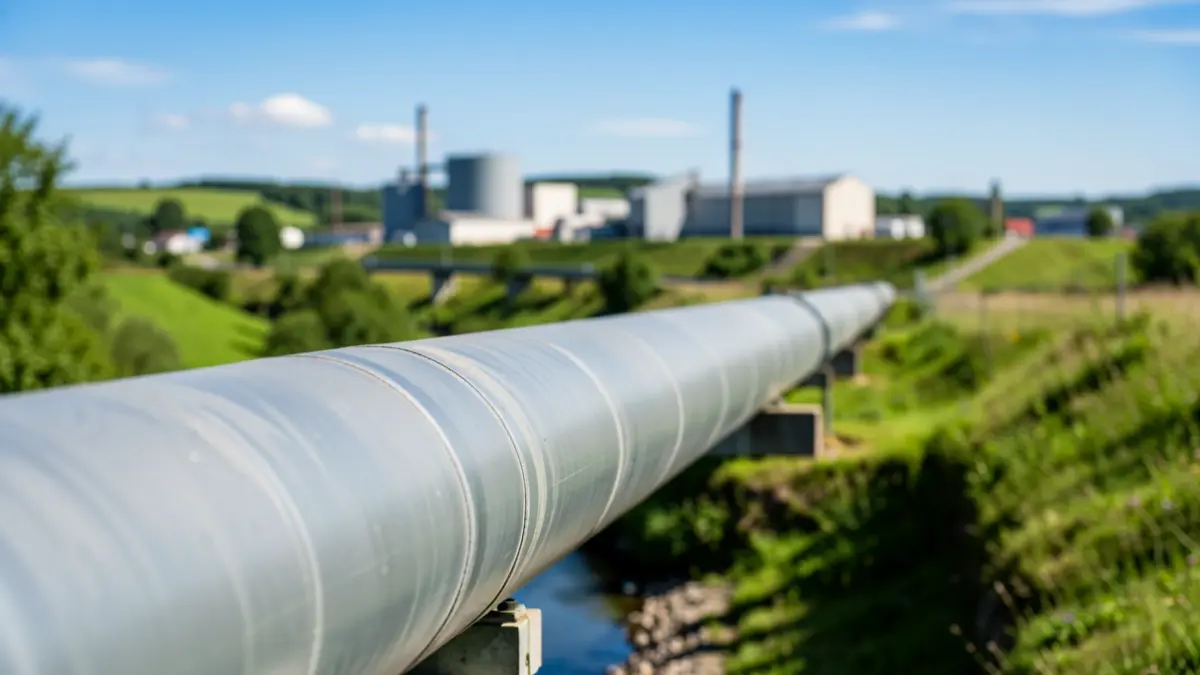
The Goitondo-Ermua collector is a key structural component of the regional sanitation system. The new main conduit is approximately 1,800 meters long and runs parallel to the Errekazabaleta river, connecting the industrial area of Mallabia with the urban network of Ermua. The infrastructure serves four industrial estates in the Goitondo area, covering 17.23 hectares and representing important centers of economic activity.
The system can manage an average flow rate of 15.5 liters per second, comparable to the discharge generated by 4,500 equivalent inhabitants. However, due to the industrial nature of the discharges, the pollution load can be significantly higher. The project also anticipates future connections, such as those for the Berano neighborhood (Mallabia) or the urban developments of Okinzuri (Ermua), reinforcing its strategic importance in the medium and long term.
The construction work required considerable technical effort to reconcile the operations with the environmental conditions and existing infrastructure. The route was developed within a very limited corridor, influenced by the proximity of the river, the regional road BI-2301, and the pedestrian path between Ermua and Mallabia. Deep trenches, exceeding 4.5 meters in some sections, were necessary to cross the river, the road, and pathways. The works lasted 24 months, with a final investment of 3.49 million euros (VAT included).